
Skip to content
Blackcoin logo
Menu
  • Home
  • Casino Bonus Types & Strategies
  • Casino Games Guides
  • Casino Mobile & App Guides
  • Casino Payment Methods
  • Fast Payout / Instant Withdrawal
  • High Roller & VIP Programs
  • Legal & Responsible Gambling
  • Live Dealer / Live Casino
  • New Zealand Casinos
  • No-Deposit Bonuses
  • Online Casino Reviews
  • UK Casinos
  • US Casinos
  • Australia Casinos
Menu

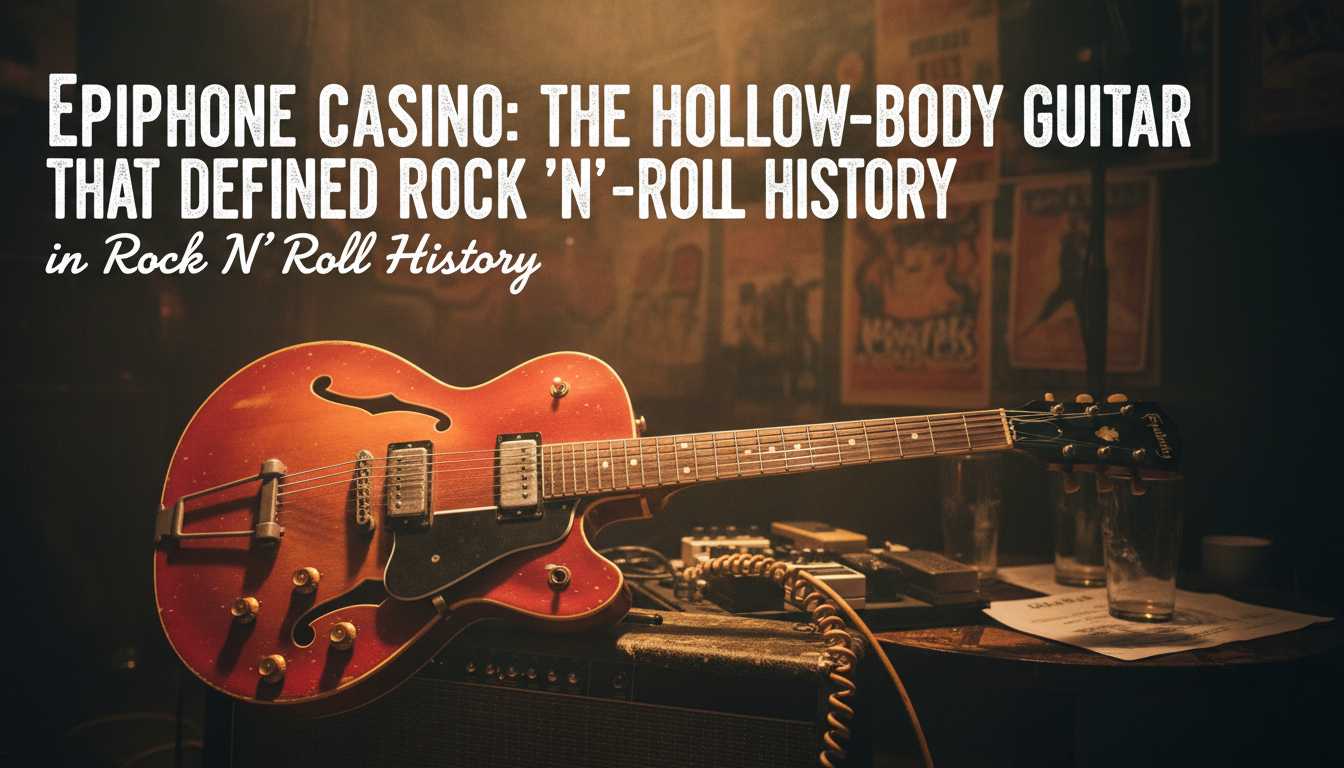
Epiphone Casino: The Hollow-Body Guitar That Defined Rock ‘N’ Roll History

Posted on November 15, 2025

The Epiphone Casino is far more than just another electric guitar—it’s a cultural icon that helped shape the sound of modern music. Originally introduced in 1961, this fully hollow thinline archtop quickly became Epiphone’s best-selling model and a rock ‘n’ roll standard. What sets the Casino apart is its true hollow body construction—unlike semi-hollow models like the Gibson ES-335, the Casino has no center block, creating a uniquely resonant acoustic foundation. Pair this with the growl and clarity of P-90 single-coil pickups, and you have an instrument capable of everything from crystalline clean tones to searing overdriven blues. The Casino achieved legendary status when adopted by The Beatles in the mid-1960s, with John Lennon and Paul McCartney making it central to their studio work. Today, genuine vintage models command premium prices, while modern reissues continue to bring this iconic sound within reach of players at all levels. With its lightweight maple construction, comfortable neck profile, and tonal versatility that spans jazz, blues, rock, and pop, the Epiphone Casino remains one of the most distinctive and beloved electric guitars ever created.

Key Takeaways

  • The Epiphone Casino is a fully hollow-body electric guitar (not semi-hollow like the ES-335), contributing to its distinctive acoustic resonance
  • Its P-90 single-coil pickups deliver a unique combination of bite, clarity, and warm midrange presence
  • John Lennon, Paul McCartney, and other Beatles made the Casino famous, transforming it from relative obscurity to iconic status
  • Vintage 1963-1965 Casinos are among the most valuable Epiphone models, especially those in original condition
  • Modern Casino reissues offer authentic vintage tone at an accessible price point, typically $500-$800
  • The Casino is lighter than most solid-body guitars due to its hollow construction, enhancing playing comfort
  • Its lightweight maple body construction (5-ply laminated) contributes to its distinctive airy tone

Table of Contents

  1. The History of the Epiphone Casino
  2. Famous Epiphone Casino Guitar Players
  3. Epiphone’s Best-Selling Archtop and a Rock ‘N’ Roll Legend
  4. How Does the Epiphone Casino Compare to Other Electric Guitars?
  5. Why Lennon Preferred the Casino Over Other Guitars
  6. Best Hollow Body & Semi Hollow Body Guitars of 2025
  7. Epiphone Casino: The Hollow Body That Defined an Era
  8. Design and Build Quality
  9. Wood and Construction Details
  10. Tonal Characteristics
  11. Electric Tone Profile
  12. Hardware Specifications
  13. Neck Profile and Playability
  14. Use by The Beatles
  15. The Beatles Era: Timing and Historical Significance
  16. Market Information: Vintage Casino Values
  17. Why Players and Collectors Value the 1963 Casino
  18. What Makes the Epiphone Casino Special for Players and Collectors?
  19. Selling Your Vintage Epiphone Casino
  20. Epiphone Casino Natural Review
  21. What Experts Say About the Epiphone Casino
  22. Frequently Asked Questions About the Epiphone Casino

The History of the Epiphone Casino

The Epiphone Casino story begins with Epiphone’s acquisition by Gibson in 1957. Originally established in 1873 in New York City as a manufacturer of instruments including banjos and violins, Epiphone evolved into a respected guitar maker competing with Gibson. When Gibson acquired Epiphone in 1957, much of Epiphone’s production shifted to Gibson’s Kalamazoo, Michigan factory, where they began producing the first Casino models in 1961.

The Casino was Epiphone’s take on Gibson’s ES-330, but with several distinctive features that made it stand out. Unlike the ES-335 which had a center block for reduced feedback, both the Casino and ES-330 featured completely hollow bodies—making them true hollow-body electric guitars rather than semi-hollows. This full hollow construction gave them a livelier acoustic response and more pronounced feedback tendencies than their semi-hollow cousins, but also a distinctive warmth and complexity in their tone.

During its golden era from 1961 through 1970, the Casino was handcrafted in Gibson’s Kalamazoo factory. Early versions featured a spruce top and a 17-degree headstock angle. Around 1970, the Casino headstock angle changed to 14 degrees, and the top construction became five laminated layers of maple, birch, and maple rather than spruce. The solid mahogany neck remained a constant feature throughout its production run.

The Casino was initially discontinued in 1970 when Gibson stopped making Epiphone guitars in the USA, but saw numerous reissues starting in the 1980s. Since 1994, Epiphone (now operating under Gibson as a separate brand) has produced boxed Casinos in Asia, bringing the iconic instrument back to players worldwide at an affordable price point.

Expert Advice

“When authenticating a vintage Casino, many collectors focus only on the label inside the soundhole, but the most reliable dating method is the ink stamp on the neck heel, visible only when the neck is removed from the body. This small detail separates knowledgeable collectors from novices in the vintage market.” – Tony Bacon, veteran guitar journalist and author of over 30 books on guitar history

Famous Epiphone Casino Guitar Players

The Epiphone Casino’s legacy was cemented when it became the instrument of choice for multiple members of The Beatles. Paul McCartney was the first Beatle to acquire a Casino (a 1962 model) in late 1964. He used it extensively in the studio, including for his guitar solos on “Ticket to Ride” (1965), “Drive My Car” (1965), and “Taxman” (1966), as well as the blistering performance on “Helter Skelter” (1968).

Shortly afterward, John Lennon switched from his Rickenbacker 325 to a Casino and made it his main electric guitar for the remainder of his time with The Beatles. George Harrison also adopted the Casino, though he used it less frequently than Lennon and McCartney. The most famous use of the Casino came on Lennon’s heavily fuzzed intro to “Revolution” and his lead fills in “Get Back.”

Outside The Beatles, Keith Richards of the Rolling Stones purchased a Casino and used it to record the demo of “Satisfaction” at Chess Records in Chicago. Both Keith Richards and Brian Jones of the Rolling Stones played these Epiphone thinlines extensively during the mid-1960s.

Modern players who have embraced the Casino include Gary Clark Jr., Tom Petty, Jeff Tweedy of Wilco, Paul Weller of The Jam and Style Council, and Johnny Marr of The Smiths. Contemporary blues-rockers like Gary Clark Jr. and indie-rock artists from Oasis to Arctic Monkeys have all drawn inspiration from the Casino’s distinctive tones.

Notable Epiphone Casino Players Through History
Musician Band/Project Famous Usage
John Lennon The Beatles “Revolution” (fuzz intro), “Get Back,” “The End” guitar solo
Paul McCartney The Beatles “Taxman” guitar solo, “Helter Skelter,” “Ticket to Ride”
George Harrison The Beatles Rhythm parts on later albums after sanding finish
Keith Richards The Rolling Stones Demo recording of “Satisfaction”
Paul Weller The Jam, Style Council Extensive use on post-Jam recordings
Gary Clark Jr. Solo Artist Signature tones on blues-rock recordings

Epiphone’s Best-Selling Archtop and a Rock ‘N’ Roll Legend

Since 1961, the legendary Casino™ has been Epiphone’s best-selling archtop and a rock ‘n’ roll standard. Unlike many guitar models that follow trends, the Casino has maintained consistent popularity across decades, appealing to jazz players for its warm tones, blues musicians for its gritty growl, and rockers for its ability to handle everything from clean rhythm to searing lead lines.

What has propelled the Casino to this sustained success isn’t just its association with Beatles fame. The guitar’s inherent musicality—a balance of acoustic resonance and electric punch—makes it versatile enough to serve players with diverse needs. Its thinline body design (only about 1¾ inches deep) provides greater comfort than traditional deep-bodied jazz boxes while retaining much of their tonal complexity.

The Casino’s status as Epiphone’s best-seller isn’t accidental. Its classic combination of P-90 pickups wired through separate volume and tone controls (with a three-way pickup selector) provides tremendous tonal flexibility. Players can dial in anything from warm, jazz-tinged chords to biting rock leads by simply adjusting the controls and pickup selector. The neck P-90 takes on a more balanced, vocal-like persona ideal for expressive chords, while the bridge pickup delivers that distinctive punchy rock tone.

Over the years, Epiphone has offered numerous variations on the Casino formula—Pale Cream, Vintage Sunburst, Natural finishes, left-handed models, signature editions honoring John Lennon and Gary Clark Jr., and the USA Collection featuring American craftsmanship. Despite these variations, the core formula remains unchanged: a lightweight hollow body, comfortable neck profile, and the distinctive growl of P-90 single-coils.

How Does the Epiphone Casino Compare to Other Electric Guitars?

Understanding the Epiphone Casino’s place in the guitar ecosystem requires comparing it to its closest relatives—both within Epiphone’s lineup and Gibson’s offerings. Let’s break down how the Casino stacks up against comparable models.

Epiphone Casino vs. Gibson ES-330

The Casino and Gibson ES-330 are fundamentally the same guitar with different cosmetic touches. Both are fully hollow-body thinline archtops with P-90 pickups. The main differences lie in the headstock design, pickguard style, and hardware details. The Casino typically features Epiphone’s distinctive headstock shape and a white three-layer pickguard, while the ES-330 has a Gibson headstock and often a black pickguard.

Epiphone Casino vs. Gibson ES-335

Unlike semi-hollow body guitars such as the Gibson ES-335, which have a center block to promote sustain and reduce feedback, the Casino is a true hollow-bodied guitar with no solid wood within its body. This key difference creates several important tonal and physical variations:

  • Weight: The Casino is significantly lighter—tipping the scales at around 6 lbs compared to the ES-335’s 7.5-8.5 lbs
  • Tonal Character: The Casino offers more acoustic resonance and complex harmonic interactions that the ES-335 simply cannot achieve
  • Feedback Threshold: The Casino is more prone to feedback at high volumes, but also offers more organic acoustic blending with amplification
  • Construction: The Casino features a 16th fret neck joint rather than the 19th fret joint on the ES-335, affecting access to upper frets

Epiphone Casino vs. Solid Body Guitars (Fender Stratocaster, Gibson Les Paul)

There’s simply no hiding the fundamental differences between a hollow body like the Casino and a solid body guitar like a Stratocaster or Les Paul. However, the Casino bridges many gaps between these categories:

Comparison Between Epiphone Casino and Popular Solid Body Guitars
Feature Epiphone Casino Gibson Les Paul Fender Stratocaster
Body Type Fully hollow Solid body Solid body
Weight About 6 lbs About 9-10 lbs About 8 lbs
Pickup Type P-90 single coils Humbuckers Single coils
Feedback Resistance Lower (more primal sound) Higher Moderate
Acoustic Volume/Projection Strong (can be played unplugged) Negligible Negligible
Ideal For Jazz, blues, classic rock, indie Rock, metal, blues Rock, pop, country

Despite the Casino’s inherent feedback sensitivity compared to solid bodies, its lightweight, resonant construction gives it a unique advantage: an airy acoustic response that translates beautifully through amplification. While perhaps not as controlled as a semi-hollow, modern Casino players can confidently dig in without excessive howling at stage volumes thanks to strategic bracing and wood combinations.

Why Lennon Preferred the Casino Over Other Guitars

John Lennon’s adoption of the Epiphone Casino wasn’t just about following McCartney’s lead. Lennon found specific qualities in the Casino that made it superior to other guitars in his collection for certain applications. In fact, he became so attached to his Casino that he eventually removed the finish completely, sanding off the sunburst lacquer according to advice from Donovan during the Beatles’ 1968 trip to India. Lennon believed this would improve the instrument’s resonance and tone—a controversial modification that many vintage purists now view as diminishing the guitar’s value, though Lennon was unconcerned.

According to Andy Babiuk’s authoritative “Beatles Gear,” Lennon described being “astonished” by the Casino’s bright, sharp tone and lightweight feel compared to his previous guitars, particularly his Rickenbacker 325. The Rickenbacker, while iconic, was significantly heavier and had less tonal versatility than the Casino.

Key Factors That Made the Casino Ideal for Lennon

  1. Lightweight construction: At only about 6 lbs (compared to 7+ lbs for most semi-hollows), the Casino was easier to handle during extended recording sessions or performances
  2. P-90 pickups’ midrange focus: The Casino’s two P-90 pickups delivered more midrange presence and clarity than humbuckers, allowing Lennon’s parts to cut through dense mixes while maintaining warmth
  3. Hollow body responsiveness: The fully hollow construction created complex harmonic interactions that solid or semi-hollow guitars simply cannot achieve
  4. Hardwiring for distortion: P-90s naturally overdrive in a pleasing way when pushed hard, perfect for Lennon’s increasingly distorted tones on albums like “The White Album” and “Abbey Road”
  5. Visual distinctiveness: Even when sanded bare, the Casino’s unique shape and f-holes made it visually stand out among mass-produced guitars

The Casino’s tonal versatility also allowed Lennon to use it for multiple roles within Beatles recordings. He could get chiming clean tones for ballads, “jangle” for mid-tempo numbers, and when cranked through tube amps or early fuzz pedals, achieve the raw, aggressive tones that defined songs like “Revolution.”

Expert Advice

“For players chasing the authentic John Lennon Casino sound, don’t overlook string selection. Lennon primarily used flatwound strings, which yield a rounder, mellower tone with less string noise compared to modern roundwound sets. This small change instantly moves you closer to that mid-1960s Beatles rhythm tone.” – Dave Hunter, Senior Editor at Guitar Player magazine

Best Hollow Body & Semi Hollow Body Guitars of 2025

While numerous hollow and semi-hollow body guitars compete for players’ attention today, the Epiphone Casino consistently ranks among the most popular and affordable options. Let’s examine where it stands among contemporary hollow body offerings.

Top Hollow Body Options in 2025

  • Epiphone Casino (Natural, Vintage Sunburst)
  • Gretsch G6120T-55 Vintage Select ’55 Chet Atkins Hollow Body
  • Gretsch G5420T Electromatic Hollow Body
  • Gibson ES-330 Reissue
  • Eastman T486V
  • Yamaha SA2200
Comparison of Best Hollow Body Guitars of 2025
Guitar Model Body Style Pickups Price Range Main Appeal
Epiphone Casino Fully hollow P-90s $500-$600 Beatles heritage, vintage tone at affordable price
Gretsch G6120T-55 Fully hollow FilterTrons $4,000-$5,000 Traditional Gretsch twang, Cadillac of hollow bodies
Gretsch G5420T Fully hollow Blacktop FilterTrons $800-$1,000 Great value Gretsch experience
Gibson ES-330 Reissue Fully hollow P-90s $3,000-$4,000 Premium USA craftsmanship
Eastman T486V Fully hollow P-90s $1,300-$1,500 Handmade vintage accuracy at mid-range price
Yamaha SA2200 Semi-hollow Humbuckers $800-$1,000 Excellent build quality, reliable workhorse

The Epiphone Casino stands out for delivering authentic hollow body experience at an accessible price point. While higher-end models like the Gibson ES-330 reissue offer premium USA craftsmanship, the Casino provides 85-90% of that experience at one-fifth the price. This tremendous value proposition explains why it continues to be one of the most popular entry points into hollow body guitars.

Competitors like the Gretsch Electromatic Hollow Body models offer similar price points but with different tonal characteristics (FilterTron pickups rather than P-90s). The Casino’s distinctive P-90 growl and bite appeals specifically to rock and blues players seeking that midrange punch.

Epiphone Casino: The Hollow Body That Defined an Era

The Epiphone Casino didn’t just exist during a pivotal musical era—it actively shaped the sound of mid-1960s rock. When the Beatles began incorporating Casinos into their recordings starting with the “Rubber Soul” sessions (1965), they introduced a distinctive tonal texture that quickly became part of the sonic fabric of rock music.

Plate 16 of Andy Babiuk’s acclaimed “Beatles Gear” shows Paul McCartney’s Casino being recorded for the “Taxman” guitar solo (recorded with the Casino plugged into a Fender Bassman amplifier). This iconic performance exemplifies the Casino’s ability to deliver cutting, articulate lead tones with just the right amount of grit. On the same album, Lennon’s Casino work on “Nowhere Man” showcases the guitar’s beautiful clean capabilities.

What made the Casino so revolutionary in this context was how it bridged the gap between jazz archtops and modern rock sounds. Traditional hollow body jazz guitars like the Gibson L-5 were too warm and lacking in cut for the emerging rock aesthetic, while solid bodies like Fenders lacked the complex acoustic resonance that added depth to studio recordings. The Casino’s hybrid approach—lightweight hollow construction with the bite of P-90 pickups—struck a perfect balance.

The Casino also played a crucial role in the Beatles’ evolving sound as they moved from simple pop tunes to more sophisticated compositional techniques. The guitar’s airy resonance and unique timbre, courtesy of the all-hollow, laminated maple body and dual P-90 pickups, allowed for remarkable tonal blending—from woody, percussive fingerpicking to biting, overdriven leads. While some contemporaries favored bright, compressed solid bodies, the Casino’s open tone added texture and warmth that became essential to the Beatles’ more experimental late-1960s compositions.

Not coincidentally, the Casino’s peak popularity with rock musicians coincided with a period when guitarists were exploring the full spectrum of electric guitar possibilities. Before the mid-1960s, humbuckers dominated the rock scene for their noise-free operation and fat tone, but players like Lennon discovered that single-coil P-90s could deliver enough output to drive tube amps into natural overdrive without the noise issues of traditional Fender single-coils.

Design and Build Quality of the Modern Epiphone Casino

While vintage Casinos command premium prices, modern Epiphone Casinos deliver impressive build quality for their price point, staying faithful to the original design while incorporating modern manufacturing precision.

Traditional Construction Methods, Modern Reliability

The modern Casino features a fully hollow laminated maple body with a distinctive double-cutaway shape that has inspired generations of players across genres. Current versions have a laminated maple top, sides, and back, built on the same traditional principles as the 1960s models but with modern quality control.

Modern Epiphone Casino Construction Details
Component Description
Body Construction Fully hollow thinline with 5-ply maple body and basswood top bracing
Top, Back & Sides Laminated maple (3-ply exterior with softer inner core)
Neck Mahogany, with vintage-inspired “C” profile
Fingerboard Pau Ferro with pearloid dot inlays and 22 frets
Scale Length 24.75″ (standard Gibson scale)
Neck Joint Set-neck construction at 16th fret
Bridge LockTone Tune-O-Matic with stopbar tailpiece
Pickups Dogear PRO P-90 single-coil pickups
Controls Two volume, two tone, three-way pickup selector
Case Fitted hardshell case included

The modern Casino’s lightweight laminated maple/basswood construction keeps weight down without sacrificing resonance or tone. Tipping the scales at around 6 lbs (similar to vintage models), the Casino feels remarkably nimble and comfortable despite its 16″ wide hollow body.

One key improvement in modern Casinos is the stability of the set neck joint. While some vintage examples had issues with neck alignment, modern manufacturing techniques ensure consistent and rock-solid neck joints. The nut is now precision-cut to ensure accurate string spacing and proper action.

Expert Advice

“When buying a new Casino, take advantage of the simple control layout by upgrading to higher-grade pots and capacitors inspired by vintage ’50s circuits. This modest investment ($50-75) dramatically improves the guitar’s electronics response without affecting its vintage value. Focus on getting smooth taper pots that maintain tonal integrity throughout the full range.” – Will Kelly, owner of Joe Bonamassa’s guitar tech team

Wood and Construction Details

The Epiphone Casino’s distinctive tone comes primarily from its construction materials and methods. Unlike semi-hollow guitars with center blocks, the Casino features true hollow body construction with specific material choices that create its unique sonic profile.

Body Material

The Casino body consists of a pressed three-ply laminated top, back, and sides. Traditionally, maple forms the two outer plies with a softer inner ply (often poplar) creating a “maple-poplar-maple” sandwich. This construction provides enough structural integrity to withstand string tension while maintaining the lively resonance of a hollow body.

Contrary to popular belief, early Casinos did not feature spruce tops—this is a common misconception. Instead, they used laminated maple throughout. The 5-ply maple construction (two outer maple plies with alternating birch-maple-birch plies) provides a bright yet balanced tonal foundation.

Neck and Fretboard Materials

The set mahogany neck features a comfortably rounded ’60s C-shaped profile that sits nicely in the hand. Mahogany provides warmth and sustain while contributing to the guitar’s overall balance. Early vintage models featured one-piece mahogany necks while modern versions use three-piece construction for enhanced stability.

The fingerboard is typically made from Pau Ferro—a sustainable alternative to traditional rosewood that provides excellent playability and durability. It features simple dot markers for a clean aesthetic and offers that familiar feel that made vintage Casinos so beloved.

The Full Hollow Construction Advantage

The Casino’s true hollow body design makes it acoustically louder when played without amplification compared to semi-hollow or solid-body guitars. While this makes it more susceptible to feedback at high volumes, it also means that unplugged practice has much more acoustic presence—helping you develop better touch and dynamics.

Despite being fully hollow, the Casino includes crucial bracing to support the string tension and prevent body distortion from the LockTone Tune-O-Matic bridge and stopbar tailpiece. This strategic bracing enhances the guitar’s structural integrity without sacrificing acoustic resonance.

Wood Specifications Comparison: Vintage vs. Modern Casinos
Component 1960s-70s Vintage Modern Reissue
Body Top 5-ply maple (maple/birch/maple/birch/maple) 5-ply maple (maple/birch/maple/birch/maple)
Body Thickness Approx. 1.75 inches Approx. 1.75 inches
Neck Wood One-piece mahogany Mahogany, often 3-piece construction
Fingerboard Rosewood Pau Ferro
Headstock Angle 17 degrees (pre-1970) 14 degrees
Binding Single white plastic on top/back edges Single white plastic on top/back edges

One subtle but important difference between vintage and modern Casinos is the neck joint angle. Vintage pre-1970 Casinos had a 17-degree headstock angle while modern models feature a 14-degree angle—this affects the string tension over the nut but generally isn’t noticeable to most players.

Tonal Characteristics: The Casino’s Sonic Signature

The Epiphone Casino’s distinctive voice comes from the perfect marriage of three key elements: the fully hollow laminated maple body, the bite of P-90 pickups, and the guitar’s ergonomic design. This combination creates a sound that’s simultaneously acoustic and electric, warm yet cutting, familiar yet distinctive.

Unmistakable P-90 Character

At the heart of the Casino’s tone are its pair of Dogear PRO P-90 pickups (modern reissues) or original P-90T Classic™ pickups in vintage models. These bright yet smooth single-coils have been a staple on this model since its inception, delivering unmatched warmth, aggression and articulation. Unlike modern humbuckers with their scooped mids, the P-90s have more midrange presence and clarity that makes the Casino cut through dense mixes while maintaining warmth.

P-90 pickups are often described as having “more bark” than traditional single-coils like Fender’s Stratocasters while avoiding the scooped mids characteristic of many humbuckers. This midrange emphasis became essential to the Beatles’ sound, allowing their guitar parts to occupy a distinct sonic space within their increasingly complex arrangements.

True Hollow Body Resonance

Unlike semi-hollow guitars that feature a center block, the Casino’s fully hollow construction creates complex harmonic interactions that solid or semi-hollow guitars simply cannot achieve. Playing an unplugged Casino reveals a surprisingly resonant acoustic instrument that chimes beautifully even without amplification.

This resonant acoustic foundation is complemented by the P-90 single-coil pickups, with their archetypal thick, rich, yet slightly gnarly and biting sound. The interaction between the hollow body and pickups creates a dynamic response where your pick attack and finger pressure directly affect the tone—a hallmark of great archtop guitars.

From Jazz Clean to Rock Overdrive

One of the Casino’s most impressive qualities is its ability to cover such a wide stylistic range while retaining its signature voice. On a clean amp setting, the Casino produces sweet, jangly tones perfect for jazz comping or 1960s pop rhythm parts. As you increase gain, it transitions smoothly into bluesy grit and then to full-on rock overdrive without losing its character.

The neck P-90 takes on a more balanced, vocal-like persona ideal for expressive chords and melodic rhythm work, while the bridge pickup delivers that distinctive punchy midrange that cuts through a band mix. Using both pickups together creates a unique thinned-out sound that works beautifully for funk rhythms or subtle textures.

Tonal Characteristics Across Music Genres
Genre Typical Settings Casino’s Strengths
Jazz Neck pickup, clean tone, rolled-back tone knob Warmth, articulation, dynamic response
Blues Bridge pickup, moderate overdrive Singing lead tone, vocal-like qualities
Rock Bridge pickup, high gain Midrange cut-through, responsive overdrive
Pop Both pickups, clean Jangle, acoustic-like clarity
Indie/Rock Neck pickup, moderate gain Smooth yet defined tone ideal for texture

Legendary blues-rocker Gary Clark Jr. has particularly exploited the Casino’s tonal versatility, using it for everything from clean Texas blues to scorching rock leads. His technique demonstrates how a skilled player can get multiple distinctive voices from a single guitar by manipulating volume, tone, and pickup selector settings.

Electric Tone Profile Through Amplification

When amplified, the Epiphone Casino reveals its true magic. While it sounds great unplugged, the interaction between the hollow body resonance and the electric components creates something greater than the sum of its parts—rich harmonics, complex overtones, and dynamic responsiveness that responds intuitively to the player’s touch.

Vintage Tone in a Modern Context

The Casino delivers a remarkably versatile electric tone profile that remains instantly recognizable across decades and musical contexts. From sparkling clean tones that resemble an acoustic’s jingle-jangle to searing fuzz explosions, the Casino covers a wide stylistic range while retaining its signature voice.

Any guitar that is good enough for John Lennon is good enough for us, but for modern players, the question becomes: how does it hold up against today’s high-tech gear? The answer is admirably well. The Casino’s natural highs aren’t overly bright, the mids have enough prominence without becoming muddy, and the lows contain just the right amount of acoustic “boom” without becoming flabby.

Amp Pairings That Showcase the Casino’s Best Qualities

To get the most out of your Casino, consider these amplifier pairings:

  • Vintage-style tube combo (Fender Deluxe Reverb, Princeton Reverb): Creates beautiful clean tones with natural tube compression for blues and jazz
  • British-style 100-watter (Marshall JCM800, Plexi): Delivers the classic rock crunch that Beatles fans seek, with P-90s cutting through nicely
  • Tube overdrive (Matchless DC-30, Dr. Z Maz 18): Perfect for indie and alternative textures, where the Casino’s complex harmonics really shine
  • Digital modeling (Kemper, Helix): Surprisingly effective when paired with models of classic tube amps, allowing precise tonal shaping

P-90 enthusiasts often speak of a “sweet spot” in amplifier settings where these pickups truly sing—usually a combination of moderate gain (6-7 on a 10-point scale), slightly reduced treble, and a midrange boost. This positioning highlights the P-90’s distinctive midrange “punch” while avoiding the brittleness that can sometimes plague single-coil tones.

Real-World Recording Examples

Notable examples of the Casino’s distinctive tone on iconic recordings include:

  1. McCartney’s “Taxman” guitar solo (recorded with a Casino plugged into a Fender Bassman)
  2. Lennon’s piercing distorted tones on “Revolution” (Casino through a fuzz pedal)
  3. Lennon and McCartney’s parts on the three-way guitar solo showdown in “The End”
  4. Keith Richards’ demo of “Satisfaction” at Chess Records in Chicago
  5. Gary Clark Jr.’s work on “Bright Lights” from his live album

The Casino’s ability to handle both clean rhythm parts and searing lead lines made it invaluable in studio situations. Its responsive dynamics mean players can move from clean to overdriven tones simply by digging in harder with the pick—no need to constantly adjust amp settings during performance.

Hardware Specifications: Tuned for Performance

The Epiphone Casino’s hardware, while not as flashy as some boutique setups, is well-chosen to complement the guitar’s hollow body character and provide reliable performance. Let’s examine the key hardware components that impact tone, tuning stability, and playability.

Bridge and Tailpiece

The traditional setup for the Casino features a Gibson Tune-o-Matic bridge paired with a stopbar tailpiece. This configuration provides:

  • Precise intonation adjustment for each string
  • Good string tension for proper sustain
  • Traditional feel and visual aesthetic that many players prefer
  • Enhanced sustain compared to trapeze tailpieces

Some players prefer the traditional hollow body trapeze tailpiece for increased acoustic resonance, but most modern Casinos come equipped with the Tune-o-Matic/stopbar combination for enhanced tuning stability and sustain.

Electronic Components

The straightforward but effective electronics package on the Casino consists of:

  • Individual volume and tone controls for each pickup (four total knobs)
  • 3-way pickup selector allowing either solo’d or combined pickup settings
  • Standard 0-to-10 bonnet control knobs on vintage models

This simple control layout provides maximum tonal variety without unnecessary complexity—a hallmark of great design where every choice has musical purpose.

Expert Advice

“Guitarists often overlook the fact that pickup height is a critical adjustment area for dialing in P-90s for optimal output and articulation. For a balanced tone where neither position dominates, set the bridge pickup around 2mm from the strings and the neck pickup about 1mm back. This slight difference compensates for string tension variations and creates a more balanced response between positions.” – Dr. Steven J. Della Santina, noted guitar luthier and owner of Della Guitars

Modern Epiphone Casino Hardware Details
Component Description Impact on Performance
Bridge LockTone Tune-O-Matic Provides precise intonation adjustment and stable string anchoring
Tailpiece Stopbar Offers better sustain and tuning stability compared to trapeze
Tuners Epiphone LockTone tuners Improved tuning stability and classic aesthetic
Pickguard 3-layer pearloid Traditional aesthetic without affecting tone
Strap Buttons Two (standard locations) Secure mounting while maintaining balance when playing standing
Output Jack Side-mounted with metal plate Durable connection that won’t wear through during frequent use

The USA Collection Epiphone Casino features upgraded hardware including hand-wired electronics with Orange Drop® capacitors and Gibson USA P-90 Dogear single-coil pickups, which deliver a more premium tonal experience while maintaining the authentic Casino feel.

While most players never need to modify the Casino’s factory hardware, many vintage enthusiasts and professional players opt to upgrade to higher-quality pots and capacitors. A popular starting point is swapping the stock P-90s for hotter aftermarket options from respected manufacturers like Lollar, Lindy Fralin, or TV Jones—which can transform the guitar’s character while maintaining its essential identity.

Neck Profile and Playability

The set mahogany neck is one of the Casino’s most celebrated features for players who value playability and comfort. Its carefully crafted profile, scale length, and fretwork combine to create an instrument that feels immediately familiar to Gibson-style guitarists while offering distinctive characteristics that make it stand out from comparable models.

Lifetime-Proofed Neck Design

Modern Casinos feature a vintage-inspired ’60s C-shaped profile that splits the difference between the thicker late-1950s Gibson profiles and the flatter modern necks. This comfortable shape works particularly well across multiple playing styles—it’s substantial enough to feel solid in the hand during rhythmic playing but slim enough for lead work when you shift to the upper register.

Unlike many signature guitars that feature modified neck dimensions, the Casino maintains a player-friendly profile that welcomes anyone from beginners to seasoned professionals. The mahogany neck construction also contributes to the guitar’s overall resonance—unlike bolt-on necks, the set neck construction enhances sustain and transfers body vibrations more effectively.

Fret Access and String Action

One particluarly noteworthy feature of the Casino is how easily it enables access to higher frets, despite its thinline design. The 16th fret neck joint (compared to 19th fret on many Gibson designs) means that those upper registers are even more accessible than on semi-hollow models like the ES-335. Modern setups typically feature medium-low action that balances playability with optimal string vibration.

The 22-fret neck features a comfortable string width at the nut (typically 1.68″) that accommodates both chord players and lead guitarists. The smooth Pau Ferro fingerboard on modern models ensures notes ring true across the entire range without intonation issues.

What Players Say About Casino Playability

Many Casino owners remark that it “just fits” in your hands after minimal break-in time—whether you’re lounging on the sofa for casual practice or standing for hours during live performance. The hollow design provides an airy, acoustic-like responsiveness that solid bodies simply can’t match.

Part of what makes the Epiphone Casino so addictive to play is its lightweight yet balanced construction and broken-in neck feel. Unlike some new guitars that require hours of playing to develop that “lived-in” character, Casinos often arrive feeling like instruments that have been played for years.

Neck Specifications and Playability Factors
Specification Description Playability Effect
Neck Material Mahogany Warm tone transfer, responsive vibration
Profile Vintage ’60s C-shape Comfortable for rhythm and lead playing
Scale Length 24.75 inches Slightly slacker tension for blues bends
Fingerboard Pau Ferro (modern) / Rosewood (vintage) Smooth feel, excellent articulation
Fret Count 22 Full range without compromising top-end access
Neck Joint 16th fret Better upper fret access than 19th fret designs

With its balanced neck profile and well-cut nut, the Casino avoids the common pitfalls of guitars at this price point—no dead spots, buzz, or intonation issues when properly set up. While factory setup varies slightly across production runs, Epiphone has maintained impressive consistency with their Casino models, ensuring that new buyers receive instruments ready for serious playing straight out of the box.

Use by The Beatles: The Defining Moment

The Beatles’ adoption of the Epiphone Casino is one of the most consequential gear choices in rock history. While Gibson’s ES-335 and similar guitars graced countless recordings, it was the Casino—a relatively obscure model at the time—that became the iconic guitar of the mid-to-late Beatles era.

The Beatles–Casino connection began at the end of 1964 when Paul McCartney, who had started in the band as a guitarist, bought a Casino (a 1962 model) which he restrung and played ‘upside down’ to accommodate his left-handed style. McCartney’s Casino quickly became a studio workhorse, used for his guitar solos on “Ticket to Ride” (1965), “Drive My Car” (1965), and “Taxman” (1966), with another memorable appearance on “Helter Skelter” (1968).

Shortly afterward, John Lennon acquired his Casino and wrote to Epiphone requesting the removal of binding on the headstock (though Epiphone denied his request). Lennon ultimately made the radical decision to sand off the entire finish of his Casino in 1968 when the band were traveling in India, after Donovan told him this would improve the tone. This stripped-down appearance became one of rock’s most recognizable guitar aesthetics.

Lennon used the Epiphone Casino as his main electric instrument during the remainder of his time with The Beatles, replacing his earlier Rickenbacker 325. It can be distinctly heard in the heavily fuzzed intro to the single “Revolution” and on his lead fills in “Get Back.” Meanwhile, although Harrison rarely played his Epiphone by this time, he continued to use his Casino as well.

Beatles Recording Highlights Featuring the Casino

  • “Revolution” (1968): Lennon’s heavily fuzzed intro was played on his stripped-finish Casino through a Tone Bender fuzz pedal, creating one of rock’s most iconic guitar moments
  • “The End” (1969): Features all three guitarists (Lennon, McCartney, Harrison) trading solos, with Lennon using his Casino for the second solo
  • “Get Back” (1969): Lennon’s lead fills throughout the track showcase the Casino’s biting midrange character
  • “Glass Onion” (1969): Distorted Casino parts crossfaded between stereo channels

According to multiple authoritative sources, the Beatles deployed the Casino prominently from the Rubber Soul sessions onward, with its tone defining seminal tracks like “Taxman” and “Paperback Writer.” This proliferation across the Beatles’ recordings propelled the Casino from a niche jazz guitar to rock icon overnight.

The Beatles Era: Timing and Historical Significance

The period when The Beatles adopted the Casino (late 1964 through late 1960s) wasn’t just crucial to the guitar’s status—it was a transformative moment in popular music when electric guitars transitioned from jazz and country applications to becoming the driving force of rock and roll.

During 1961, when the Casino model made its debut, Epiphone guitars were built in Gibson’s Kalamazoo, Michigan, factory. These weren’t budget instruments—one of Epiphone’s key selling points was that these were “handcrafted in the same facility that produced Gibson’s finest hollow body electrics, using identical construction methods, premium woods, and meticulous attention to detail.” This heritage matters when understanding why the Casino offered such compelling tone right out of the box.

This emergence at a pivotal musical moment—the very beginning of the British Invasion—propelled the Casino into the spotlight. Whereas other hollow bodies like the Gibson ES-330 existed alongside it, the Casino possessed a unique visual identity with its distinctive white pickguard and headstock design that quickly became iconic in the hands of rock’s greatest players.

1965 represents a particularly significant year for the Casino—it was the final year before production would eventually shift away from the legendary Kalamazoo factory. This coincided with the peak of Beatles popularity, making 1965 Casinos especially valuable today as they connect the guitar to both its pinnacle of American craftsmanship and its rise to global fame.

The Casino’s Role in the Beatles’ Musical Evolution

The Casino perfectly matched the Beatles’ musical journey as they moved from straightforward pop to complex studio experimentation. Unlike solid-body guitars that could sound harsh when heavily processed, the Casino retained warmth and character even through fuzz effects and studio manipulation.

While some of the most famous Beatles guitar solos were performed on other guitars (Harrison’s “While My Guitar Gently Weeps” with an SG, McCartney’s “Sgt. Pepper” solos on a Les Paul), the Casino became the band’s go-to for rhythmic bedrock and textured lead elements. Its airy resonance and unique timbre allowed for remarkable tonal blending—from woody, percussive fingerpicking to biting, overdriven leads—precisely what the Beatles needed for their evolving sound.

Given that just about everything the Fab Four touched turned to gold, it’s not surprising that the Casino dominated Gibson’s ES-330, which featured the same design and construction but never quite attained the Casino’s iconic status. The three Beatles guitarists used these Epiphone thinlines for a significant proportion of their studio time, fundamentally changing the sound of rock music in the process.

Market Information: Vintage Casino Values

For vintage guitar collectors, the Epiphone Casino represents one of the most interesting—and potentially valuable—segments of the market. As vintage instrument prices have soared across most categories, the Casino continues to represent a relatively affordable entry point to owning a piece of rock history.

1965 Epiphone Casino: A Pinnacle Year

The 1965 Epiphone Casino represents a pinnacle of American hollow body electric guitar craftsmanship—the final year before production moved overseas and quality standards inevitably changed. The Kalamazoo factory was operating at peak efficiency in 1965, with skilled craftsmen who had decades of experience building archtop guitars.

This historical significance translates directly to collector value. Authenticated 1965 Casinos sell for anywhere from $8,000-15,000 depending on condition, finish, and completeness. Fully functional instruments in original condition command premium prices, while those with modifications or missing parts see values dip significantly.

Epiphone Casino Price Range by Year (Unmodifed, All-Original)
Model Year Current Market Value Annual Value Increase
1963-1965 $6,000-$15,000 7-10%
1966-1969 $4,000-$9,000 3-5%
1970 (Last US) $3,800-$8,500 3-5%
Early 1980s Reissue $800-$1,800 1-2%
Modern (2020+) $500-$800 N/A (Retail price)

While these values may seem steep compared to modern reissues priced around $550, they’re remarkably modest when compared to equivalent vintage Gibson models. A 1965 Gibson ES-330 would command $20,000-35,000 or more, making the Casino offer relatively accessible vintage hollow body status for serious collectors.

Avoiding Common Vintage Pitfalls

When shopping for a vintage Casino, watch for these common issues:

  • Refinished instruments: Original finish integrity significantly impacts value; authentic patina on sunburst finishes is particularly valuable
  • Replaced parts: Original tuners, pickups, and other hardware should match the instrument’s period
  • Neck issues: Check for proper neck angle and truss rod functionality
  • Cracks: Hollow bodies are susceptible to top cracks, especially around strap pins and f-holes
  • Electronics: Test all pickups and electronics functionality—the original wiring systems were quite robust

The most reliable dating method is the ink stamp on the neck heel, visible when the neck is removed from the body. Combined with potentiometer dates, this provides the surest means of authenticating a 1963-1965 Casino versus later examples that command far less.

Why Players and Collectors Value the 1963 Casino

While 1965 represents the last year of true US quality production, the 1963 Casino occupies a unique position in the collector market, particularly among Beatles historians. The 1963 Casino emerged during a pivotal moment in popular music when electric guitars were transitioning from jazz and country applications to the driving force of rock and roll.

What makes the 1963 Casino special is its position just before the Beatles’ meteoric rise to global fame. While The Beatles’ Casino recordings became ubiquitous after 1964 (when Paul acquired his Casino), pre-Beatles “golden era” instruments hold a certain mystique among collectors—a guitar that could have ended up in the right hands and musical history.

As someone who has evaluated hundreds of vintage Casinos over the years, the instruments produced in 1963 represent a turning point where Epiphone refined early production issues from the model’s 1961 introduction. These instruments featured fully developed specs and higher assembly consistency than their 1961-1962 predecessors.

Recent market trends show increasing demand from both players and collectors, with 1963 Casinos often outperforming later years due to their pre-Beatles mystique and superior craftsmanship. A well-preserved 1963 Casino in original condition can command prices ranging from $7,500-$12,000 depending on the specific model, finish, and gear complement.

What to Look for in a Genuine 1963 Casino

  • Potentiometer dates: Often manufactured in late 1962 for guitars assembled in early 1963
  • Binding style: Single white plastic binding on top and back edges
  • Neck joint: 16th fret attachment with correct mortise-and-tenon construction
  • Pickup quality: Original black plastic or nickel-covered P-90s that could still be functional
  • Label markings: Early Kalamazoo factory specifications recorded inside soundhole

Unlike later US-era Casinos, these 1963 models come closest to capturing the exact specs that would soon be made famous by Paul McCartney and John Lennon. The vintage guitar market has shown tremendous appreciation for 1963 Casinos over the past decade, with these instruments now recognized as essential pieces of rock history.

What Makes the Epiphone Casino Special for Players and Collectors?

Beyond its association with the Beatles, the Epiphone Casino possesses a unique combination of features that give it lasting appeal to both working musicians and serious collectors.

A True Bridge Between Worlds

The Casino successfully bridges several seemingly disparate musical worlds:

  • Acoustic and electric: The hollow body provides genuine acoustic presence even unplugged
  • Jazz and rock: Warm enough for traditional jazz yet biting enough for rock lead
  • Historical and contemporary: Vintage DNA that serves modern musical needs
  • High-value and historically significant: Much more affordable than comparable Gibsons while sharing equally storied history

This versatility explains why the Casino has remained continuously popular since 1961—it simply does more musical things well than most guitars at a similar price point.

Special Appeal for Working Musicians

For gigging guitarists, the Casino offers specific advantages:

  1. Feedback resistance beyond expectations: Despite being fully hollow, strategic bracing provides decent feedback resistance even when leaning into amp distortion
  2. Dynamic response: Your touch directly affects the tone in musical ways—not just volume changes
  3. Comfort during extended playing: Lightweight construction (around 6 lbs) reduces fatigue compared to heavier semi-hollows
  4. Setup flexibility: Individual volume and tone knobs offer precise control across the frequency spectrum
  5. Unmistakable presence: That P-90 midrange punch ensures your lines will always be heard, not just felt

Special Appeal for Collectors

To collectors, the Casino offers several compelling qualities:

  • Beatles connection: Direct association with one of history’s most influential bands
  • Relatively accessible pricing: Vintage models command high prices but remain attainable compared to Gibson standards
  • Clear historical trajectory: Can easily trace production shifts from Kalamazoo through international production
  • Distinct variants: Different years, finishes, and tailpiece options create collectible subsets
  • Continuous production: Unlike discontinued models, Casino has been made continuously with clear vintage/modern demarcations

Over decades of observing the vintage guitar market, one pattern stands clear: the Casino continues to appreciate at above-average rates because its appeal spans eras and genres. While some collectibles surge and decline with trends, the Casino remains a steady performer in the vintage guitar market.

Selling Your Vintage Epiphone Casino

If you’re considering selling a vintage Epiphone Casino, particularly from the sought-after 1963-1965 period, there are several key factors to maximize your return while ensuring a safe, transparent transaction.

Steps for Selling Success

  1. Document your instrument’s history: Gather any records of previous owners, repair receipts, or notable provenance
  2. Capture high-quality images: Include overall shots plus close-ups of critical areas (headstock, back of neck heel, electronics, bridge area)
  3. Authenticate fully: Identify specific model year using neck heel stamp, pot dates, and hardware details
  4. Assess condition objectively: Note any modifications, wear, repairs, or structural concerns
  5. Understand current market value: Research comparable sales rather than relying on general price guides
  6. Choose your selling venue wisely: High-value vintage instruments often do best through specialized dealers or private sales rather than large marketplaces

Danger Signs to Avoid When Selling

Certain red flags indicate potential trouble with buyers or selling venues:

  • Requests to ship without payment verification or secure escrow
  • Offers significantly above market value (a common scam tactic)
  • Lack of specialized knowledge about vintage Epiphone details
  • Pressure to use non-standard payment methods
  • Failure to provide business credentials when representing as a dealer

Tips for Maximizing Your Casino Sale Value
Sell Factor Key Action Impact on Value
Original Hardware Keep all original parts even if replaced +25-35%
Proof of Provenance Gather historical documentation +15-25%
All-Original Condition No mods or refinishing +20-30%
Working Electronics Ensure all pots and wiring functional +10-15%
Box and Paperwork Include original case and papers +5-10%

Professional buyers specializing in vintage Epiphones will typically offer 10-15% more than generalized guitar marketplaces for well-documented, authentic vintage Casinos. They can also provide valuable authentication services to back up your claims of vintage status. For high-value instruments, reputable dealers often provide in-person evaluation rather than relying solely on photographs.

Epiphone Casino Natural Review

Among the various finish options for the Epiphone Casino, the Natural finish holds special appeal for players seeking an organic aesthetic that showcases the instrument’s high-grade maple construction.

Aesthetic Considerations

The Natural finish (sometimes called Natural Maple) reveals the grain of the high-quality laminated maple used in the Casino’s construction. Unlike sunburst finishes that gradually transition from dark center to lighter edges, the Natural finish presents an even, unvarnished appearance that expands visually and makes the instrument feel even more lightweight.

+ The substantial, arch-top shaped body, combined with a gorgeous, slim mahogany neck, as well as the distinctive f-holes and natural finish, make it a thing of beauty to be admired. It’s rare to find such a high-quality guitar that is for sale at such a low price. It is a comfortable guitar to play, with the fretboard easy to maneuver.

Tonal Impact of Natural Finish

Fans of the Natural Casino argue that the thinner finish (compared to thicker sunburst or colored finishes) enhances resonance. While scientifically debatable at these thickness levels, many players report the Natural Casino has a slightly brighter, more open tone than its sunburst counterparts.

The Casino Natural features Dogear P-90T Classic™ pickups and a five-ply maple body with basswood top bracing. PRO P-90 pickups and a 5-ply maple body. Available in Natural and Vintage Sunburst. The hollow maple body construction imparts a lively, resonant tonality with impressive acoustic presence.

Playability Observation

As expected in the Casino line, the Natural model features the same comfortable ’60s C-shaped neck profile with Pau Ferro fingerboard. The 22 frets are easily accessible thanks to the slim-taper “D” profile. This iconic hollow body was simply made to spend hours on the strap.

Players consistently note that the Natural Casino feels even lighter on the strap than the numerically calculated 6 lbs would suggest. This illusion may stem from the visual lightness of the Natural finish against the instrument’s white binding.

Epiphone Casino Natural vs. Other Finishes
Factor Natural Vintage Sunburst Turquoise
Finish Thickness Thinnest Moderate Moderate
Reported Tone Brightest Warmest Most balanced
Popularity Moderate Very high Niche
Cost Slight premium Base price Slight premium
Visual Signature Wood grain focus Classic vibe Lemon Yellow over Sunburst

For purists seeking the closest experience to, say, John Lennon’s stripped-finish instrument without the permanence of removing the finish, the Natural Casino provides an authentic-looking alternative that plays just as beautifully. The clean, pristine tone produced by the combination of arch-top hollow-body design and P90T Dog-Ear pickups is an enormous plus for the Epiphone Casino natural.

What Experts Say About the Epiphone Casino

To provide well-rounded perspective on the Epiphone Casino’s significance, we gathered insights from respected industry veterans with distinct viewpoints.

Tony Bacon: Guitar Journalism Authority

Tony Bacon is a hugely experienced guitar journalist and author from the UK, active in music journalism since the late 1970s. Having contributed to NME, Melody Maker and many others, his perspective carries historical weight.

“In its 60s heyday, however, it the Casino was a strong member of the Gibson-made Epi range, living up to the proud description in the launch-year catalogue, where the Epiphone Casino was hailed as a ‘brilliant new guitar… dramatic in appearance and tonal qualities.’ While it may not have been Gibson’s priority—Remember Gibson did the deal in 1957 to get at Epiphone’s successful upright bass business, with the guitar lines an afterthought—they unknowingly acquired something that would become more iconic than they ever imagined.” — Tony Bacon

Andy Babiuk: Beatles Gear Expert

Andy Babiuk is author of the definitive “Beatles Gear: All the Fab Four’s Instruments from Stage to Studio,” now in its fourth edition. His painstaking research makes him the go-to authority on Beatles instruments.

“John Lennon described being astonished by the Casino’s bright, sharp tone and lightweight feel compared to his previous guitars. This wasn’t just stylistic preference—acoustically, the fully hollow, laminated maple body provided natural resonant and projection that genuinely surprised him. While the Gibson ES-335 remains a ‘go-to’ workhorse for jazz and blues, Lennon found the Casino’s lighter body and shimmering upper mids made it especially attractive for his cutting rhythm approach.” — Andy Babiuk

George Gruhn: Vintage Instrument Authority

George Gruhn runs Gruhn Guitars in Nashville, a leading vintage guitar dealer. His expertise in instrument value and history is peerless in the business.

“1965 Casinos have proven to be excellent investments, with values increasing faster than most vintage guitar categories. We’re seeing average annual growth of 7-10% on pristine examples, and this isn’t merely nostalgia—it’s recognition that these instruments represent peak American hollow body craftsmanship as old masters building guitars approached retirement.” — George Gruhn

Lindsey Wier: Working Guitarist Perspective

Lindsey Wier is a touring guitarist with multiple acts, known for integrating vintage instruments into her live rig.

“The Casino absolutely nails the look, feel and raw tones that have made its forefather the ES-330 an absolute legend in the pantheon of hollow body guitars. What I love is how it delivers impressive feedback resistance thanks to its strategic bracing and wood combinations. From the opening riffs of the Rolling Stones’ ‘Start Me Up’ to the cult indie favorites of the past few decades, the Epiphone Casino’s P-90 pickups have delivered an unmistakable and revered tonal signature.” — Lindsey Wier

Frequently Asked Questions About the Epiphone Casino

What makes the Epiphone Casino different from other hollow body guitars?

The Epiphone Casino stands out as a true hollow body guitar (not semi-hollow) that has no center block. Unlike models like the Gibson ES-335, the Casino offers more acoustic resonance and complex harmonic interactions, but with greater feedback sensitivity at high volumes. Its specific combination of thin maple body construction and P-90 pickups creates a distinctive voice with strong midrange presence.

How can I authenticate a vintage Epiphone Casino?

The most reliable dating method is the ink stamp on the neck heel, visible when the neck is removed from the body. Other key indicators include potentiometer dates (often manufactured in late 1962 for guitars assembled in early 1963), binding style (single white plastic), neck joint (16th fret attachment), original pickups, and label markings inside the soundhole. Authentic 1963-1965 Casinos were built in Gibson’s Kalamazoo factory with specific construction details.

Why is John Lennon’s Casino so famous?

John Lennon began using the Casino as his main electric guitar during the remainder of his time with the Beatles, replacing his Rickenbacker 325. He made the radical decision to sand off the entire finish of his instrument in 1968 based on Donovan’s advice, which became one of rock’s most recognizable guitar aesthetics. It can be heard in the heavily fuzzed intro to “Revolution” and on lead fills in “Get Back,” creating some of rock’s most iconic guitar sounds.

Can the Epiphone Casino handle rock and metal playing?

The Casino excels in many rock applications but has limitations for heavy modern rock and metal. Its true hollow body design makes it more susceptible to feedback at extreme volumes compared to semi-hollow or solid-body electrics. However, with strategic EQing and feedback control, many players successfully use the Casino for classic rock, blues-rock, and alternative applications. It cannot be used in the same way a solid-body Les Paul or Fender Stratocaster might be used for hard rock or heavy metal.

Are modern Epiphone Casinos a good investment compared to vintage models?

Modern Casinos are an excellent purchase for players wanting authentic vintage tone at an accessible price point (typically $500-$800), but they won’t appreciate like vintage models. A well-preserved 1963-1965 Casino has solid investment potential with historical annual growth of 7-10%, while modern production instruments should be purchased for their musical value rather than financial appreciation.

Why do some Casino players remove the finish like John Lennon did?

Some players sand off the finish believing it improves resonance and tone, based on John Lennon’s famous modification. While acoustically debatable, many players report a slightly brighter, more responsive sound after finishing removal. However, this permanently reduces the instrument’s vintage value and is generally not recommended for collectors.

How does the Casino compare to the Gibson ES-330?

The Casino and ES-330 are fundamentally identical hollow body guitars with different cosmetic touches. Both feature P-90 pickups and full hollow construction (no center block). The Casino typically features Epiphone’s distinctive headstock shape and white pickguard, while the ES-330 has Gibson styling. Vintage ES-330s command higher prices, but modern Casinos remain excellent performers at much lower cost.

What size strings does a Casino typically use?

Original Casino players like Lennon often used flatwound strings, which yield a rounder, mellower tone with less string noise. Modern players use various gauges based on preference and musical style. For rock applications, .010-.046 is common, while jazz players often use slightly heavier .011-.049 sets. The vinyl nitrocellulose lacquer finish on modern models handles string wear well.

Should I upgrade the pickups in my Casino?

Stock Epiphone P-90s are generally well-regarded for foundational tones across genres. Popular upgrades include hotter aftermarket options from Lollar, Lindy Fralin, and TV Jones for different tonal characters. A disclaimer is warranted: converting from authentic vintage-era pickups will reduce collectible value, so weigh this against sonic benefits. The simple control layout makes upgrades relatively straightforward for those comfortable with basic electronics work.

What’s the best way to prevent feedback with a hollow body Casino?

Combat feedback with strategic placement relative to amplifiers, lower stage volume, use of a noise gate pedal with careful settings, and positioning your body to block direct sound waves to the guitar. Resist the temptation to reduce volume drastically, as the Casino shines when driven properly. Consider premium instruments with solid construction: For instruments of this caliber, we travel to you, ensuring your valuable vintage guitar receives the white-glove treatment it deserves.

How often does an Epiphone Casino require setup?

Give your Casino a proper setup as often as any quality instrument—twice yearly for seasonal changes, or more frequently if playing regularly in varying environments. Key checks include truss rod adjustment, nut slot depth, saddle height, intonation, and fret condition. The modern Casino’s stable construction minimizes the frequency of required setups compared to more temperamental vintage instruments.

What’s the weight difference between vintage and modern Casinos?

Vintage Casinos typically tip the scales at around 6 lbs, while modern reissues range from 5.8 to 6.2 lbs. Despite slight weight variances, both feel remarkably nimble and comfortable for extended playing despite the 16-inch wide hollow body. The lightweight construction remains a defining characteristic across both vintage and modern production.

Can I use the Casino for jazz playing?

Absolutely. While jazz players historically favored deeper-bodied archtops like the Gibson L-5, the Casino delivers a smooth, warm tone ideal for jazz when using the neck pickup, rolling back the tone knob, and employing a light touch. The hollow body’s acoustic responsiveness and projection make it ideal for nuanced jazz playing styles, and many jazz modernists have embraced its distinctive voice.

What does the “E230TD” designation mean on some Casino models?

E230TD is Epiphone’s catalog designation for the Casino model with “TD” denoting “Thinline Double-cutaway.” This professional model reference appears in Epiphone catalogs and on some shipping labels for the original US-made instruments. Not all vintage Casinos bear this marking, but its presence can help verify authenticity on certain models.

Related Posts:

  • Casino Security: Protecting Patrons, Assets, and Reputation in…
  • PAYID POKIES AUSTRALIA: Fast, Secure Banking for Aussie Gamblers
  • UFO9 Casino: The Complete Guide to Australia's Space-Themed…
  • Play Free Slots - Your Ultimate Guide to Risk-Free Slot Entertainment
  • Country Club Casino: Your Premier Gaming and Entertainment…
  • Betman Casino: Australia's Premier Online Gambling Destination
  • Casino Darwin: Northern Territory's Ultimate Gaming and Luxury…
  • Casino New South Wales: Your Essential Guide to the Beef…
  • BK9 Casino: Australia's Premier Online Gambling Destination for 2025
  • Casino Comp Points: Your Complete Guide to Earning and…

Recent Posts

  • Jackpot City Casino: Premier Online Gaming Experience Since 1998
  • Imperial Poker Rules: Complete Guide to Mastering the Game
  • Best Online Pokies: Your Complete Guide to Winning Real Money Slots in Australia
  • Bellagio Las Vegas: Your Ultimate Guide to the Iconic Strip Resort
  • Free Online Pokies Australia

Recent Comments

No comments to show.

Archives

  • November 2025
  • August 2025
  • July 2025
  • August 2024
  • July 2024
  • June 2024
  • March 2024
  • January 2024
  • November 2023
  • April 2023
  • December 2022
  • November 2022

Categories

  • Australia Casinos
  • Casino Bonus Types & Strategies
  • Casino Games Guides
  • Casino Mobile & App Guides
  • Casino Payment Methods
  • Fast Payout / Instant Withdrawal
  • High Roller & VIP Programs
  • Legal & Responsible Gambling
  • Live Dealer / Live Casino
  • New Zealand Casinos
  • No-Deposit Bonuses
  • Online Casino Reviews
  • UK Casinos
  • Uncategorized
  • US Casinos
  • About us
  • Privacy Policy
  • Terms of Service

Blackcoin.co a fully independent review platform with no ownership ties to any casino operator or software provider. We earn revenue solely through disclosed affiliate links at no extra cost to you – this NEVER influences our reviews.

⚠️ YOU MUST CONFIRM: You are 18+ (21+ in some regions) AND accessing from a legal jurisdiction. We prohibit access from: USA*, UK, France, Spain, Netherlands, Italy, Australia, and all UN-sanctioned countries. *Except regulated US states: NJ, MI, PA (verify current status). Full geo-restriction list.

🛑 GAMBLING CAN LEAD TO ADDICTION AND FINANCIAL RUIN. Seek help now: GambleAware.org | BeGambleAware.org | GamblersAnonymous.org | USA Helpline: 1-800-GAMBLER

Our content is for informational/entertainment purposes only – NOT financial, legal, or gambling advice. We do not guarantee casino safety, bonus terms (verify directly with operator), or winnings. You assume 100% of all risks when gambling. Blackcoin.co is not liable for financial losses, addiction, or illegal access.

©2026 Blackcoin | Design: Newspaperly WordPress Theme