
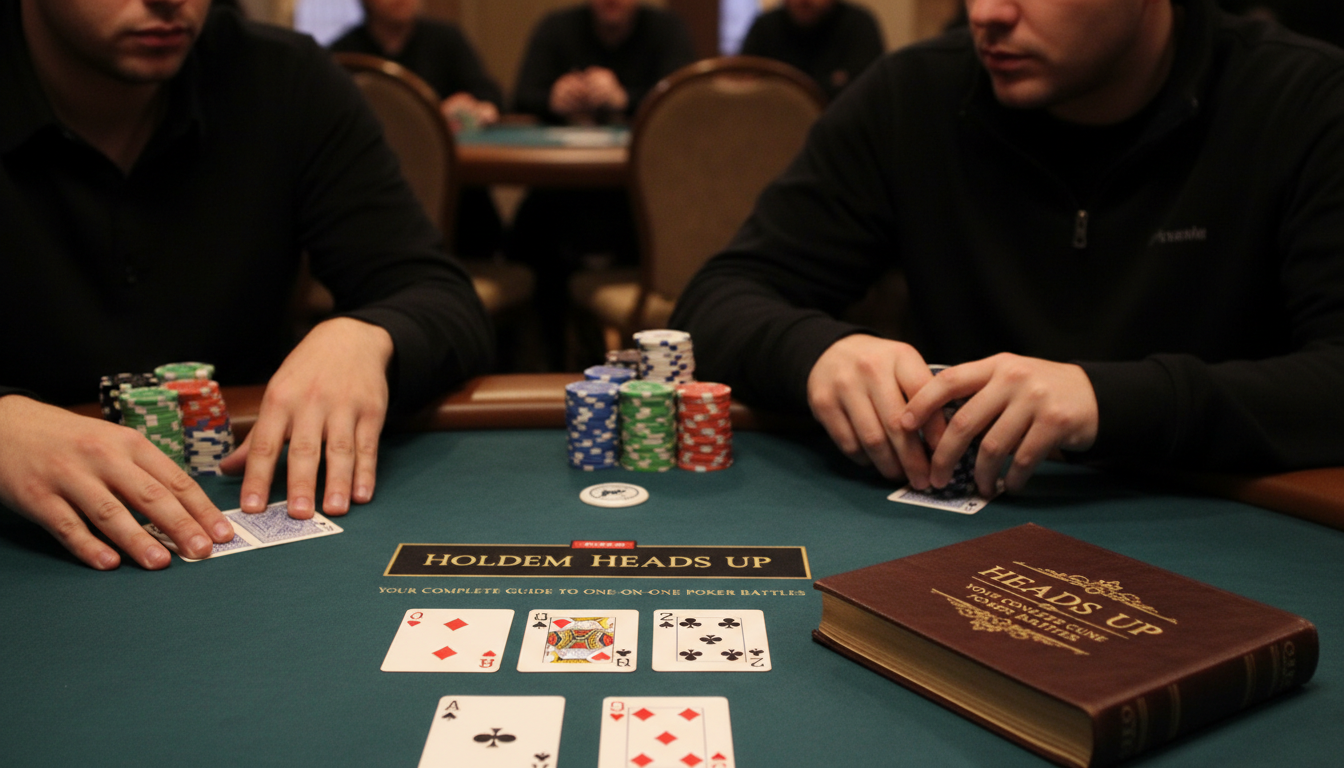
Holdem Heads Up is an intense poker format where exactly two players compete against each other in every single hand. This one-on-one setup requires you to adapt instantly to your single opponent. Players must blend smart aggression with calculated defensive strategies to secure a win. You must learn to transition smoothly from aggressive action to pot control.
A solid heads-up player never panics under pressure. Winning requires adjusting to your lone adversary step by step until your strategy exploits their unique weaknesses.
About This Article
This article provides an expert breakdown of 1v1 poker play. We cover standard online poker variants and casino table game formats. You will learn fundamental rules, blind setups, and advanced positional strategies. This guide ensures you avoid common beginner traps and maximize your profit potential.
Understanding the Basics of Heads Up Poker
Before diving into complex tactics, you must learn the fundamental mechanics. The game utilizes standard poker hand rankings and community cards.
The small table size drastically amplifies the importance of table position. When you only face one opponent, your playable cards increase significantly. You get to see more flops, defend your position, and make bold moves.
Definition of Heads Up Poker
In heads-up poker, exactly two players sit at the table. This setup appears naturally at tournament final tables when solely two competitors remain. It also exists in specialized cash games designed strictly for 1v1 action.
There are no other opponents to worry about. The action revolves entirely around the complex dynamic existing between you and your rival.
The Difference between Regular Poker and Heads Up Poker
Standard full-ring poker games feature up to nine or ten players. In regular poker, hands that look weak are often folded instantly.
This dynamic shifts drastically in one-on-one formats. Because you only compete against a single hand, marginal cards gain massive value. You must grasp the critical differences to survive.
- Starting Ranges: Hands like 8-6 suited or Jack-5 become playable.
- Action Frequency: You are involved in 100 percent of the hands dealt.
- Aggression: Passive play guarantees failure. Aggression is mandatory.
- Stack Depth: Often played with shallower stack depths, increasing action.
Heads-Up Rules for Texas Hold’em Poker
In heads-up poker, the deal and the blinds play a crucial role. The same standard rules dictate the best five-card hand winner. However, dealing order and blind positioning shift to ensure fair action flow.
How Heads-Up Works in Texas Hold’em
The rules adapt securely to the two-player structure. In standard games, the small blind sits to the direct left of the dealer. In a 1v1 match, this traditional setup reverses.
Proper Preflop Head-Up Blinds Setup
Setting up blinds confuses many beginners. Knowing who posts which blind is essential. The dealer button strictly dictates the action order.
The player with the dealer button always posts the small blind. Their single opponent posts the big blind. This rule maintains fairness across all betting streets.
The Small Blind and The Big Blind
As the dealer, you will post the small blind. Your opponent will post the big blind. The blinds rotate every single hand.
Every time you fold your small blind directly, you surrender free money. On the other hand, the big blind must aggressively protect its required investment.
How do blinds work in heads-up play?
Action order relies directly on these blind positions. The dealer acts first before the flop is revealed. After the flop is dealt, the big blind must act first on all remaining streets.
| Voting Street | First to Act | Last to Act (Advantage) |
|---|---|---|
| Pre-Flop | Small Blind (Dealer) | Big Blind |
| Post-Flop (Flop, Turn, River) | Big Blind | Small Blind (Dealer) |
How to Play Heads-Up Hold’em?
Many casinos feature a table game version of this format played directly against the house. In this casino game, proper wager sequencing is necessary. You try to build a better poker meld than the dealer.
Placing Initial Wagers
Before cards are distributed, players must submit equal wagers. Place these into the designated Ante and Odds boxes. These initial bets face table minimums and maximums.
After wagers are placed, the dealer distributes two cards face-down to each player. This includes the dealer themselves.
Quick Rules
Players receive multiple opportunities to raise before showdown. You can only raise your bet one single time during a hand. Choose your moment carefully.
Before the flop, you can raise up to 3x your original Ante bet. If you check, the dealer reveals the first three community cards.
The Turn and River
If you have not raised yet, you gain another chance. On the flop, you can bet 2x your Ante. If you wait for the turn or river, you can only bet 1x your Ante.
Always check if your hand is weak. Consider folding during the final voting rounds if you hold nothing. Throwing chips into a losing pot destroys bankroll management.
Scoring Rules
Once the river card falls, the showdown begins. Both participants reveal their hole cards. The highest five-card combination takes the primary pot.
Folding automatically surrenders all box wagers. Players never need to make additional play wagers if they choose to fold entirely.
Optional Bonus Wagers
Equal wagers in the Ante and Odds boxes unlock side bets. You may freely wager on optional bonuses provided by the casino. These create exciting jackpot potential.
You do not require bonus wagers to play regular hands. However, they spice up the action substantially.
Heads-Up Hold’em Payouts and Odds
This variant includes massive bad beat bonuses. You receive special payouts for losing with a straight or higher hand against the dealer.
The stronger your losing hand, the higher your bad beat return. Any final hand weaker than a straight results in a standard push on your Odds wager.
Trips Plus Pay Tables
The Trips bonus pays you purely based on absolute hand strength. You win this payout if you form a three-of-a-kind variation or better.
This side action enjoys roughly a 16 percent chance of hitting. It provides low risk matched with moderate monetary rewards.
House Edge Summary
Savvy players respect the math behind casino odds. The standard side pocket bonus carries a house edge near 3 percent. The Trips bonus holds slightly better mathematical value.
For every dollar wagered on terrible side bets, you lose roughly 0.64 cents over time. Play standard table options carefully to preserve capital.
Creating a Long-Term Heads-Up Poker Strategy
Mastering basic guidelines is easy enough. However, major tactical adjustments require constant practice. Your choices depend entirely on opponent tendencies.
You can learn more observing a rival in thirty minutes here than in days of full ring play. Pay strict attention to betting patterns. Notice precisely how they handle extreme pressure.
Level of Aggression
Aggression wins poker matches. This remains perfectly true when holding positional advantage. Leverage positional power to apply maximum stress.
You should play with open raises from the button position. Bluffing effectively gives a massive mathematical edge. Try a three big blind pre-flop raise to test rival strength.
What hands should you raise heads-up?
Open your ranges vastly compared to nine-player tables. The small blind can profitably raise an enormous spectrum of hands.
- Any pocket pair (except potentially deuces against tight players).
- Any hand containing an Ace or face card.
- Strong suited connectors and one-gappers.
- High suited cards from the big blind defensive position.
Optimal Preflop Ranges for Heads-Up Play
Sound preflop strategies lay the necessary foundation for victory. Employ active push-fold ranges as stacks shorten. Limit random limping unless intentionally planning traps.
Avoid folding prematurely before the flop. Connect with the board aggressively. Combine your poker skills into a relentlessly active style.
Adjusting Strategy Against Different Opponents
Always adapt your game plan based on the active flow. Identify whether your opponent behaves passively or aggressively.
Against loose players, trap them constantly. Allow them to push blindly into pots using worse hands. Fold fewer marginal holdings pre-flop against maniacs.
Conversely, punish conservative players relentlessly. Raise completely unguarded blinds. Steal the board when community cards show terrifying high combinations.
Psychological Factors & Reading Opponents
Expert competitors stay calm during critical stress points. In 1v1 battles, distinct strategic patterns emerge very quickly.
If someone bets rapidly after missing flops but pauses with strong hands, they present a readable tell. Notice when they fold to minimal raises. A couple of calculated jabs at their ego might force massive blunders.
Is Heads Up Poker Easy?
The pace certainly attracts newcomers, but winning consistently remains difficult. You face relentless pressure every single hand.
Failing to adapt causes rapid bankroll destruction. Beginners often fold too widely or stubbornly call huge bets prematurely. Regular practice fixes these expensive fundamental mistakes.
The Rules of Heads Up Poker in Texas Hold’em
The standard rules apply effortlessly across both cash games and tournaments. First place earns maximum payouts, avoiding complex payout ladder mathematics.
Because Independent Chip Model (ICM) pressures vanish completely, decisions become purely chip value oriented. You just try to stack the opponent quickly and efficiently.
What Experts Say About Holdem Heads Up
Leading professionals state that table position fully dictates win rates. Elite players note that the post-flop button advantage is the biggest edge naturally available across poker formats.
Experts consistently warn beginners against treating 1v1 play like standard nine-handed games. Professional coaches highlight that calling with wide ranges at incorrect times ruins win ratios. They advise aggressively analyzing blind steals and maintaining perfectly balanced defense structures.
Where Can I Play Heads Up Poker Online?
Finding a reliable action venue requires careful research. We investigate wagering rules and exclusion laws before recommending platforms.
Best Heads Up Real Money Online Poker Sites
Premium poker sites provide dedicated tables exclusively for duo competition. Many modern platforms cater heavily to 1v1 Sit-and-Go tournaments.
Some software lobbies instantly launch specialized cash games the moment two active players sit. Search for digital card rooms offering low rake and high traffic volume.
Where Can I Practice Heads Up Poker for Free?
Utilize social casino platforms to sharpen skills cheaply. Sweepstakes websites allow friendly practice matches using virtual gold tokens.
Testing aggressive strategies using fake currency helps calm early nerves. Once you properly crush free matches, confidence builds efficiently for real stakes.
Expert FAQ Segment
Who acts first before the flop?
The player holding the dealer button acts first before any community cards are shown. Because they act first, they must post the smaller initial blind wager.
Who holds the post-flop advantage?
The dealer button possesses massive post-flop leverage. The big blind must act first on the flop, turn, and river, allowing the dealer to gather crucial information before betting.
Should I play defensively in 1v1 action?
Pure defensive play guarantees a slow demise. Aggressive maneuvering remains strictly required. You must consistently battle for blinds and challenge weak community card boards.
What constitutes a standard casino preflop bet?
When playing against the house, making a strong 3x Ante setup is standard practice. You reserve this maneuver primarily for pairs and capable high cards. Weak hands should simply check through.
How quickly do blind rotation rules apply?
The button changes absolute custody after every single hand. You alternate seamlessly between acting pre-flop and holding post-flop advantage. This rotation keeps overall odds extremely fair.