
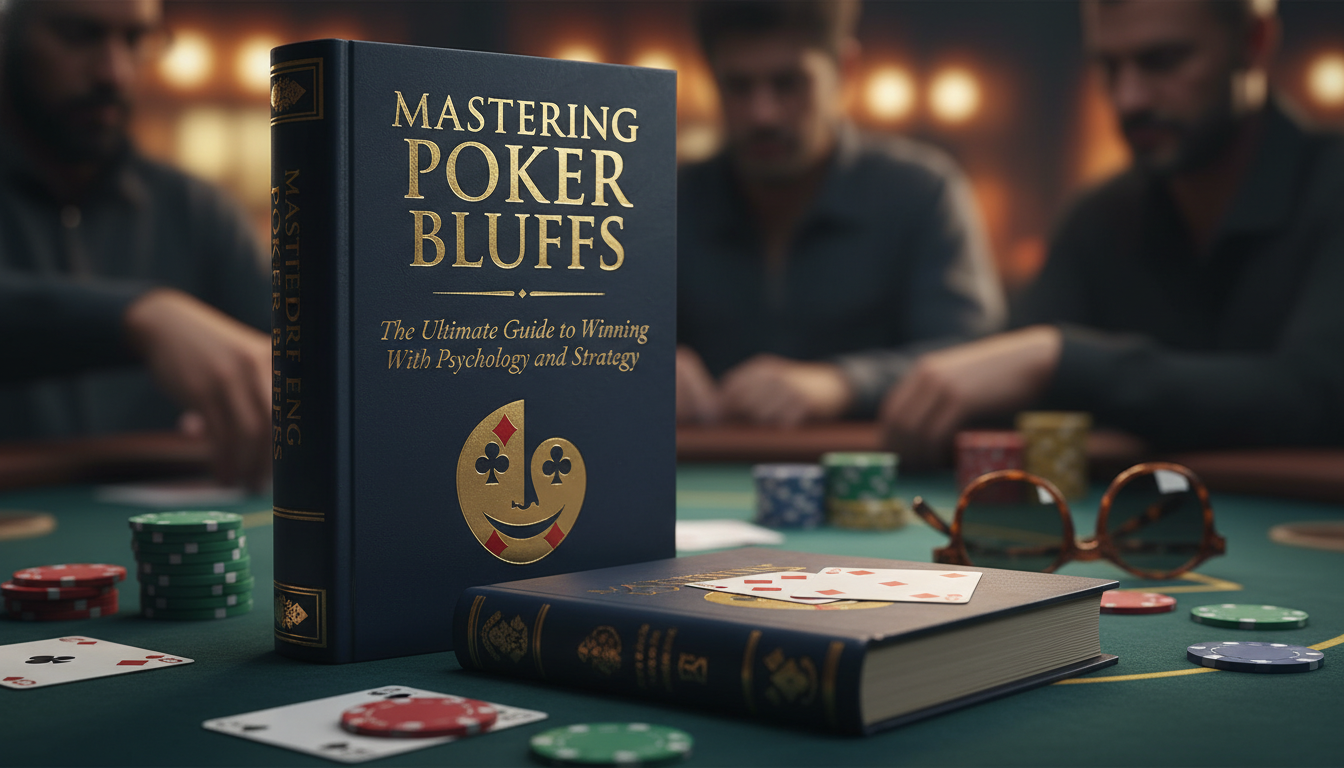
Mastering Poker Bluffs is an essential skill for any serious player looking to dominate the tables. This comprehensive guide breaks down the mechanics of bluffing, from understanding basic rules to advanced GTO strategies. You will learn how to read opponents, calculate pot odds, and utilize the bluff-to-value ratio properly. Whether you play cash games or tournaments, mastering this art transforms your gameplay. In the end, this guide will increase your overall win rate significantly.
Introduction to Poker Bluffing
Poker is one of the most played games in any casino. Deception is key in poker. It lets players pretend they have strong hands. Bluffing adds excitement to the game. It is also a very handy strategic tool. It helps players win money regularly.
Knowing when to bluff is essential. You must properly use this tool in your arsenal. The strength of a bluff relies heavily on your opponents. It is not just about your cards. You must understand the math and the psychology behind the game.
Understanding the Basics of Bluffing
The main point of bluffing is to trick your opponent. You want them to think you hold a better hand. Noticing tells helps you gain knowledge. Deception lets you act strong when you are weak. Good timing is key to bluffing well. You must learn your opponents fast.
Your story must make sense. If your hand range does not match your story, the facts do not add up. Your bluff will fail. As you gain more experience, you can try tougher bluffs. You can use psychology to boost your wins.
Understanding the Fundamentals of Bluffing
Bluffing works best when carefully planned. You must build a believable narrative. The key is crafting a coherent narrative from the flop to the river. You must act like you hold a strong made hand. Every move must look natural.
There are rules you should follow. You should avoid bluffing when you actually have a great hand. If you have the best cards, you should bet wisely. You want to win the biggest possible pot. Do not force them to fold early.
Core Principles for Successful Bluffing
Successful bluffing combining math and art. My experience shows that successful bluffs use precise timing. You must think strategically. You cannot just guess. Here are the core principles you need:
- Use correct bet sizing. Large bets signal huge strength or pure bluffs.
- Watch table dynamics. Adapt to how your table plays.
- Calculate pot odds. Ensure your bluff makes mathematical sense.
- Never overplay empty hands. Know when to walk away.
Building Your Bluffing Arsenal
You need a variety of bluffs in your toolkit. Knowing different tricks gives you an edge. You must understand board texture. You must know your table position. Pure bluffs work best with perfect timing. Semi-bluffs are safer and highly profitable.
A Pre-Flop Bluff With a Continuation Bet
A continuation bet is very powerful. Let us look at a simple scenario. You raise pre-flop with Queen-Jack. The flop misses you completely. Everyone checks to you. You fire a bet anyway. You represent a strong starting hand. Most opponents will fold if they missed the flop too.
Button Pressure Bluffs (Double Barreled)
Button pressure is critical. A double-barrel bluff means you bet the flop and turn. You get called on the flop, but you bet again. This puts extra pressure on opponents. It works well against careful players. Turn check-raises also pressure rivals heavily.
Bluffing From the Blinds
Playing from the blinds is tough. You act first on most streets. You lack position. You must proceed with caution. However, you can check-raise to represent big hands. This strategy pressures opponents. It gives you a backup plan if called.
Semi-Bluffs
A semi-bluff is very powerful. You bet with a hand that is weak right now. However, it has ways to improve later. Flush draws and open-ended straight draws are great examples. This action lowers your overall risk. Even if your bluff is called, you might hit the winning card.
Choosing the Right Spots to Bluff
Good bluffing spots are vital. Your story must check out. The board must give you believable strength. Letting someone think they trapped you is profitable. If it is a bad bluffing situation, avoid it. Good timing is key.
Small Pots Are the Easiest to Steal
Small pots attract little attention. They are easy to steal. If opponents show no interest, take the pot. A small raise gets the job done. You do not always need massive bets to win.
Multi-Way Pots
Bluffing into many players is highly risky. Avoid bluffing in multi-way pots. The chances of someone holding a strong hand are high. If you do not connect with the board, just fold. Save your chips for better opportunities.
Bluffing on Scare Cards
Scare cards bring fear. A scare card is any turn or river card that scares your opponent. A third flush card is a prime example. A four-liner to a straight works too. These cards help you tell a strong story. Use them to force players to fold.
The Role of Position and Table Dynamics
Position is everything in poker. When you act last in late position, you gain rich information. You see who checked or called. You see who gave up on the pot.
Table dynamics dictate your strategy. Play tight against calling stations. They never fully fold. Do not bluff short stacks at all. They will call you anyway. Focus on players who actually fold.
Understanding the Bluff-to-Value Ratio
The bluff-to-value ratio is critical. It balances your strong hands and pure bluffs. You must mix them correctly. It is vital for a Game Theory Optimal strategy.
Defining the Bluff-to-Value Ratio
This ratio sets how often you bluff versus how often you bet for value. A polarized range mixes strong hands and pure bluffs. It removes medium hands. The exact optimal ratio changes based on bet sizes.
The Relationship Between Bet Size and Bluffing Frequency
Bet size strictly dictates your bluffing frequency. Big bets mean you need to win more often. Thus, large river bets target strong hands. Smaller bets fold out medium hands easily. Smaller bets require a lower success rate. Bigger bets need more respect.
Understanding GTO Analysis and the Bluff-to-Value Ratio
GTO analysis aims for optimal decisions. It uses pure mathematical principles. Solvers explore vast decision spaces. They identify strictly optimal strategies. They simulate different bet sizes.
Bluff-to-value ratio and its role in GTO strategy
In GTO play, you bluff just enough to make opponents indifferent to calling. It balances your bets perfectly. You do not need perfect GTO play to win. However, basic awareness prevents massive errors. It helps you crush weak players.
The Significance of the River and Bluff-to-Value Ratios
The river street is vital. Big river bluffs require guts. You must understand pure perception. Large bets here polarize your range heavily. You either have the nuts or nothing. Plan this street carefully.
Calculating the Pot Odds
Pot odds guide your calling decisions. They are crucial for winning. Knowing pot odds helps you immensely over time. They lower your long term risk.
To find pot odds, divide the call amount by the final pot size. For example, your call is $50. The final pot size is $200. You divide 50 by 200. Your odds are 25%. Your call must succeed 25% of the time to simply break even.
| Bet Size (Fraction of Pot) | Your Call Amount | Required Success Rate |
|---|---|---|
| 1/2 Pot | Medium | 25% |
| 2/3 Pot | Large | 28.5% |
| Full Pot | Maximum | 33.3% |
Reading opponents: tells, patterns, and modern analytics
Reading people is widely important. Watch how they act at tables. Observe their raw bet sizes. Remember, big bets show extreme strength or blind weakness. Minimum Defense Frequency shows you how often to call. This metric stops you from being exploited.
How To Spot When A Poker Opponent Is Bluffing
Spotting a bluff is an amazing skill. Unusually large bets may signal weakness. Steady bets may signal real strength. If a betting pattern does not match the board, they are bluffing. Stay alert.
Identifying Your Opponents’ Tells
Live tells include eye contact and body posture. Online tells relate to mouse clicks and timing. Loose aggressive players bluff constantly. Tight players wait for huge cards.
Verbal Tells: What Opponents Say and How They Say It
Listen closely to spoken words. Voice changes signal internal stress. Saying “um” heavily means they might be bluffing. Small actions expose big secrets. Staring hard is a common trick. It hides a deeply weak hand.
Spotting Aggressive Betting Patterns
The importance of betting patterns is huge. Focus on players who raise constantly. Track their frequency from different positions. Mixing bluffs with true strong hands complicates things. Always map your opponent’s default behaviors.
Timing Tells Analysis
Time-based tells are highly reliable. Watch how fast they bet. Fast bets often indicate pure excitement. Long pauses usually mean complex calculations. They might be reviewing HUD data.
Managing Your Own Psychological State
Stay calm under immense pressure. Make calculated math-based decisions. Avoid purely emotional choices. Players make rational choices when they remain composed. Control your deep breathing. Maintain consistent betting speeds.
Adapting to Game Situations
You must adapt to survive. Change styles if the table shifts. If it is a bad bluffing situation, firmly avoid it. Find the best targets. Adjust your plan based on stack sizes.
Utilizing Bluffing in Tournaments Versus Cash Games
In cash games, stacks remain deeper. Players call lighter easily. You can afford to stretch bluffs. Tournaments operate differently. Short stacks flat out refuse to fold. Wait for bubble stages. Tournament players fold more near the bubble.
Examples Of Poker Bluffs
Let us review a clear play. You raise pre-flop with Ace-King. The flop is Eight-Eight-Three. Both players check. You make a continuation bet. Your opponents fold easily. This board helps nobody.
Another great scenario: The river completes a flush. You hold the bare Ace of that suit. You bet large. Your bluff is heavily believable. This stops better hands from calling.
Experience: a short personal anecdote
My experience shows that bluffs tell a story. Once, I checked the flop and turn with nothing. The river brought a huge scare card. I shoved all-in. My opponent nervously folded pair of Aces. Why? Because the story made perfect sense.
Drills to practice bluffing without heavy losses
Practice safely. Begin with simple small bluffs. Test ideas in low-stakes games. Use solvers like GTO+ to analyze specific hand ranges. You will slowly find strict patterns. You can practice without losing big money.
Ethical and responsible approach
Always maintain control. Never play beyond your bankroll. Bluffing causes massive swings. Play logically. If a game feels too tough, walk away. Healthy habits keep poker fun.
Poker Bluffing Tips
- Observe the first 30 minutes. Understand baseline habits.
- Identify calling stations. Never bluff them.
- Blend value bets and bluffs seamlessly.
- Focus strictly on stack ranges. Avoid desperate short stacks.
Final checklist before you bluff
- Are you in late position?
- Does your story match the board perfectly?
- Is the opponent capable of actually folding?
- Are the pot odds heavily in your favor?
- Is the bet sizing exactly right?
What Experts Say About Mastering Poker Bluffs
Top professionals deeply understand bluffing dynamics. Matt Affleck emphasizes that river bluffs must always tell a logical story. They never happen randomly. Jonathan Little urges players to note how turn and river cards shift board texture. Lexy Gavin-Mather points out that precise timing and table image matter most.
Conclusion: Bluff Smart, Not Reckless
Poker bluffing requires immense courage and sharp logic. You must deeply understand psychology and simple mathematics. Play tightly observe actions. Small mistakes cost chips.
Poker Bluffing Conclusion
Bluffing is not just blind trickery. It is leveraging high-level strategy to secure an edge. Do the work. Study the math. Good bluffing leads directly to massive poker victories. Keep improving, stay focused, and enjoy the game.
Mastering Poker Bluffs FAQ
What is a semi-bluff in poker?
A semi-bluff involves betting aggressively with a weak hand that has strong potential to improve. Flush draws and open-ended straight draws are the most common examples. It provides two ways to win the pot.
Why should I never bluff calling stations?
A calling station rarely folds. They call with mediocre hands just to see your cards. Bluffing them is a fast way to lose chips. Stick to value betting against them.
How do pot odds help my bluffing strategy?
Pot odds dictate risk. They tell you exactly how often an action must succeed. By balancing odds, you keep your plays highly profitable over the long term.
What is the Minimum Defense Frequency (MDF)?
MDF determines how often you mathematically must call. It prevents aggressive opponents from exploiting you easily. Using MDF ensures you catch enough bluffs.
How important is my table position when bluffing?
Position is incredibly important. Acting last allows you to gather maximum information. You see exactly who looks weak. The button is the best seat for bluffing.
What are GTO solvers?
GTO solvers are heavy computational tools. They calculate purely optimal math strategies. They teach players ideal bluff frequencies and perfect bet sizings.
Can I bluff in multi-way pots safely?
It is generally unwise. With multiple opponents, the chance that someone connected with the board skyrockets. Keep your bluffs to single opponent, heads-up hands.