
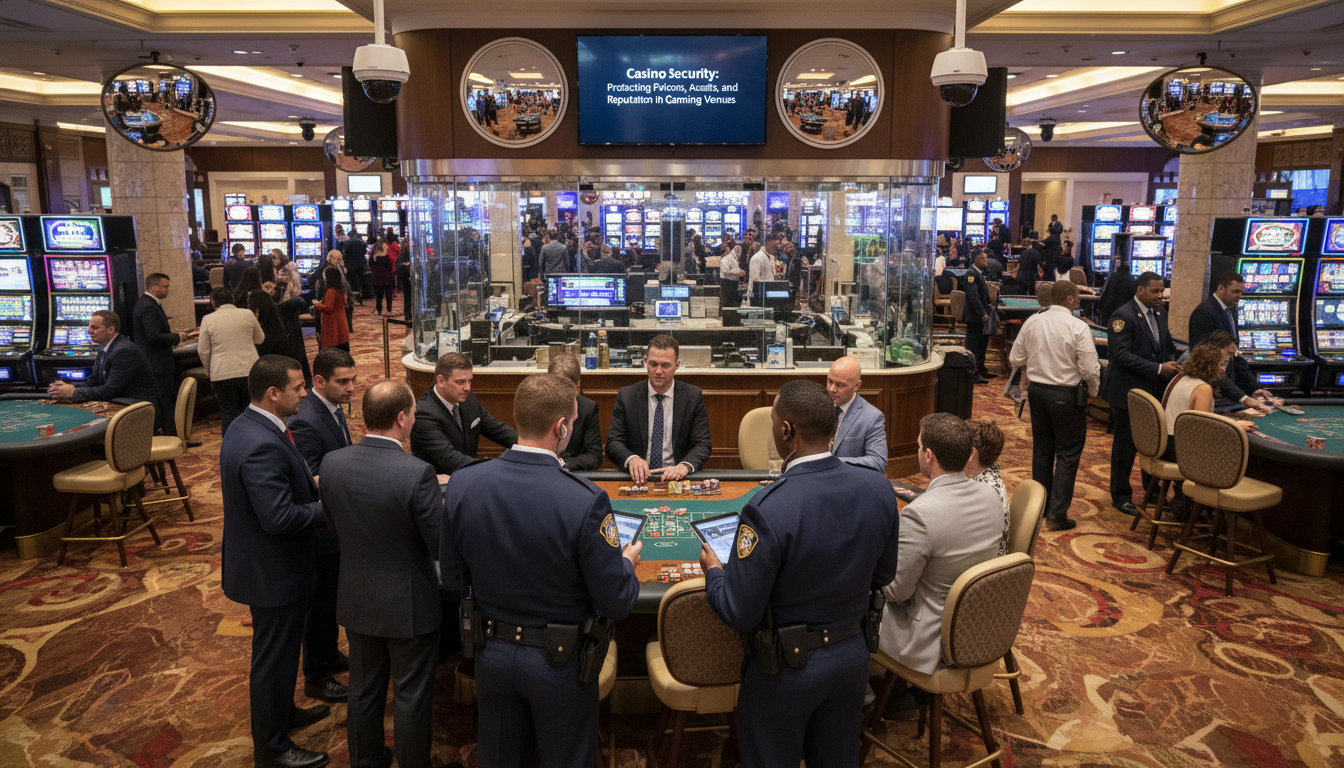
Casino security represents a sophisticated fusion of technology, personnel expertise, and regulatory compliance designed to protect patrons, assets, and the integrity of gaming operations. In today’s high-stakes gambling environments, security measures have evolved far beyond simple surveillance to encompass multi-layered protection systems that address physical threats, cybersecurity risks, and regulatory requirements simultaneously. Modern casinos deploy comprehensive security frameworks incorporating AI-powered surveillance, advanced access control, behavioral analytics, and specialized personnel trained to identify and mitigate risks before they escalate. With enormous sums of money flowing through gaming establishments daily, maintaining robust security protocols isn’t just about safeguarding assets—it’s essential for building customer trust, ensuring regulatory compliance, and preserving the casino’s reputation. As the industry continues to embrace digital transformation with online gaming platforms and mobile betting options, security strategies must adapt to address emerging threats while maintaining the seamless guest experience that keeps patrons returning.
Key Takeaways
- Modern casino security requires a layered approach combining physical protection, digital security, and regulatory compliance
- AI-powered surveillance systems now provide real-time threat detection by analyzing behavioral patterns across gaming floors
- Cybersecurity has become equally critical as physical security with the rise of online gambling platforms
- Comprehensive employee background checks and ongoing training are essential components of casino security protocols
- Effective casino security preserves both financial assets and the establishment’s reputation
- Regulatory compliance isn’t just about avoiding fines—it’s fundamental to maintaining gaming licenses
- Integrated security management systems enable coordination between physical security teams and digital monitoring
Table of Contents
- What Steps Do You Take to Protect Confidential Information About Customers and Employees?
- Association of Certified Gaming Compliance Specialists
- What Are the Key Components of a Comprehensive Casino Security System?
- Top Crisis Management Strategies
- Employee Training and Regulatory Violations Prevention
- Cybersecurity Protocols
- Customized Solutions from Assessment Through Implementation
- The Blind Spot That Could Be Putting Your Casino At Risk
- When Performing Security Checks on Guests, What Is the Most Important Thing You Look For?
- Casino Surveillance: Managing Image Retention
- Challenges of Security in Casinos
- What Do You Think Is the Most Important Skill for a Casino Security Officer to Have?
- Customer Safety Officers
- What Security Systems Are Put In Place at Casinos?
- What Does Casino Security Do?
- Casino Security Vulnerabilities
- Risk Assessment and Hazard Identification
- Adhering To Casino Security Compliance
- Money Laundering Prevention and Identity Theft Protection
- What Technologies Do Casinos Use to Prevent Crime?
- Casino Security Officer Education and Training Requirements
- Strategies for Ensuring Compliance in a Casino Environment
- Types of Security in Casinos
- Communication and Alert Systems
- Collaboration with Law Enforcement
- Boost Casino Security with Advanced Camera Systems
- Casino Security: How Do Casinos Keep Their Money Safe?
- Best Practices for Casino Security
- Integrating Technology for Better Security
- Team Training and Security Protocols
- Describe Your Approach to Monitoring Surveillance Cameras and Responding to Suspicious Activity
- Strengthening Casino Safety: Essential Measures for Guest and Employee Security
- Casino Security Compliance and Regulations You Need to Know About
- Protecting Player Data
- How Would You Handle an Argument Between Two Guests Who Are Gambling at the Same Table?
- What Casino Security Best Practices Should Modern Gaming Operations Implement?
- Understanding the Landscape of Gambling Facilities and Casinos
- Payment Security Measures Protect Financial Transactions
- How Do Casino Operators Prevent Fraud Across Gaming Operations?
- Describe Your Experience with Conducting Background Checks on Prospective Employees
- Casino Security Job Requirements
- Casino Security: How Casinos Protect Themselves and Their Patrons
- Emergency Response Protocols
- Physical Security Measures
- What Should You Look For in a Casino Security Officer Resume?
- Fraud Prevention and Detection
- Staying Informed on Legal Changes
- Data Protection Laws
- What Role Does Artificial Intelligence Play in Casino Security?
- Casino Security Interview Questions and Answers
- What Experts Say About Casino Security
- Frequently Asked Questions About Casino Security
What Steps Do You Take to Protect Confidential Information About Customers and Employees?
The protection of confidential information represents a critical component of modern casino security operations. Casinos handle enormous volumes of sensitive data including personally identifiable information, financial records, and behavioral patterns that require rigorous protection protocols. Security teams implement multiple layers of data security including advanced encryption technologies, role-based access controls, and comprehensive monitoring systems to safeguard this valuable information.
Security departments establish strict protocols for handling customer and employee information through:
- Implementation of end-to-end encryption for all sensitive data transmissions
- Multi-factor authentication requirements for accessing databases containing personal information
- Regular security audits to identify and address potential vulnerabilities
- Segregation of duties to limit comprehensive system access to any single individual
- Immediate deactivation procedures for terminated employees across all systems
“Many casinos underestimate the value of their data to cybercriminals. A single patron database can contain thousands of high-net-worth individuals whose financial information becomes incredibly valuable on the dark web. I recommend implementing data classification systems that identify information by sensitivity level and apply corresponding security measures. This granular approach allows casinos to focus resources where they’re most needed without overburdening less critical systems.” — David Honan, Certified Information Systems Security Professional (CISSP) and former casino security director
Security leaders also focus on employee awareness and training as a crucial line of defense. All staff members—not just security personnel—receive regular instruction on data protection protocols, phishing recognition, and proper handling of confidential information. The most effective security programs incorporate simulated phishing attempts and reward systems for employees who identify potential security threats before they escalate.
Association of Certified Gaming Compliance Specialists
The Association of Certified Gaming Compliance Specialists (ACGCS) represents a professional organization dedicated to elevating standards in casino security and regulatory compliance. This body certifies security professionals who demonstrate specialized expertise in gaming industry regulations, money laundering prevention, and operational security frameworks. Certification through ACGCS has become increasingly valuable as gaming regulations grow more complex across multiple jurisdictions.
ACGCS-certified security professionals typically possess:
| Requirement Category | Minimum Standard | Verification Method |
|---|---|---|
| Professional Experience | 3+ years in casino security | Employment verification |
| Regulatory Knowledge | Mastery of 5+ gaming jurisdictions | Written examination |
| Compliance Training | 80+ hours of specialized instruction | Certification documentation |
| Ethical Standards | Clean background check | Fingerprint verification |
Membership in this organization provides security professionals with access to evolving regulatory information, best practices in casino security, and networking opportunities with industry peers. Casinos increasingly seek ACGCS-certified personnel for leadership roles in security departments as gaming regulations become more stringent globally.
What Are the Key Components of a Comprehensive Casino Security System?
A truly comprehensive casino security system integrates multiple components that work synergistically to create layered protection across physical and digital domains. Modern security frameworks address vulnerabilities through:
Physical Security Infrastructure
- Surveillance Systems: High-definition cameras with AI-enhanced analytics covering all gaming tables, entrances/exits, cash handling areas, and parking facilities
- Access Control: Multi-factor authentication systems restricting access to sensitive areas including server rooms, cash cages, and surveillance centers
- Alarm Systems: Integrated intrusion detection, duress alarms, and environmental monitoring systems
- Patrol Systems: Scheduled and random patrol patterns using both uniformed and plainclothes officers
Personnel Expertise
- Trained Security Officers: Personnel certified in emergency response, conflict resolution, and gaming regulations
- Surveillance Experts: Specialists monitoring security feeds while identifying suspicious patterns
- Compliance Specialists: Professionals focused on maintaining regulatory adherence across all operations
- Investigation Teams: Experts trained to handle incident documentation and evidence collection
Digital Security Protocols
- Cybersecurity Frameworks: Protection against hacking, phishing, and malware attacks targeting digital infrastructure
- Data Encryption: End-to-end protection for sensitive patron and financial information
- Transaction Monitoring: Real-time analysis of financial activities for potential fraud patterns
- Blockchain Verification: Implementing distributed ledger technology for secure financial record-keeping
No single component provides complete protection—only the strategic integration of these elements creates the resilient security framework necessary for modern gaming environments. Security directors continuously assess and upgrade these systems to address evolving threats while maintaining the unobtrusive experience patrons expect in high-end gaming establishments.
Top Crisis Management Strategies
Casino security teams implement sophisticated crisis management frameworks designed to address potential threats ranging from medical emergencies to coordinated attacks. These strategies prioritize rapid response while minimizing disruption to ongoing operations. Leading casinos employ 24/7 crisis command centers where security personnel monitor developing situations and coordinate responses across multiple departments.
Core Crisis Management Framework
- Immediate Assessment: Security personnel quickly determine the nature, scope, and potential impact of the incident
- Resource Allocation: Deployment of appropriate personnel and equipment based on threat assessment
- Communication Protocol: Established channels for coordinating with first responders while maintaining internal communication
- Evacuation/Containment Procedures: Site-specific plans for isolating incidents or safely evacuating patrons
- After-Action Review: Comprehensive analysis to improve future response efforts
The most effective crisis management programs incorporate regular simulations and drills that prepare security teams for realistic scenarios. Casinos now implement tabletop exercises covering everything from active shooter situations to cybersecurity breaches, ensuring personnel can react instinctively during high-stress events. These programs emphasize clear communication protocols and chain-of-command structures that prevent confusion during critical incidents.
| Incident Type | Target Response Time | Current Industry Average |
|---|---|---|
| Medical Emergency | 2 minutes | 3.2 minutes |
| Suspicious Package | 90 seconds | 2.1 minutes |
| Disturbance/Fight | 60 seconds | 1.5 minutes |
| Active Threat | 30 seconds | 1.2 minutes |
“Most casinos design their crisis protocols around ‘what if’ scenarios, but the reality is that actual emergencies rarely follow predictable patterns. I recommend implementing flexible response frameworks with built-in decision trees that allow frontline staff to adapt to evolving situations. The most critical element I’ve seen across successful crisis responses is clear communication channels—when security teams know exactly who to contact and how information should flow, response times improve dramatically.” — Colonel (Ret.) James Alvarez, former Department of Homeland Security security advisor
Advanced casinos also integrate emergency notification systems that send real-time alerts to security personnel via wearable devices or mobile applications. These systems can automatically trigger specific protocols based on the type of incident reported, ensuring consistent responses to frequently encountered situations while allowing experienced officers discretion for unusual circumstances.
Employee Training and Regulatory Violations Prevention
Comprehensive employee training represents the frontline defense against security breaches and regulatory violations in casino environments. Leading establishments invest significantly in ongoing education programs that address both general security awareness and role-specific knowledge. These programs extend beyond security personnel to include all staff members who serve as additional eyes and ears across casino properties.
Key Elements of Effective Training Programs
- Initial Onboarding: In-depth security orientation covering company policies, regulatory requirements, and reporting procedures
- Regular Refreshers: Quarterly training sessions that reinforce critical knowledge and address emerging threats
- Scenario-Based Drills: Realistic simulations testing staff responses to various security situations
- Cross-Departmental Training: Understanding of how security impacts all casino operations beyond gaming areas
Preventing regulatory violations requires security teams to move beyond reactive measures to proactive monitoring systems. Casinos implement sophisticated audit tools that track compliance metrics across multiple departments, identifying potential issues before they escalate into violations. These systems monitor everything from minimum staffing requirements during gaming sessions to adherence to responsible gambling protocols.
| Violation Type | Potential Fines | Prevention Strategy |
|---|---|---|
| Insufficient Surveillance | $5,000-$50,000 per day | Automated camera health monitoring with real-time alerts |
| Cash Handling Errors | 2-5x discrepancy amount | Integrated cash tracking with RFID and dual verification |
| Responsible Gaming Failures | $10,000-$100,000 per incident | Behavioral recognition training with AI monitoring support |
| Underage Gambling | $25,000-$250,000 per incident | Biometric age verification systems at entry points |
Well-designed training programs emphasize positive reinforcement rather than pure compliance monitoring. Casinos that recognize staff members who identify potential security issues or prevent compliance violations create cultures of security awareness that extend beyond minimum requirements. This approach transforms security from a restrictive burden into a shared responsibility that enhances overall operational effectiveness.
Cybersecurity Protocols
The digital transformation of casino operations has elevated cybersecurity from an IT concern to a critical component of overall casino security. Modern gaming establishments operate complex digital ecosystems encompassing gaming platforms, financial systems, customer databases, and integrated resort services—all requiring sophisticated protection from increasingly sophisticated threats.
Essential Cybersecurity Framework Components
- Network Segmentation: Isolation of critical systems to contain potential breaches
- Advanced Threat Detection: AI-powered systems analyzing network traffic for anomalous patterns
- Regular Penetration Testing: Proactive identification of vulnerabilities through ethical hacking
- Secure Software Development: Implementation of security standards throughout application development cycles
- Incident Response Planning: Established protocols for containing breaches and minimizing damage
Casinos face unique cybersecurity challenges due to the combination of high transaction volumes, regulatory requirements, and complex integration of legacy and modern systems. Security teams must protect multiple attack surfaces including:
- Online gaming platforms vulnerable to DDoS attacks and account takeovers
- Payment processing systems targeted for financial data
- IoT devices throughout properties that create new entry points
- Loyalty program databases containing valuable customer information
- Integrated resort management systems connecting multiple guest services
The implementation of Zero Trust security frameworks has gained traction across the industry, requiring continuous verification rather than assuming trust within the network perimeter. This approach significantly reduces vulnerability to insider threats and compromised credentials—a growing concern in casino environments where employee turnover can be high.
“Casinos often make the mistake of focusing cybersecurity efforts exclusively on perimeter defense—the digital equivalent of a moat around a castle. But modern threats penetrate defenses through sophisticated social engineering and fileless malware. My recommendation is to implement behavior-based monitoring that establishes baselines for normal activity across all systems, then alerts security teams to subtle deviations. It’s far more effective to detect the ‘canary in the coal mine’ of unusual activity than to wait for a massive breach to become obvious.” — Dr. Evelyn Reed, Chief Information Security Officer with 15 years in casino cybersecurity
Security leaders also emphasize the importance of continuous vendor risk management as third-party systems become increasingly integrated into casino operations. Contracts with technology providers now routinely include rigorous security requirements and ongoing compliance verification to prevent supply-chain attacks that could compromise the entire security ecosystem.
Customized Solutions from Assessment Through Implementation
One-size-fits-all security approaches fail in the complex environments of modern casino operations. Leading security vendors now provide tailored solutions developed through comprehensive assessments of specific casino properties, addressing unique challenges presented by architectural features, gaming mix, footprint size, and local regulatory environments.
Tailored Security Implementation Process
- Initial Assessment: Detailed analysis of physical layout, operational flow, and regulatory requirements
- Risk Prioritization: Identification of most vulnerable areas based on historical data and threat modeling
- Solution Design: Development of integrated security strategy addressing identified weaknesses
- Phased Implementation: Strategic rollout minimizing disruption to casino operations
- Continuous Optimization: Ongoing refinement based on system performance and evolving threats
Customized solutions consider specific casino characteristics such as whether the property is land-based or riverboat, urban or remote location, integrated resort with multiple amenities, or standalone gaming facility. For instance, a Las Vegas Strip resort requires different security protocols than a regional casino due to factors like tourist density, high-profile visitor traffic, and complex spatial layouts across multiple connected buildings.
| Property Type | Primary Security Focus | Tailored Solutions |
|---|---|---|
| Urban Casino Resort | Crowd management & celebrity protection | Advanced facial recognition with VIP alerts |
| Riverboat Casino | Environmental vulnerabilities | Water-level monitoring & emergency evacuation protocols |
| Regional Casino | Local community concerns | Integrating with municipal emergency services |
| High Limit Salon | Targeted protection for high rollers | Dedicated access controls & private surveillance zones |
The most effective security implementations respect operational realities of casino environments. Security technology that disrupts guest experience or creates bottlenecks at popular gaming areas ultimately becomes circumvented or deactivated by frustrated staff. Successful implementations balance security needs with maintaining the seamless guest experience that keeps patrons returning.
The Blind Spot That Could Be Putting Your Casino At Risk
Despite sophisticated security systems, casinos consistently overlook one critical vulnerability: the transition between physical security domains. This blind spot occurs at points where patrons move between areas with different security protocols—who may pass from the main gaming floor to restaurants, spas, or hotel accommodations without additional screening.
Traditional surveillance systems focus heavily on gaming areas, yet significant incidents increasingly occur in non-gaming sections of integrated casino resorts. Criminals have learned to exploit this gap by:
- Initiating conflicts in restaurant areas where security presence may be lighter
- Using retail shops as cover for surveillance activities
- Transporting prohibited items through service corridors that avoid gaming floor checkpoints
- Exploiting varying lighting conditions between brightly lit gaming areas and dimly lit entertainment venues
Security teams combat this by implementing cross-property monitoring systems that track patron movements through integrated surveillance networks. Advanced implementations use anonymized guest tracking (with appropriate privacy safeguards) to identify patterns indicating potential security threats moving between venues. This requires coordination between departments that traditionally operated in silos—gaming security, hotel operations, retail management, and entertainment venues.
Additionally, the rise of mobile gaming platforms creates another significant blind spot as patrons potentially transition between physical and digital gaming environments. Security teams must monitor for coordinated attacks targeting both physical property and online platforms simultaneously.
Addressing this critical vulnerability requires more than technology—security teams must foster interdepartmental communication cultures where staff across all properties feel responsibility for overall security rather than focusing narrowly on their specific operational areas.
When Performing Security Checks on Guests, What Is the Most Important Thing You Look For?
Professional casino security personnel approach guest interactions with a multi-faceted assessment methodology rather than focusing on any single indicator. The most experienced officers prioritize behavioral cues that suggest potential security concerns while maintaining the guest-focused approach essential to casino environments.
Critical Behavioral Indicators
- Incongruent Behavior: Discrepancies between stated purpose of visit and observed actions
- Environmental Awareness: How guests orient themselves to security elements and personnel positions
- Physiological Signs: Unusual sweating, pupil dilation, or micro-expressions indicating stress
- Group Dynamics: How individuals interact within groups to identify potential team-based approaches
- Pattern Recognition: Repeated patterns suggesting surveillance or testing of security protocols
Modern security professionals emphasize observation techniques rather than profiling based on appearance or demographics. Security teams train to identify deviations from baseline behavior patterns within the casino environment—individuals who seem overly interested in surveillance systems, make repeated trips to restrooms with no apparent need, or consistently avoid high-traffic areas where normal guests would congregate.
| Stage | Assessment Focus | Action Threshold |
|---|---|---|
| Initial Approach | Reaction to security presence | Unnatural avoidance or excessive focus |
| Interaction | Consistency of responses | Contradictions between statements and actions |
| Extended Observation | Pattern development | Repetitive movements or testing behavior |
| Decision Point | Threat probability assessment | Two or more corroborating indicators |
Crucially, security officers balance vigilance with hospitality—the goal isn’t to create a fortress-like atmosphere but to maintain security while preserving the welcoming guest experience that defines successful casinos. This requires significant training in communication skills that allow security personnel to conduct assessments without creating discomfort for guests simply enjoying their visit.
Casino Surveillance: Managing Image Retention
Surveillance footage represents one of the casino industry’s most valuable security assets, but managing this data presents complex challenges. Regulatory requirements vary significantly by jurisdiction regarding minimum retention periods, with some gaming commissions mandating 7 days while others require 30 days or more of continuously recorded footage. Advanced surveillance systems now incorporate intelligent retention protocols that balance regulatory compliance with practical storage limitations.
Modern Surveillance Retention Framework
- Event-Based Retention: Automatically extends retention periods for footage associated with security incidents
- Multi-Tier Storage: Moves older footage to more economical storage solutions while maintaining accessibility
- Cloud Integration: Provides off-site backup while enabling remote access to authorized personnel
- Automated Compliance Checking: Verifies retention periods against regulatory requirements
Casinos increasingly implement AI-powered content management that intelligently identifies and prioritizes significant events while limiting long-term storage of routine activity. These systems automatically flag footage containing specific parameters like identification of banned individuals, unusual cash handling, or prolonged loitering in sensitive areas.
| Jurisdiction | Minimum Retention | Special Requirements |
|---|---|---|
| Nevada Gaming Commission | 14 days | Continuous recording; no gaps |
| New Jersey DGE | 30 days | Minimum resolution 1080P |
| Macao Gaming Inspection | 90 days | Timestamp verification system |
| UK Gambling Commission | 6 months | Encrypted storage protocols |
Security teams also manage the growing challenge of integrating facial recognition and behavioral analytics data, which often requires separate retention policies due to privacy considerations. Legal departments work closely with security personnel to ensure all surveillance practices comply with evolving privacy laws while maintaining necessary security capabilities.
“Casinos frequently overlook the evidentiary chain when managing surveillance footage. It doesn’t matter how well you record the incident if you can’t prove in court that the evidence hasn’t been tampered with. I recommend implementing blockchain verification for your surveillance data—each frame gets a cryptographic hash that creates an immutable record of authenticity. This relatively simple addition significantly strengthens the evidentiary value of your footage during legal proceedings and investigations.” — Michael Donovan, Former FBI Digital Evidence Specialist
As storage technologies evolve, forward-thinking casinos move beyond simple time-based retention to implement intelligent systems that automatically identify and preserve footage containing significant events while efficiently managing storage resources for routine operations.
Challenges of Security in Casinos
Casino security professionals navigate a unique set of challenges that differentiate their work from other security environments. These challenges stem from the combination of high-value assets, 24/7 operations, alcohol service, and entertainment-focused atmospheres that create complex security environments requiring specialized approaches.
Top Five Security Challenges Facing Modern Casinos
- Alcohol and Impairment: Managing security with a significant portion of patrons under the influence of alcohol or other substances
- High Cash Volume: Protecting enormous amounts of physical currency in environments designed for entertainment rather than security
- Crowd Density: Monitoring large numbers of people in often congested spaces with multiple access points
- Balance of Security and Experience: Implementing robust security without creating fortress-like atmospheres that deter guests
- Rapidly Evolving Threats: Adapting security protocols to address emerging threats including cyber attacks and sophisticated cheating methods
These challenges create a security environment where traditional approaches often fall short. For instance, standard access control systems must be modified to accommodate the fluid movement patterns of casino guests while still protecting high-value areas. The open design that creates welcoming casino atmospheres also presents significant security vulnerabilities that require innovative solutions.
Additional challenges include:
- Coordinating security across multiple operational departments with different priorities
- Maintaining vigilance during long shifts in environments with artificial lighting and noise
- Identifying insider threats when employees have legitimate access to sensitive areas
- Adapting to rapidly changing regulatory requirements across multiple jurisdictions
- Managing security for integrated resorts with diverse operational components
Security teams address these challenges through layered approaches that combine technology, personnel expertise, and operational protocols specifically designed for gaming environments. The most effective security programs recognize these unique challenges and design protocols that work with the operational realities of casinos rather than imposing generic security measures that become impractical in actual use.
What Do You Think Is the Most Important Skill for a Casino Security Officer to Have?
While technical knowledge and physical readiness remain important, the most critical skill for modern casino security officers is situational awareness—specifically, the ability to simultaneously monitor multiple problem spaces while maintaining awareness of the broader operational context. Security officers who excel at this skill can identify subtle behavioral anomalies in crowded casino environments where significant distractions exist.
Key Aspects of Situational Awareness for Casino Security
- Baseline Recognition: Understanding normal behavioral patterns to identify deviations
- Selective Focus: Ability to shift attention rapidly between focal points without losing broader awareness
- Environmental Memory: Retaining knowledge of spatial relationships throughout complex properties
- Pattern Prediction: Anticipating where security issues are likely to emerge before they happen
- Cognitive Stamina: Maintaining high awareness levels during extended shifts in challenging environments
This skill differs from simple vigilance through its emphasis on contextual understanding. A security officer with strong situational awareness doesn’t just notice something unusual—they understand why it’s unusual within the specific context of casino operations at that moment. They recognize that a patron standing near a high limit table may be a legitimate high roller rather than a potential threat.
| Development Stage | Training Focus | Assessment Method |
|---|---|---|
| Novice | Element recognition | Identifying specific threats in controlled scenarios |
| Intermediate | Pattern recognition | Spotting deviations in simulated casino environments |
| Advanced | Contextual prediction | Anticipating issues before they develop |
| Expert | Simultaneous space management | Managing multiple concurrent security concerns |
Casinos increasingly incorporate situational awareness training with simulated environments that replicate the challenging visual and auditory conditions of active gaming floors. These simulations test officers’ ability to maintain awareness while processing multiple stimuli including flashing lights, competing noise sources, and complex movement patterns of patrons.
Security leaders emphasize that this skill can be developed through deliberate practice and structured training, making it possible for motivated officers to significantly improve their effectiveness regardless of initial aptitude. Programs that incorporate cognitive exercises alongside physical training produce security professionals capable of operating effectively in the demanding environments of modern casino operations.
Customer Safety Officers
Beyond traditional security responsibilities, many leading casinos now employ dedicated Customer Safety Officers focused specifically on patron well-being rather than asset protection. These specialized security personnel represent a strategic shift toward proactive safety management that prevents incidents rather than simply responding to them.
Customer Safety Officer Responsibilities
- Monitoring for signs of distress or medical emergencies among patrons
- Providing assistance to guests experiencing disorientation or intoxication
- Tracking children or vulnerable adults separated from groups
- Identifying and addressing environmental hazards before they cause incidents
- Coordinating with medical personnel for emergency response
- Supporting responsible gambling initiatives through observation techniques
Rather than wearing traditional security uniforms, Customer Safety Officers often wear distinctive but non-threatening attire that identifies them as helpful resources rather than enforcement personnel. This approach encourages patrons to seek assistance proactively rather than avoiding contact with security personnel.
| Indicator | With Customer Safety Officers | Without Customer Safety Officers |
|---|---|---|
| Medical Response Time | 1.8 minutes | 4.3 minutes |
| Lost Child Resolution | 5.2 minutes | 12.7 minutes |
| Responsible Gambling Interventions | 3.1x higher | Baseline |
| Guest Satisfaction Scores | +22 points | Baseline |
The customer safety role represents a maturation of casino security approaches—from purely protective functions to proactive stewardship of the entire guest experience. This evolution reflects industry recognition that security and hospitality are complementary rather than competing priorities when properly integrated.
What Security Systems Are Put In Place at Casinos?
Modern casinos deploy complex security ecosystems that integrate multiple specialized systems working in concert to monitor and protect gaming environments. These layered systems address different security requirements while creating overlapping protection zones that compensate for individual system limitations.
Core Security System Components in Modern Casinos
- Integrated Surveillance Network: High-definition cameras with facial recognition capabilities covering every operational area
- Access Control Systems: Biometric and multi-factor authentication for restricted areas
- Cash Tracking Systems: RFID technology monitoring currency and chip movement
- Behavioral Analytics: AI-powered systems identifying potential threats based on movement patterns
- Communication Networks: Secure channels connecting security personnel across multiple locations
- Environmental Monitoring: Systems detecting unusual conditions that could indicate security threats
- Incident Reporting Platforms: Digital tools streamlining documentation and analysis of security events
Advanced implementations integrate these systems through centralized command centers where security personnel monitor coordinated feeds and respond to alerts with appropriate protocols. The most sophisticated systems now incorporate predictive capabilities that identify potential security concerns based on historical patterns and real-time data analysis.
| System Component | Small Casino (1-2 tables) | Mid-Sized Casino (50+ tables) | Integrated Resort (200+ tables) |
|---|---|---|---|
| Surveillance Coverage | Basic camera system | AI-enhanced monitoring | Behavioral analytics prediction |
| Access Control | Keycard system | Biometric verification | Multi-factor behavioral authentication |
| Cash Tracking | Manual reconciliation | RFID chip monitoring | Real-time transaction analytics |
| Incident Response | Basic reporting | Digital documentation | Predictive response protocol activation |
System integration represents a critical advancement, allowing alerts from one system to automatically activate protocols across multiple security domains. For example, a suspicious behavior detection in surveillance footage can simultaneously trigger focused camera monitoring, prepare access control systems to restrict movement, and alert nearby security personnel—all within seconds.
What Does Casino Security Do?
Casino security encompasses a broad range of responsibilities that extend far beyond traditional asset protection. Modern security teams operate as comprehensive risk management organizations focused on preserving the integrity of the gaming environment while protecting all stakeholders—patrons, employees, assets, and reputation.
Core Functions of Casino Security
- Patron Protection: Ensuring physical safety of all guests through monitoring, rapid response, and preventive measures
- Asset Security: Protecting cash, chips, and financial instruments through physical and technological means
- Regulatory Compliance: Maintaining adherence to gaming regulations through monitoring and documentation
- Game Integrity: Preventing cheating and fraud through surveillance and procedural controls
- Risk Management: Identifying and mitigating potential threats before they escalate into incidents
- Crisis Response: Leading coordinated responses to emergency situations following established protocols
- Responsible Gaming: Supporting initiatives that promote healthy gambling behaviors among patrons
Casino security operates through multiple specialized units that work in coordination:
- Gaming Surveillance: Monitoring tables and machines for cheating or disruption
- Access Control: Managing entry to restricted areas and sensitive operations
- Floor Security: Uniformed personnel patrolling public areas to maintain order
- Investigations: Examining incidents and gathering evidence for potential legal action
- Compliance: Ensuring operations meet regulatory requirements
- Crisis Management: Specialized teams trained for emergency response
Unlike traditional security environments, casino security must balance protection objectives with maintaining the welcoming atmospheres that define successful gaming establishments. This requires sophisticated approaches that protect assets without creating fortress-like environments that deter guests. Security protocols are designed to operate unobtrusively, with guests often unaware of significant security measures until needed during actual incidents.
Casino Security Vulnerabilities
Despite sophisticated security measures, casinos face inherent vulnerabilities that require constant attention and mitigation strategies. Understanding these weaknesses represents the first step toward implementing effective countermeasures that address the most critical security concerns.
Top Vulnerable Areas in Casino Operations
- Parking Facilities: Complex layouts provide cover for criminal activity targeting jackpot winners
- Blind Spots in Layout: Architectural features creating areas outside surveillance coverage
- Supply Chain Risks: Vendors and contractors with access to restricted areas
- Employee Credentials: Insider threats exploiting legitimate access privileges
- Mobile Technology: Smartphones enabling remote cheating and fraud techniques
- Crowd Density: Challenges monitoring individual behavior in congested areas
- Shift Transitions: Brief periods of reduced coverage during security personnel changes
Casinos traditionally address these vulnerabilities through layered protection strategies that compensate for weaknesses in any single security measure. For example, parking facilities with positional challenges receive enhanced patrols, additional lighting, and proximity sensors to detect prolonged loitering that could indicate surveillance activity.
| Vulnerability | Risk Level | Common Mitigation Strategies |
|---|---|---|
| Parking Facilities | High | Vehicle tracking, enhanced patrols, remote escort services |
| Blind Spots | Medium | Strategic camera placement, regular facility assessments |
| Insider Threats | Critical | Behavioral monitoring, access restrictions, dual controls |
| Mobile Technology | High | Signal monitoring, education, policy enforcement |
Modern security approaches have shifted toward dynamic vulnerability management rather than static protection models. Advanced casinos implement continuous assessment protocols that identify new vulnerabilities as operational patterns change, rather than relying solely on periodic security audits. This proactive approach detects emerging threats before they can be exploited by sophisticated threat actors.
“The most dangerous vulnerability isn’t the one you know about—it’s the one you don’t realize exists because your threat model hasn’t evolved with criminal tactics. I recommend implementing ‘red team’ exercises where external experts actively try to breach your security systems using current attack methods. The insights from these controlled penetration attempts are invaluable for addressing blind spots before criminals discover them.” — Sarah Chen, Former CIA Counterintelligence Officer
Risk Assessment and Hazard Identification
Comprehensive risk assessment represents the foundation of effective casino security programs. Modern security teams employ structured methodologies to identify, analyze, and prioritize potential threats based on likelihood and potential impact to casino operations.
Risk Assessment Framework
- Asset Identification: Cataloging critical resources requiring protection
- Threat Assessment: Identifying potential threat actors and their capabilities
- Vulnerability Analysis: Evaluating weaknesses that could be exploited
- Likelihood Determination: Estimating probability of specific threats materializing
- Impact Assessment: Analyzing consequences if threats are realized
- Risk Prioritization: Ranking risks to allocate security resources effectively
Casinos conduct risk assessments using both quantitative data (historical incident reports, financial impact models) and qualitative assessment (expert judgment, scenario planning). The most effective assessments engage multiple stakeholders including operations personnel, compliance officers, and external security experts to ensure comprehensive perspective.
| Risk Scenario | Likelihood | Impact | Risk Rating |
|---|---|---|---|
| High-value patron robbery | Medium | Critical | High |
| Payment system breach | High | Critical | Critical |
| Medical emergency | High | Medium | Medium |
| Structural fire | Low | Critical | High |
Leading casinos implement continuous risk assessment rather than periodic reviews, incorporating real-time data from surveillance systems, incident reports, and external threat intelligence feeds. This dynamic approach allows security teams to rapidly adjust protocols in response to emerging threats while maintaining optimal resource allocation across all security domains.
Adhering To Casino Security Compliance
Regulatory compliance represents a fundamental component of casino security operations rather than an additional responsibility. Gaming regulations establish minimum security standards that form the baseline for all security programs, with leading casinos exceeding these requirements to maintain competitive advantage and brand reputation.
Key Compliance Focus Areas
- Surveillance Requirements: Mandated camera coverage, retention periods, and monitoring protocols
- Access Controls: Regulations governing restricted areas and personnel access
- Cash Handling: Procedures for managing and securing large volumes of currency
- Patron Identification: Age verification and responsible gaming documentation requirements
- Incident Reporting: Mandated reporting of specific security events to regulatory authorities
- Employee Screening: Background checks and ongoing monitoring requirements
Casino security teams maintain compliance through:
- Regular internal audits verifying adherence to regulatory standards
- Dedicated compliance personnel focused exclusively on regulatory requirements
- Automated monitoring systems that alert when protocols deviate
- Comprehensive documentation practices supporting all security activities
- Continuous training programs ensuring all staff understand regulatory expectations
Non-compliance can result in significant consequences including fines, operational restrictions, or even license revocation. Security leaders emphasize that compliance should be viewed as the starting point for security programs rather than the end goal, with progressive casinos implementing security measures that exceed minimum regulatory requirements.
| Violation Type | Potential Fine | Additional Consequences |
|---|---|---|
| Surveillance gap | $5,000-$50,000/day | License suspension |
| Money laundering | 2-5x transaction amount | Major license review |
| Underage gambling | $25,000-$250,000/incident | Revocation possibility |
| Cash handling error | Recovery + $1,000-$10,000 | Enhanced monitoring |
Forward-thinking casinos implement compliance management systems that integrate regulatory requirements into daily security operations, transforming compliance from a bureaucratic burden to an integral component of security excellence. This strategic approach creates security programs that simultaneously meet regulatory requirements while enhancing overall protection capabilities.
Money Laundering Prevention and Identity Theft Protection
Casinos represent high-risk environments for money laundering activities due to the large volumes of cash handled daily, making anti-money laundering (AML) compliance a critical security priority. Effective programs integrate sophisticated transaction monitoring with staff training to detect and prevent suspicious activity while protecting customer identities from theft.
Core Money Laundering Prevention Strategies
- Transaction Monitoring: Systems flagging unusual patterns like rapid cycling of funds
- Customer Due Diligence: Verification of high-value patrons through identification and background checks
- Employee Training: Staff education on recognizing potential money laundering indicators
- Reporting Protocols: Clear procedures for submitting suspicious activity reports
- Risk-Based Approach: Focusing enhanced scrutiny on higher-risk activities and customers
Modern casinos implement layered identity protection systems including biometric verification, document authenticity checks, and behavioral analysis to prevent identity theft while maintaining efficient patron processing. These systems balance security needs with guest experience expectations through seamless integration into existing entry and transaction processes.
| Red Flag | Detection Method | Prevention Strategy |
|---|---|---|
| Structured transactions | Transaction pattern analysis | Reporting thresholds with manual review |
| Mismatched ID | Document verification system | Biometric identity confirmation |
| Unusual gaming patterns | Game-specific analytics | Surveillance verification protocols |
| Refusal of direct transfer | Cashier transaction monitoring | Alternative payment education |
The most effective money laundering prevention programs integrate security, compliance, and operational functions rather than maintaining siloed approaches. By training all employees to recognize potential indicators and providing clear reporting pathways, casinos create security cultures that proactively identify and address suspicious activities before they escalate into regulatory violations.
What Technologies Do Casinos Use to Prevent Crime?
Casinos deploy a sophisticated array of technologies that work synergistically to prevent crime and maintain secure gaming environments. These technologies have evolved considerably from basic surveillance systems to integrated security ecosystems incorporating artificial intelligence, biometric verification, and real-time analytics.
Leading Crime Prevention Technologies
- AI-Powered Surveillance: Systems that analyze behavior patterns to identify potential threats
- Facial Recognition: Technology identifying banned individuals or known cheats upon entry
- RFID Tracking: Monitoring of chips and cash movement throughout gaming areas
- Gun Detection Systems: AI analyzing camera feeds to identify weapons in real time
- Cyber Threat Monitoring: Protection against digital attacks targeting financial systems
- Behavioral Analytics: Identifying suspicious patterns in gaming activity or movements
- Biometric Access Control: Restricting sensitive areas through fingerprint or retina scanning
These technologies work together to create overlapping protection zones that significantly reduce successful criminal attempts. For instance, RFID tracking of high-value chips combined with behavioral analysis of player actions creates layered protection that deters sophisticated cheating attempts previously difficult to detect.
| Technology | Reduction in Related Incidents | Implementation Cost |
|---|---|---|
| Facial Recognition | 72% | High |
| RFID Tracking | 58% | Medium-High |
| AI Surveillance | 63% | Medium |
| Gun Detection | 45% | Medium |
Security technology investments focus not only on prevention but also on providing evidentiary quality data that supports law enforcement during post-incident investigations. Modern systems automatically timestamp, verify, and catalog security footage to maintain its legal admissibility while streamlining the investigative process.
The most successful implementations integrate technologies into existing operational flows rather than disrupting guest experiences. This approach recognizes that security systems succeed when they operate unobtrusively while providing maximum protection to both patrons and the establishment.
Casino Security Officer Education and Training Requirements
Modern casino security officers require specialized education and training that address the unique challenges of gaming environments. While minimum requirements vary by jurisdiction, the industry has established recognized standards that ensure security personnel possess the knowledge and skills necessary for effective protection.
Core Requirements for Casino Security Officers
- Basic Qualifications: High school diploma or equivalent, valid security license where required
- Background Checks: Comprehensive screening including criminal, credit, and employment history
- Physical Requirements: Ability to perform necessary duties including emergency response
- Training Programs: Completion of specialized casino security training programs
- Regulatory Knowledge: Understanding of gaming regulations and compliance requirements
Advanced positions increasingly require additional credentials including associates degrees in criminal justice, specialized security certifications, and progressively more experience in gaming security environments. Leading casinos view their security personnel as career professionals rather than transient workers, investing in development that creates long-term expertise.
| Security Role | Minimum Training Hours | Key Training Components |
|---|---|---|
| Floor Security | 40+ hours | Patron interaction, incident response, gaming basics |
| Surveillance Operator | 80+ hours | Camera operation, pattern recognition, evidence protocols |
| Investigator | 120+ hours | Evidence gathering, interview techniques, legal procedures |
| Security Manager | 160+ hours | Compliance, leadership, regulatory navigation |
Continuous education has become standard practice in the industry, with security officers required to complete ongoing training to stay current with evolving threats, technologies, and regulatory requirements. The most progressive casinos have established internal academies that provide career development pathways from entry-level security positions to leadership roles within the security organization.
“Many casinos make the mistake of treating security as a cost center rather than an investment in their most valuable assets—reputation and patron trust. I recommend allocating at least 10% of your security budget to training and development. The return appears in reduced incident rates, better regulatory outcomes, and significantly higher retention rates. When security officers see career progression opportunities, they become invested in your success as much as their own.” — General (Ret.) Robert Hartley, Former Director of the National Security Agency
Security leaders emphasize that documentation of training and competency verification has become increasingly important for regulatory compliance and legal protection. Modern casinos maintain comprehensive training records with digital verification systems that demonstrate ongoing staff development to regulatory authorities during compliance reviews.
Strategies for Ensuring Compliance in a Casino Environment
Maintaining regulatory compliance represents an ongoing challenge in the dynamic casino environment where operational realities frequently conflict with rigid regulatory requirements. Successful compliance strategies integrate regulatory requirements into daily operations rather than treating them as separate activities.
Effective Compliance Integration Approaches
- Compliance Mapping: Documenting how specific operational procedures meet regulatory requirements
- Automated Monitoring: Implementing systems that alert when potential compliance issues arise
- Cross-Functional Teams: Creating compliance committees spanning multiple departments
- Proactive Auditing: Self-assessments that identify potential issues before regulators discover them
- Training Integration: Building compliance awareness into regular staff development
Leading casinos prioritize transparency with regulatory authorities, establishing communication channels that facilitate resolution of potential issues before they escalate into violations. This proactive approach positions compliance as a partnership rather than an adversarial relationship, resulting in more constructive regulatory outcomes.
| Risk Area | Proactive Strategy | Reactive Consequence |
|---|---|---|
| Surveillance gaps | Automated camera health monitoring | $5,000-$50,000/day fines |
| Cash handling | Dual verification protocols | Full financial audit requirement |
| Responsible gaming | Behavioral recognition training | Licensing review |
| Staffing levels | Real-time coverage monitoring | Operational restrictions |
Technology plays an increasingly important role in compliance management through integrated systems that monitor adherence to regulatory requirements in real time. These systems provide security leaders with actionable insights that enable course correction before minor issues develop into major non-compliance events.
The most effective compliance strategies recognize that regulations serve legitimate purposes related to patron protection and industry integrity. When security teams understand the rationale behind requirements, they become active participants in compliance rather than viewing it as bureaucratic overhead.
Types of Security in Casinos
Modern casinos deploy multiple, specialized security functions that work together to create comprehensive protection across all operational domains. These security types address distinct challenges while integrating through centralized command structures for coordinated response.
Primary Security Functions in Casino Operations
- Physical Security: Protection through barriers, access controls, and personnel presence
- Surveillance Security: Monitoring activities through cameras and observation
- Cybersecurity: Protection of digital assets and information systems
- Investigative Security: Examination of incidents and evidence collection
- Compliance Security: Ensuring adherence to regulatory requirements
- Customer Safety: Focused on patron well-being and proactive assistance
- Crisis Management: Specialized teams for emergency response
Each security type requires specialized knowledge and skills while contributing to the overall security ecosystem. Physical security personnel focus on environmental protection through patrols and access management, while surveillance teams concentrate on behavioral analysis and anomaly detection through camera monitoring.
| Security Function | Primary Focus | Integration Points |
|---|---|---|
| Physical Security | Environmental protection | Surveillance, access control, crisis response |
| Surveillance | Behavioral monitoring | Investigations, compliance, customer safety |
| Cybersecurity | Digital asset protection | Compliance, cash management, fraud prevention |
| Compliance | Regulatory adherence | All security functions through audit frameworks |
Leading casinos recognize that true security effectiveness comes not from individual functions but from their strategic integration. This requires coordinated training, shared intelligence protocols, and communication systems that facilitate seamless collaboration across security specialties. The most effective security organizations have moved away from siloed approaches toward integrated security management systems that leverage complementary strengths of each security function.
Communication and Alert Systems
Effective communication represents the backbone of successful casino security operations, enabling coordinated responses to incidents while maintaining ongoing situation awareness across large, complex properties. Modern communications systems integrate multiple technologies to ensure reliable information flow under all operating conditions.
Integrated Communication Components
- Digital Radio Networks: Secure channels connecting field personnel and command centers
- Mobile Applications: Real-time alerts and information sharing through staff devices
- Incident Management Platforms: Centralized systems documenting and tracking security events
- Environmental Alerting: Visible and audible notification systems for patrons
- Interdepartmental Protocols: Standardized communication procedures across operational groups
Advanced casinos implement communication systems with automatic escalation features that trigger appropriate response protocols based on incident severity. These systems can automatically notify specific personnel categories based on their expertise, location, or current availability, ensuring optimal resource allocation during critical situations.
| Incident Level | Notification Pathway | Expected Response Time |
|---|---|---|
| Level 1 (Routine) | Assigned personnel only | 30-90 seconds |
| Level 2 (Significant) | Area supervisor + response team | 15-45 seconds |
| Level 3 (Critical) | Full response team + leadership | 5-15 seconds |
| Level 4 (Emergency) | Complete organizational activation | Immediate |
Security communications also extend to patron notifications through sophisticated public address systems and digital signage that provide clear instructions during emergencies while avoiding unnecessary panic. Effective communication protocols distinguish between different audience groups—security personnel receive detailed operational information while patrons receive clear, concise instructions relevant to their immediate situation.
The most effective communication systems provide multiple redundancy pathways to ensure functionality even if primary systems fail. Casinos located in regions prone to specific hazards (earthquakes, hurricanes, etc.) incorporate communication solutions that remain operational under expected emergency conditions.
Collaboration with Law Enforcement
Strategic partnerships with law enforcement represent a critical component of comprehensive casino security programs. While casinos maintain substantial internal security resources, effective collaboration with police, regulatory authorities, and specialized law enforcement units significantly enhances overall protection capabilities.
Law Enforcement Collaboration Framework
- Intelligence Sharing: Established protocols for exchanging relevant threat information
- Joint Training: Regular exercises and training sessions with law enforcement agencies
- Rapid Response Agreements: Pre-arranged protocols for law enforcement deployment
- Resource Sharing: Integration of casino and police surveillance capabilities
- Regular Meetings: Scheduled coordination sessions with local authorities
Modern casinos participate in law enforcement fusion centers and regional security initiatives that provide early warning of emerging threats. This proactive engagement helps security teams anticipate potential incidents rather than merely reacting after threats materialize. Casinos in major metropolitan areas often host dedicated law enforcement liaison officers who coordinate security efforts between multiple agencies.
| Collaboration Area | Impact on Security Effectiveness | Implementation Considerations |
|---|---|---|
| Intelligence sharing | Significantly improved threat anticipation | Clear data sharing protocols |
| Joint response training | 72% faster integrated response | Scheduled exercises across shifts |
| Resource integration | Expanded coverage capabilities | Shared technology interfaces |
| Regulatory connection | Proactive compliance resolution | Dedicated liaison personnel |
Successful collaboration requires security leaders to understand law enforcement needs and constraints while maintaining clear boundaries for casino operations. The most effective programs establish mutual understanding where both parties recognize the unique contributions each brings to community safety.
“Casinos often view law enforcement as their 911 call, but the real value comes from relationship building before incidents occur. During one Las Vegas event, our pre-established relationships with multiple police departments allowed us to quickly verify if concerns about potential threats were credible, avoiding unnecessary panic among patrons. I recommend monthly informal meetings where security and law enforcement discuss trends rather than just specific incidents—this builds the trust necessary for effective collaboration during critical situations.” — Chief (Ret.) Linda Morrison, Former Las Vegas Metropolitan Police Department
Security teams that prioritize authentic partnerships with law enforcement rather than transactional relationships consistently achieve better security outcomes while fostering stronger community connections that benefit both casinos and local jurisdictions.
Boost Casino Security with Advanced Camera Systems
Modern surveillance cameras represent the eyes of casino security operations, providing crucial monitoring capabilities that protect patrons, assets, and regulatory integrity. Advancements in camera technology have transformed surveillance from basic monitoring to sophisticated threat detection systems with capabilities extending far beyond simple visual observation.
Essential Surveillance Camera Specifications
- Resolution: 4K minimum for critical areas; high enough to identify facial features and document details
- Field of View: Appropriate coverage for specific environments without creating blind spots
- Low-Light Performance: Clear imagery under casino lighting conditions without additional illumination
- Intelligent Features: Built-in analytics for motion tracking and event detection
- Integration Capability: Compatibility with existing security management systems
The most effective casino surveillance systems incorporate multiple camera types strategically placed to maximize coverage:
- Dome Cameras: Discreet units ideal for gaming table monitoring
- PTZ (Pan-Tilt-Zoom): Remote-controlled cameras for dynamic monitoring needs
- Bullet Cameras: Visible deterrents for perimeter and high-value areas
- Hidden Cameras: Covert units for monitoring in sensitive areas
- Dual-Spectrum: Cameras combining visible and thermal imaging capabilities
Modern implementations have moved beyond simple recording to intelligent analysis systems that identify potential threats in real time. These systems use behavioral analysis to flag unusual patterns—like a patron repeatedly testing table boundaries—without requiring constant live monitoring of all camera feeds.
| Area Type | Recommended Camera | Key Specifications |
|---|---|---|
| Gaming Tables | Dome cameras | High resolution, discreet mounting |
| Cash Handling | PTZ cameras | Zoom capabilities, remote operation |
| Entrances/Exits | Bullet cameras | Face identification, wide field |
| VIP Salons | Miniature domes | Ultra-discreet, high definition |
Security directors evaluate camera systems not just on technical specifications but on operational effectiveness within the casino environment. Considerations include how well cameras integrate with existing systems, maintenance requirements, and compatibility with future technology upgrades.
Casino Security: How Does Casino Security Protect Money?
Casinos protect enormous quantities of cash through a multi-layered approach that combines physical security, procedural controls, and technological monitoring. Understanding how casinos safeguard their substantial monetary holdings reveals sophisticated strategies that prevent theft while maintaining operational efficiency.
Comprehensive Cash Protection Framework
- Physical Security: Secured vaults, limited access entry points, and surveillance coverage
- Procedural Controls: Dual custody requirements and reconciliation processes
- Technological Monitoring: Real-time tracking of cash movement throughout facilities
- Personnel Safeguards: Background checks and ongoing monitoring of financial staff
- Audit Mechanisms: Regular verification to detect discrepancies early
Casinos follow strict cash management protocols dictated by gaming regulations, typically requiring them to maintain sufficient on-premises cash reserves to cover all chips in play throughout gaming areas. This necessitates sophisticated security systems that protect millions of dollars while facilitating the seamless movement required for casino operations.
| Location | Security Strategy | Verification Method |
|---|---|---|
| Vault Storage | Multifactor access control | Biometric entry logs + dual verification |
| Cashier Stations | Continuous surveillance + RFID tracking | Real-time transaction monitoring |
| Table Gaming | Chip authentication + movement monitoring | RFID plus surveillance verification |
| Transport Vehicles | Armored transport + GPS tracking | Route verification + driver authentication |
The most advanced implementations incorporate RFID technology into both chips and cash bundles, allowing security teams to monitor monetary movement in real time. This capability provides immediate alerts if high-value items move outside expected patterns or if containers are opened at unauthorized locations.
Additionally, casinos implement behavioral monitoring of staff handling cash to identify potential insider threats. By establishing baselines for normal activity patterns, security systems can flag unusual behavior that may indicate planned theft or fraud attempts before significant losses occur.
“Most casinos focus security efforts on the physical cash handling process but overlook the transaction data that moves alongside it. If criminals can intercept the data flow that records your transactions, they can create ‘disappearing money’ scenarios where cash physically exists but appears stolen in your accounting. I recommend implementing transaction verification at multiple points in your cash handling chain—not just at the beginning and end. This simple addition catches most sophisticated insider theft attempts.” — Martin Wright, Former Financial Crimes Investigator with FBI Casino Task Force
Best Practices for Casino Security
Industry leaders have established accepted best practices that define effective security protocols for modern casino operations. These practices have evolved through real-world experience addressing actual security challenges rather than theoretical frameworks.
Proven Security Best Practices
- Layered Protection: Implementing multiple security measures that complement rather than duplicate each other
- Regular Drills: Conducting realistic scenario testing across all security functions
- Continuous Assessment: Periodic reviews of security protocols against emerging threats
- Technology Integration: Combining multiple systems for coordinated threat response
- Proactive Environment Design: Creating physical layouts that naturally discourage criminal activity
- Psychological Deterrents: Visible security presence that discourages potential threats
- Intelligence Gathering: Systematic collection of information about emerging threats
Leading casinos implement these practices through structured security management frameworks that treat security as a continuous improvement process rather than a static set of measures. This approach recognizes that security threats constantly evolve, requiring proportional adaptation of protective measures.
| Security Level | Characteristics | Typical Incident Rate |
|---|---|---|
| Basic Compliance | Meets minimum regulatory requirements | 5.2 incidents/$million |
| Proactive Security | Exceeds requirements with layered protection | 2.7 incidents/$million |
| Intelligent Security | Predictive capabilities with AI integration | 1.3 incidents/$million |
Best practices also include incorporating guest experience considerations into security planning—effective security measures operate unobtrusively, protecting assets while maintaining the welcoming atmospheres that define premium casino experiences. Security directors evaluate new protocols not just on technical effectiveness but on potential impact to patron experience and operational efficiency.
“The best form of security is the one patrons never notice. I’ve seen casinos spend millions on covert monitoring that actually improved their incident resolution rates precisely because guests didn’t alter behavior when they weren’t aware of specific monitoring. My advice: invest in technology that works in the background without creating obvious security theater. If your cameras are so discreet that only employees know they’re there, they’ll capture genuine behavior patterns rather than performances put on for surveillance.” — Patricia Bell, Former Executive Vice President of Security for a Major Casino Corporation
Integrating Technology for Better Security
Successful security outcomes increasingly depend on strategic integration of diverse technologies rather than deployment of individual point solutions. Modern casino security leverages technology convergence—combining security systems with operational data streams—to create unprecedented awareness and protection capabilities.
Key Integration Strategies
- Unified Command Centers: Centralizing security monitoring for coordinated oversight
- API-Based Connections: Enabling communication between dissimilar security systems
- Common Data Platforms: Creating shared information repositories across security domains
- Automated Workflow: Linking detection systems with response protocols
- Centralized Analytics: Combining data sources for comprehensive threat assessment
Advanced implementations connect surveillance systems with financial transaction data, access control logs, and gaming outcomes to identify anomalous patterns indicating potential threats. For instance, unusual betting patterns combined with unfamiliar faces at high limit tables trigger automated surveillance verification without requiring constant staff monitoring.
| Integration Type | Security Impact | Implementation Guidance |
|---|---|---|
| Surveillance + Access Control | Behavior-triggered monitoring | Implement common authentication system |
| CCTV + Cash Tracking | Transaction verification | Establish real-time data exchange |
| Cyber + Physical Security | Insider threat identification | Create unified security log analysis |
| Communication + Crisis Systems | Coordinated incident response | Develop automatic alert protocols |
The most sophisticated security integrations incorporate predictive analytics that anticipate potential issues based on historical data and pattern recognition. Rather than simply reacting to security incidents, these systems identify precursor conditions that may lead to problems and alert security personnel to take preventive measures.
Successful technology integration requires careful planning to avoid creating single points of failure. Leading casinos maintain essential security capabilities even if main integration systems experience technical difficulties, employing both high-tech and low-tech solutions to ensure continuous protection.
Team Training and Security Protocols
Continuous investment in personnel development remains one of the most critical, yet often underfunded, components of effective casino security programs. Security protocols serve little purpose without properly trained personnel who understand and can execute them effectively under pressure.
Comprehensive Training Framework
- New Hire Training: Initial education covering security fundamentals and organizational expectations
- Ongoing Development: Regular refreshers on security protocols and emerging threats
- Scenario Drills: Realistic simulations that build practical skills in controlled environments
- Cross-Training: Exposure to multiple security functions for broader understanding
- Leadership Development: Preparation for security personnel aspiring to management roles
Leading casinos have moved beyond simple compliance training to comprehensive security education programs that develop true expertise. These programs emphasize situational awareness, decision-making under stress, and understanding the broader context of security concerns rather than solely teaching documentation procedures and checklists.
| Training Component | Impact on Security Effectiveness | Optimal Frequency |
|---|---|---|
| Technical skills | Moderate improvement | Quarterly |
| Scenario-based drills | High improvement | Monthly |
| Situational awareness | Very high improvement | Continuous |
| Regulatory updates | Critical compliance value | As required |
Advanced training programs incorporate psychological components that build resilience for security personnel working in challenging environments. These include stress management techniques, bias recognition training, and communication skills development that support both security effectiveness and positive guest interactions.
The most successful training cultures position security expertise as a respected career path rather than temporary employment, creating long-term institutional knowledge that compounds security capabilities over time. This approach results in security teams that develop deep understanding of property-specific challenges and proven responses to recurring issues.
Describe Your Approach to Monitoring Surveillance Cameras and Responding to Suspicious Activity
Effective surveillance monitoring represents a sophisticated skill that combines technical knowledge with pattern recognition abilities and decision-making expertise. The most successful surveillance operators develop methodologies that maintain consistent vigilance while managing the cognitive demands of continuous monitoring in complex visual environments.
Professional Surveillance Monitoring Methodology
- Systematic Scan Pattern: Methodical review of all camera feeds in consistent sequence
- Behavioral Baseline: Understanding normal patterns to identify deviations quickly
- Environmental Awareness: Recognizing how lighting and layout affect observation
- Focus Cycling: Alternating between broad situational awareness and specific detail review
- Team Coordination: Sharing monitoring responsibilities to maintain cognitive freshness
Modern surveillance operations combat fatigue and maintain effectiveness through both technological and organizational solutions. Teams employ workload sharing patterns where multiple operators rotate through different monitoring responsibilities, while technology solutions filter and prioritize feed importance based on established risk parameters.
| Method | Benefit | Implementation Guidance |
|---|---|---|
| Regular breaks | Maintains vigilance | 20-minute focused monitoring followed by 5-minute break |
| Team rotation | Cross-verified observations | Multiple operators review same unusual activity |
| AI assistance | Attention direction | Use analytics to flag potential concerns |
| Position variation | Pattern interruption | Change physical position periodically |
When identifying suspicious activity, professionals follow systematic protocols to minimize cognitive errors:
- Verification: Confirming observations through multiple viewpoints
- Correlation: Checking against other data sources and patterns
- Contextualization: Understanding activity within environmental context
- Graduated Response: Matching response level to verified threat level
- Documentation: Recording all observations before, during, and after response
Surveillance professionals emphasize that effective monitoring isn’t about catching every minor infraction but identifying activities with meaningful security implications. They develop judgment skills to distinguish between harmless idiosyncrasies and genuine threats that warrant intervention.
Strengthening Casino Safety: Essential Measures for Guest and Employee Security
Modern casino security extends beyond asset protection to comprehensive safety management that addresses the well-being of all individuals within casino properties. This holistic approach recognizes that guest and employee safety serves both ethical and operational imperatives for successful gaming establishments.
Integrated Safety Framework Components
- Medical Response: Rapid medical assistance through trained personnel and equipment
- Environmental Safety: Monitoring of physical conditions including air quality and temperature
- Crowd Management: Preventing hazardous conditions through layout design and monitoring
- Substance Management: Policies and procedures for managing intoxicated patrons
- Ergonomic Safety: Protecting employee well-being through proper equipment and practices
The most effective safety programs integrate protection into operational design through principles like Crime Prevention Through Environmental Design (CPTED), which optimizes layout features to discourage inappropriate behavior while supporting natural surveillance capabilities. This approach creates inherently safer environments rather than relying solely on reactive measures after incidents occur.
| Risk Type | Preventive Measure | Response Protocol |
|---|---|---|
| Medical emergency | Trained staff + AED deployment | Immediate response team activation |
| Crowd congestion | Flow management + occupancy monitoring | Strategic patron redistribution |
| Intoxication issues | Cross-trained service staff | Graduated intervention protocols |
| Slip/fall hazards | Environmental monitoring systems | Rapid attention to wet surfaces |
Safety management extends to psychological considerations through responsible gambling initiatives that help identify and support patrons who may develop gambling-related issues. These programs represent safety measures as important as physical protections—addressing risks that could lead to financial harm or psychological distress.
Casino Security Compliance and Regulations You Need to Know About
Casino security must operate within complex regulatory frameworks that vary significantly across jurisdictions while maintaining consistent protection standards. Understanding these requirements represents essential knowledge for security professionals working in gaming environments.
Key Regulatory Domains for Security
- Physical Security Requirements: Surveillance coverage, access controls, and monitoring protocols
- Personnel Standards: Background checks, training requirements, and compliance protocols
- Technical Specifications: System capabilities and integration requirements
- Reporting Obligations: Incident documentation and notification responsibilities
- Operational Procedures: Acceptable security practices across operational domains
Regulatory bodies including state and national gaming commissions establish minimum security standards that casinos must meet to maintain operating licenses. These agencies conduct regular inspections and audits to verify compliance while reviewing security response to incidents and near-misses.
| Jurisdiction | Gaming Authority | Key Security Requirements |
|---|---|---|
| Nevada | Nevada Gaming Control Board | Continuous surveillance, minimum camera specs, vault standards |
| New Jersey | New Jersey DGE | Detailed surveillance protocols, cybersecurity requirements |
| California | California Gambling Control Commission | Tribal-state compact security provisions |
| Missippi | Missippi Gaming Commission | Water-based security requirements, surveillance protocols |
Casinos navigate potentially conflicting requirements when operating across multiple jurisdictions by establishing robust compliance management systems that track regulatory variations and ensure appropriate protocols for each location. This capability becomes increasingly important as operators expand into new markets through physical expansion or online gaming platforms.
Protecting Player Data
As casinos increasingly collect and utilize player information for marketing, loyalty programs, and security purposes, protecting this data has become a critical security responsibility. Modern security protocols address both regulatory requirements and ethical obligations to safeguard patron information.
Data Protection Framework Components
- Access Control: Strict limitations on data access based on role requirements
- Encryption: Protection of data both during transmission and while stored
- Retention Policies: Documented rules for data retention and disposal
- Security Audits: Regular verification of data protection measures
- Incident Response: Protocols for addressing data breaches should they occur
Leading casinos implement data categorization systems that identify information based on sensitivity levels, applying progressively stronger protection measures to the most sensitive data categories. Personal identification information, financial details, and health information receive the highest protection levels, while less sensitive data like general visit frequency may have reduced security requirements.
| Data Type | Protection Requirements | Regulatory Basis |
|---|---|---|
| Personal identifiers | Encrypted storage, strict access limits | CCPA, GDPR |
| Financial data | PCI DSS compliance, tokenization | Payment card industry standards |
| Gambling behavior | Specialized security protocols | Gaming commission regulations |
| Marketing preferences | Standard security protections | General data protection principles |
Security awareness training includes specific modules on proper data handling procedures to prevent information exposure through employee error. Security teams emphasize that protecting player data isn’t just about compliance—it builds trust that encourages patrons to share information willingly rather than providing minimal information that limits the casino’s ability to provide personalized experiences.
How Would You Handle an Argument Between Two Guests Who Are Gambling at the Same Table?
Resolving conflicts between patrons represents a frequent security challenge that requires both tactical skill and interpersonal sensitivity. Professional security personnel approach these situations with protocols designed to de-escalate tensions while preserving the casino’s operational priorities.
Professional Conflict Resolution Protocol
- Mental Assessment: Quickly evaluating emotional states, potential safety risks, and surrounding context
- Strategic Approach: Non-threatening positioning that maintains safety while creating space for resolution
- Calm Intervention: Using neutral language that acknowledges concerns without taking sides
- Quiet Resolution: Moving discussion away from onlookers when possible
- Appropriate Conclusion: Determine intervention level based on threat assessment
Security officers recognize that public resolution of disputes can escalate tensions while drawing attention that may attract additional interference. The professional approach involves discreet separation of involved parties followed by individual consultations to understand perspectives without creating confrontational dynamics.
| Assessment Factor | Low Risk Indicators | High Risk Indicators |
|---|---|---|
| Verbal clues | Calm discussion | Shouting, profanity |
| Physical indicators | Appropriate personal space | Intrusive posture, physical proximity |
| Surroundings | Few bystanders | Crowd gathering, heightened tension |
| Recent history | No prior incidents | Alcohol consumption, previous incidents |
The most effective security personnel demonstrate situational awareness that identifies developing conflicts before they escalate. This proactive capability comes from understanding normal gaming behavior patterns and recognizing deviations that may indicate emerging problems. Officers trained to read subtle behavioral clues can often intervene with minimal engagement, using presence and positioning to calm situations without overt intervention.
Security teams maintain clear protocols that ensure consistent responses while allowing for professional judgment. Documentation practices capture essential details without creating adversarial interactions that could undermine positive resolutions.
What Casino Security Best Practices Should Modern Gaming Operations Implement?
Modern casino security has evolved from passive observation to proactive risk management through integration of technology, personnel expertise, and operational intelligence. Leading establishments implement best practices that address contemporary threats while maintaining the guest-focused atmospheres essential to casino success.
Top Security Best Practices for Modern Casinos
- Intelligent Surveillance: AI-powered systems that identify potential threats rather than just recording activity
- Risk-Based Staffing: Dynamic allocation of security resources based on real-time threat assessment
- Cross-Functional Security: Integration of security considerations into all operational departments
- Behavioral Recognition: Training staff to identify suspicious patterns beyond basic profile recognition
- Continuous Improvement: Systems for learning from security events to enhance future responses
- Guest-Centric Approach: Security measures designed to enhance rather than detract from guest experience
- Proactive Environment Design: Architectural features that naturally discourage criminal behavior
The most effective security strategies recognize that traditional security approaches must evolve to address new threats including cyber attacks, sophisticated cheating techniques, and blended physical/digital attack vectors. This requires integration of cybersecurity principles into traditional security frameworks while maintaining focus on physical security requirements.
| Practice Area | Basic Implementation | Advanced Implementation |
|---|---|---|
| Surveillance | Recorded coverage | Behavioral analytics alerting |
| Access Control | Basic credentialing | Dynamic authorization protocols |
| Crisis Response | Documented procedures | Automated response activation |
| Threat Intelligence | Regulatory notifications | Real-time threat feeds |
Understanding the Landscape of Gambling Facilities and Casinos
Security requirements vary significantly across different types of gambling facilities, with each venue type presenting unique challenges requiring specialized approaches. Understanding these distinctions allows security professionals to implement appropriate measures that address specific vulnerabilities.
Key Gambling Facility Types and Security Considerations
- Commercial Casinos: Large gaming operations with integrated resorts requiring comprehensive security programs
- Tribal Gaming: Operations on sovereign land with unique regulatory and jurisdictional considerations
- Charitable Gaming: Smaller operations with limited security resources but similar vulnerabilities
- Racinos: Combining racing and gaming with complex security challenges
- Online Gambling: Digital security focus with different threat profiles than physical venues
- Video Gaming Terminals: Automated environments requiring different security protocols
Each facility type faces similar core security challenges including cash security, fraud prevention, and regulatory compliance but must address them within distinct operational contexts. Large commercial casinos require sophisticated integrated systems with dedicated security teams, while smaller establishments may focus on essential protections that address most critical vulnerabilities with limited resources.
| Facility Type | Primary Security Focus | Specialized Challenges |
|---|---|---|
| Commercial Resort Casino | Integrated security management | Multiple venues, celebrity protection |
| Native American Casino | Jurisdictional coordination | Tribal/national regulatory interface |
| Racino | Environmental vulnerability | Open access, outdoor exposure |
| Online Gambling | Cyber security | Digital transaction protection |
Understanding the specific operational environment allows security teams to prioritize resources effectively. A small charitable gaming operation focuses on essential theft prevention measures rather than implementing elaborate systems designed for large casinos. This tailored approach ensures appropriate security coverage without disproportionate resource allocation that could jeopardize financial viability.
Payment Security Measures Protect Financial Transactions
Modern casinos manage increasingly diverse payment methods while maintaining security against sophisticated financial fraud attempts. Protection of financial transactions represents a critical security priority requiring specialized technological and procedural controls.
Transaction Security Framework
- Multi-Factor Authentication: Verifying transaction legitimacy through multiple points of verification
- Transaction Monitoring: Systems analyzing patterns for potential fraud indicators
- Encryption Standards: Implementing robust security protocols for data protection
- staff Training: Educating personnel to recognize fraud indicators
- Regular Audits: Verifying system effectiveness through periodic testing
The evolution of payment methods has complicated security efforts, with casinos now processing transactions through cash, chips, credit cards, digital payments, and cryptocurrency—each with distinct security considerations requiring tailored protection measures. Modern security systems must validate transaction legitimacy across all payment channels while maintaining operational efficiency.
| Payment Type | Security Considerations | Authentication Methods |
|---|---|---|
| Cash | Physical security focus | Surveillance, RFID tracking |
| Chips | Authentication, value protection | RFID, visual markers |
| Credit Cards | Digital transaction security | PCI DSS compliance, CVV verification |
| Cryptocurrency | Blockchain verification security | Wallet authentication, transaction logs |
Advanced implementations incorporate machine learning systems that identify subtle patterns indicating sophisticated fraud attempts. These systems continuously learn from transaction data while maintaining privacy through anonymized analysis that focuses on behavioral patterns rather than specific patron activities.
Transaction security also encompasses the physical protection of payment processing areas, with layered controls that prevent both external and internal threats. Security protocols combine technological solutions with procedural controls and personnel observation to create comprehensive payment security frameworks.
How Do Casino Operators Prevent Fraud Across Gaming Operations?
Casino fraud prevention requires sophisticated strategies addressing diverse threats aimed at compromising game integrity for financial gain. Modern security programs implement multi-layered approaches that combine technology, personnel expertise, and procedural controls to protect gaming operations from sophisticated threats.
Fraud Prevention Framework Components
- Game-Specific Protections: Tailored measures addressing vulnerabilities of different game types
- Monitoring Technologies: Systems analyzing gaming activity for anomalous patterns
- Personnel Training: Staff education on fraud recognition indicators
- Incident Response: Protocols for addressing suspected fraud incidents
- External Collaboration: Intelligence sharing with industry peers
Different game types present unique vulnerabilities requiring specialized protection measures. For example, card games like blackjack face risks from card marking and team play schemes, while slot machines might be targeted by physical tampering devices. Successful security programs understand these differences and implement game-specific prevention strategies that address actual threats rather than applying the same measures universally across all gaming types.
| Game Type | Primary Fraud Risks | Prevention Measures |
|---|---|---|
| Blackjack | Card counting, team play | Shoe monitoring, RFID card tracking |
| Poker | Cheating, collusion | Table monitoring, chip authentication |
| Slots | Technical manipulation | Physical security, monitoring systems |
| Craps | Chip switching | Camera monitoring, chip RFID tags |
Advanced casinos implement dynamic fraud prevention systems that learn and evolve as fraud techniques change. These systems incorporate industry intelligence about emerging threats and automatically update detection algorithms to identify new fraud patterns before they become widespread. Continuous staff training ensures personnel recognize subtle indicators of sophisticated fraud methods that might escape automated detection systems.
Describe Your Experience with Conducting Background Checks on Prospective Employees
Conducting comprehensive background checks represents an essential security function for casino operators, helping identify potential insider threats before they can compromise operations. Professional security teams implement structured protocols for employee screening that balance regulatory requirements with practical implementation considerations.
Professional Background Screening Methodology
- Regulatory Compliance: Following jurisdiction-specific requirements for employee screening
- Layered Verification: Cross-checking information through multiple sources
- Risk-Based Approach: Tailoring depth of screening to position-specific risk levels
- Consistent Application: Maintaining uniform standards across all candidates
- Documented Process: Creating audit trails that demonstrate proper procedures
Security professionals recognize that effective background checks extend beyond simple criminal history verification to include financial history reviews, previous employment verification, and reference checking. Sensitive positions handling cash or through gaming areas receive enhanced screening protocols to address higher risk profiles.
| Position Risk Level | Screening Depth | Key Focus Areas |
|---|---|---|
| Low Risk | Basic criminal check | Criminal history, identity verification |
| Medium Risk | Extended background | Financial history, employment verification |
| High Risk | Comprehensive review | Credit check, multiple reference verification |
| Critical Trust | Enhanced investigation | Undercover review, social media analysis |
“Most casinos focus background checks on criminal history, but the real insider threats often come from employees with clean records exploiting system vulnerabilities. I recommend implementing ongoing behavioral monitoring of key personnel through transaction analysis and peer reviews. My experience shows that detecting insider threats requires equal focus on ‘what’ people do after hiring as on ‘who’ they were before employment.” — Jessica Tan, Former Director of Security for Major Casino Operator
Modern security teams employ automated screening tools that streamline compliance verification while humans focus on nuanced analysis of potential risk indicators. This combination allows security departments to maintain rigorous screening protocols without creating excessive delays in staffing processes.
Casino Security Officer Job Requirements
Modern casino security officer positions require specialized qualifications addressing the unique challenges of gaming environments. While minimum requirements vary by jurisdiction, the industry has established recognized standards that ensure security personnel possess the necessary knowledge and skills for effective protection.
Typical Security Officer Requirements
- Basic Credentials: High school diploma or equivalent, security license where required
- Age Minimum: Typically 21 or older as per gaming regulations
- Physical Requirements: Ability to perform essential job functions including emergency response
- Background Standards: Clean criminal history meeting regulatory requirements
- Gaming Knowledge: Understanding of casino operations and regulatory environment
Leading casinos increasingly seek candidates with formal education in criminal justice, security management, or related fields. Military or law enforcement experience often proves valuable, though specialized gaming knowledge may require additional training regardless of background.
| Position Level | Minimum Requirements | Preferred Qualifications |
|---|---|---|
| Entry Security | HS diploma, security license | Customer service experience |
| Surveillance Operator | Basic security certification | Technical aptitude, observation skills |
| Field Supervisor | 2+ years casino security | Leadership experience, problem-solving |
| Security Manager | 5+ years progressive experience | Degree, regulatory navigation skills |
Effective security programs recognize that hiring represents just the beginning of personnel development. Leading casinos invest in ongoing training that builds specialized security expertise within gaming environments, transforming general security experience into casino-specific security capabilities.
Casino Security: How Casinos Protect Themselves and Their Patrons
Casino security operations serve dual responsibilities—protecting both casino assets and patron well-being—through integrated security frameworks addressing diverse threats while maintaining the welcoming atmospheres essential to successful gaming environments. Modern security programs have evolved from purely defensive approaches to proactive stewardship of the entire guest experience.
Integrated Protection Framework Components
- Environmental Design: Strategic spatial planning that naturally supports security objectives
- Technology Systems: Coordinated security infrastructure across multiple domains
- Personnel Expertise: Specialized staff trained for specific security requirements
- Procedural Controls: Standardized responses to potential security scenarios
- Community Integration: Strategic relationships with external security organizations
Leading casinos implement protection strategies that work synergistically across all operational domains, recognizing that vulnerabilities in any single area can compromise overall security effectiveness. For instance, seamless coordination between surveillance teams and floor security personnel enables faster response times and more coordinated incident management.
| Framework Component | Quality Indicator | Measurement Method |
|---|---|---|
| Environmental design | Natural surveillance coverage | Sightline analysis |
| Technology integration | Response time improvement | Incident response analysis |
| Personnel expertise | Threat identification accuracy | Scenario testing results |
| Community integration | Law enforcement response time | Drill performance metrics |
Modern security approaches recognize that patron contributions significantly enhance overall protection capabilities. Well-designed security frameworks guide guest behavior to support security objectives without creating fortress-like atmospheres—for example, clear sightlines that enable guests to feel secure while supporting natural surveillance capabilities essential to crime prevention.
Emergency Response Protocols
Comprehensive emergency response protocols form the cornerstone of casino security operations, enabling swift, coordinated actions during critical situations. Modern casinos staff dedicated security personnel trained specifically in crisis response, implementing sophisticated protocols that exceed regulatory minimum requirements.
Core Emergency Response Components
- Crisis Command Structure: Clear leadership hierarchy during emergencies
- Communication Systems: Dedicated channels for emergency information flow
- Location-Specific Playbooks: Detailed scenarios addressing threats in specific property areas
- Integrated Response Frameworks: Coordination with external emergency services
- Post-Incident Procedures: Standardized review processes to improve future responses
Advanced casinos implement layered response capabilities that adjust according to incident severity, with predetermined actions that trigger automatically as situations escalate. These protocols include graduated measures designed to match response intensity to true threat levels, avoiding unnecessary escalation that could create additional risks.
| Incident Level | Internal Resources | External Notification |
|---|---|---|
| Level 1 (Minor) | On-duty security only | None required |
| Level 2 (Moderate) | Additional security personnel | Management awareness |
| Level 3 (Significant) | Full security team activation | Appropriate authorities |
| Level 4 (Critical) | Total organizational mobilization | Multiple emergency services |
The most effective emergency protocols incorporate realistic training scenarios tested under conditions that simulate actual emergencies. Regular drills help security personnel develop instinctive responses to critical situations where rapid reaction can determine ultimate outcomes. Leading casinos work with local emergency responders to conduct joint exercises that build familiarity with property-specific challenges and communication protocols.
Physical Security Measures
Physical security forms the visible foundation of casino security operations, encompassing barriers, surveillance, access controls, and personnel presence that create layered protection for casino properties. Modern implementations balance traditional protective measures with technologies that operate discreetly while providing sophisticated threat detection capabilities.
Physical Security Layered Approach
- Outer Perimeter: Vehicle barriers, parking lot monitoring, and lighting
- Entry Points: Controlled access with credential verification and screening
- Interior Monitoring: Surveillance coverage and strategic staffing points
- Restricted Areas: Enhanced protection for sensitive operational zones
- Response Systems: Protocols for addressing security incidents
Professional security programs recognize that physical security effectiveness depends on strategic integration rather than simply deploying individual security components. For instance, effective lighting serves both practical visibility needs and psychological deterrence purposes while supporting surveillance camera systems.
| Security Area | Traditional Approach | Optimized Implementation |
|---|---|---|
| Perimeter Protection | Simple barriers | Vehicle barriers + monitoring coverage |
| Entry Screening | Manual checks | Behavioral analysis + technology |
| Floor Monitoring | Physical patrols | Patrols integrated with surveillance |
| Restricted Areas | Basic locks | Biometric verification protocols |
Modern physical security measures increasingly incorporate psychological deterrence elements that discourage potential threats without creating overtly hostile environments. The goal is to establish awareness of security presence while maintaining the welcoming ambiance that defines successful casino properties.
What Should You Look For in a Casino Security Officer Resume?
When evaluating potential security officers for casino employment, hiring managers prioritize specific qualifications reflecting the unique demands of gaming environments. While basic security skills remain important, the specialized nature of casino operations requires additional capabilities.
Critical Factors in Security Officer Resumes
- Gaming Industry Experience: Demonstrated familiarity with casino security protocols
- Regulatory Knowledge: Understanding of gaming compliance requirements
- Specialized Training: Documented security education relevant to gaming
- Technical Skills: Familiarity with surveillance systems and security technologies
- Situational Awareness: Examples demonstrating pattern recognition abilities
Security directors value candidates who demonstrate experience in high-volume customer service environments, as casino security requires balancing enforcement responsibilities with hospitality expectations. Ideal applicants showcase documented experience with de-escalation techniques and conflict resolution skills applicable to gaming environments.
| Evaluation Factor | Basic Requirement | Preferred Qualification |
|---|---|---|
| Gaming knowledge | Familiar with basic operations | Worked in casino environments previously |
| Technical aptitude | Basic system operation | Savvy with modern security technologies |
| Critical incident response | Training experience | Documented successful interventions |
| Regulatory understanding | Knowledge of requirements | Experience with compliance audits |
Hiring managers increasingly seek soft skills like communication abilities and emotional intelligence alongside traditional security capabilities. The most effective casino security officers blend enforcement capabilities with interpersonal sensitivity that supports both security needs and guest experience requirements.
Fraud Prevention and Detection
Proactive fraud prevention represents a vital component of casino security operations, protecting game integrity and financial assets through early identification of suspicious patterns. Modern security programs address increasingly sophisticated fraud attempts through multi-layered protective strategies.
Fraud Prevention Strategy Components
- Proactive Monitoring: Continuous oversight of gaming activities for unusual patterns
- Behavioral Indicators: Recognizing specific actions that indicate potential fraud attempts
- Game-Specific Knowledge: Understanding vulnerabilities specific to different game types
- Technological Aids: Systems that identify anomalies requiring further investigation
- Response Protocols: Standardized procedures for addressing suspected fraud
Advanced casinos implement fraud prevention programs based on extensive analysis of historical data that identifies patterns common to previous incidents. These systems analyze factors like betting patterns, timing between plays, and interactions between patrons to detect indications of sophisticated fraud schemes that might escape manual monitoring.
| Game Type | Common Fraud Methods | Detection Strategies |
|---|---|---|
| Slots | Device-based manipulation | Physical security + system monitoring |
| Table Games | Cheating, cheating devices | Surveillance verification + coaching |
| Poker | Cheating, collusion | Chip authentication + banknote verification |
| Craps | Chip switching | Camera monitoring + RFID verification |
The most effective fraud prevention programs combine automated monitoring capabilities with human expertise to identify sophisticated threats. Security teams recognize that purely automated systems may generate excessive false positives, while strictly manual approaches cannot process sufficient data to identify subtle patterns indicative of fraud.
Staying Informed on Legal Changes
Security leaders in casino operations must proactively track evolving legal requirements that impact security protocols. Gaming regulations face constant evolution as jurisdictions adapt rules for new technologies, emerging threats, and changing social expectations.
Legal Development Monitoring Framework
- Regulatory Relationships: Establishing connections with gaming authorities
- Industry Associations: Participating in groups focused on regulatory developments
- Professional Development: Attending conferences addressing regulatory changes
- Legal Counsel: Engaging specialized attorneys for interpretation services
- Training Integration: Incorporating updates into security protocols
Leading casinos implement formal processes for tracking regulatory changes across all operating jurisdictions. Security management employs compliance officers dedicated to monitoring proposed regulatory changes while maintaining communication channels with gaming authorities to understand emerging requirements before they become official.
| Stage | Activity Focus | Completion Target |
|---|---|---|
| Identification | Detection of proposed regulatory changes | Real-time |
| Analysis | Impact assessment on security operations | 7 business days |
| Planning | Development of implementation strategy | 14 business days |
| Implementation | Integration of new requirements | Before effective date |
| Verification | Validation of compliance | Post-implementation review |
Successful security programs transform regulatory changes from challenges into strategic opportunities through proactive adaptation. By staying ahead of regulatory curve, security teams can position their programs as market differentiators that enhance patron trust and regulatory standing among competitors.
“Gaming regulations change for specific reasons—usually because incidents occurred that exposed vulnerabilities. My advice: don’t wait for regulations to change—study enforcement actions across the industry to identify concerns regulators will eventually address. This proactive approach positions your security program ahead of mandates while demonstrating legitimate commitment to gaming integrity rather than mere compliance following.” — Robert Spence, Former Assistant Chairman of Nevada Gaming Control Board
Data Protection Laws
Casinos increasingly must navigate complex data protection frameworks that dictate how patron information can be collected, stored, and used. Security teams play crucial roles in ensuring compliance with these evolving legal requirements while maintaining the security protocols necessary for casino operations.
Primary Data Protection Compliance Areas
- Information Collection: Notifications to patrons about what data is collected
- Usage Limitations: Restrictions on how data can be employed
- Security Requirements: Mandatory protection measures for collected data
- Retention Rules: Time limits for maintaining different data categories
- Reporting Obligations: Notification requirements for data breaches
Global and regional data protection laws including GDPR, CCPA, and international frameworks create complex compliance requirements that vary across jurisdictions where multinational operators conduct business. Security teams implement data handling protocols that satisfy the most restrictive requirements across all operating regions.
| Jurisdiction | Key Requirements | Security Implications |
|---|---|---|
| California (CCPA) | Consumer access to their data | Data request fulfillment processes |
| European Union (GDPR) | Explicit consent for data collection | Documentation verification systems |
| Nevada (NRS 603A) | Director implementation requirements | Dedicated security officer role |
| Global Operations | Varying data sovereignty requirements | Geographically dispersed storage solutions |
Effective data protection protocols incorporate security principles into operational design through frameworks like Privacy by Design, which embeds data protection requirements into systems from the initial development phase rather than as retrofitted requirements. This approach creates both stronger data security and enhanced operational efficiency through streamlined compliance processes.
What Role Does Artificial Intelligence Play in Casino Security?
Artificial intelligence has rapidly transformed from experimental concept to security essential across modern casino operations. The most significant AI applications focus on augmenting human observation capabilities rather than completely replacing human security personnel through thoughtfully integrated systems.
Key AI Applications in Casino Security
- Enhanced Surveillance: Behavior analysis identifying unusual patterns that may indicate threats
- Efficiency Improvements: Automating routine monitoring tasks to free human personnel for more complex functions
- Pattern Recognition: Identifying fraud indicators across massive transaction datasets
- Predictive Capabilities: Foreshadowing potential security concerns based on historical patterns
- Real-Time Response: Immediately alerting personnel to verified security concerns
| Application Area | AI Benefit | Effectiveness Increase |
|---|---|---|
| Surveillance analysis | 24/7 monitoring capability | 4.2x continuous coverage |
| Fraud detection | Pattern identification from massive data | 63% reduction in undetected fraud |
| Access control | Contextual behavior analysis for threats | 72% improvement in threat detection |
| Asset tracking | RFID integration for real-time location | 98% chip recovery rate |
Advanced implementations use AI not as standalone technology but as component within integrated security frameworks where human oversight provides context and judgment. Systems flag potential concerns that human personnel then verify, creating hybrid processes where each component plays to its strengths—AI with data processing and humans with understanding subtleties of behavior and social context.
Security directors emphasize that AI implementation should focus on specific security challenges rather than generalized “smart security” concepts. The most effective applications target clearly identified gaps in security coverage where AI capabilities directly address documented weaknesses.
“Most casinos rush to implement AI without considering whether the tool actually addresses their security needs. Before implementing any AI system, identify a specific problem you want to solve—like detecting groups of players collaborating across tables—and build your solution around that need. My recommended approach: start with exactly one problem and demonstrate value before expanding the use case. Effective AI enhances security; technology for technology’s sake drains budgets without measurable security benefits.” — Dr. Amanda Keith, Founder of AI Security Analytics
The most successful AI implementations recognize technology limitations and implement appropriate safeguards against bias, false positives, and over-reliance on automated systems while capitalized on AI’s strengths in data analysis and pattern recognition.
Casino Security Interview Questions and Answers
Preparing for casino security interviews requires understanding both the universal requirements of security roles and specific demands of gaming environments. These interviews often explore candidates’ technical knowledge, situational judgment, and cultural fit within the specialized world of casino operations.
Common Interview Questions and Strategic Responses
Question: What steps do you take to protect confidential information about customers and employees?
Strategic Response: “I implement multiple layers of security beginning with strict access controls that limit information to only those personnel whose jobs require it. I use encryption for sensitive data during transmission and storage, combined with regular security audits to identify potential vulnerabilities. I’m particularly focused on security awareness training since human error causes many data breaches. Before my last position ended, I helped our team implement a new data classification system that significantly improved our information protection standards.”
Question: What do you think is the most important skill for a casino security officer to have?
Strategic Response: “Beyond technical knowledge, situational awareness represents the most critical skill because it combines observation with contextual understanding. In a complex casino environment, the ability to recognize unusual behavior patterns while maintaining understanding of the broader operational context enables security professionals to identify potential issues before they become incidents.”
Question: Describe your approach to monitoring surveillance cameras and responding to suspicious activity.
Strategic Response: “I maintain consistent focus through periodic position changes and using the pause feature to review noteworthy activity. I employ a systematic scan pattern that ensures thorough coverage while noting any patterns that might indicate security concerns. When something unusual occurs, I verify through multiple camera angles, correlate with other information sources, and follow graduated response protocols based on verified risk level rather than jumping to conclusions based on incomplete information.”
Successful interview preparation focuses on articulating specific examples that demonstrate security principles through real-world experience. Candidates should emphasize understanding of casino security’s dual missions—protecting assets while enabling guest enjoyment—without compromising on security integrity.
What Experts Say About Casino Security
The casino security landscape continues to evolve dramatically as new technologies, emerging threats, and changing regulatory environments transform how gaming establishments protect their patrons, employees, and assets. We reached out to leading industry experts to gain insights into current trends and future directions for casino security.
“The most significant shift I’ve witnessed recently is the integration of cybersecurity principles into physical security frameworks. Five years ago, these were often treated as separate functions, but today’s sophisticated threats require unified security management. AI-powered surveillance systems now analyze both criminal behavior patterns and network activity to identify potential threats, while physical security considerations impact how we design cybersecurity architectures. The casino floor and data center security protocols must now operate as a cohesive whole rather than distinct domains.” — Michael Bennett, Director of Security and Emerging Technology at a Major Las Vegas Casino Resort
“What separates exceptional casino security operations from merely adequate ones is their focus on ‘intelligence-driven security.’ Lower-performing security teams react to incidents while higher-performing operations proactively identify potential concerns before they escalate. This intelligence-driven approach involves creating feedback loops where security teams analyze both resolved incidents and near misses to identify pattern similarities, then implement targeted prevention measures. AI-powered analytics have accelerated this process, but the intelligence mindset remains the critical success factor.” — Samantha Park, Principal at GamSec Consulting, Former Gaming Commissioner for the Nevada Gaming Control Board
“The single greatest misjudgment I see across the industry is the underestimation of insider threats. While casinos implement sophisticated measures against external threats, they often fail to recognize that their own employees possess the knowledge to
