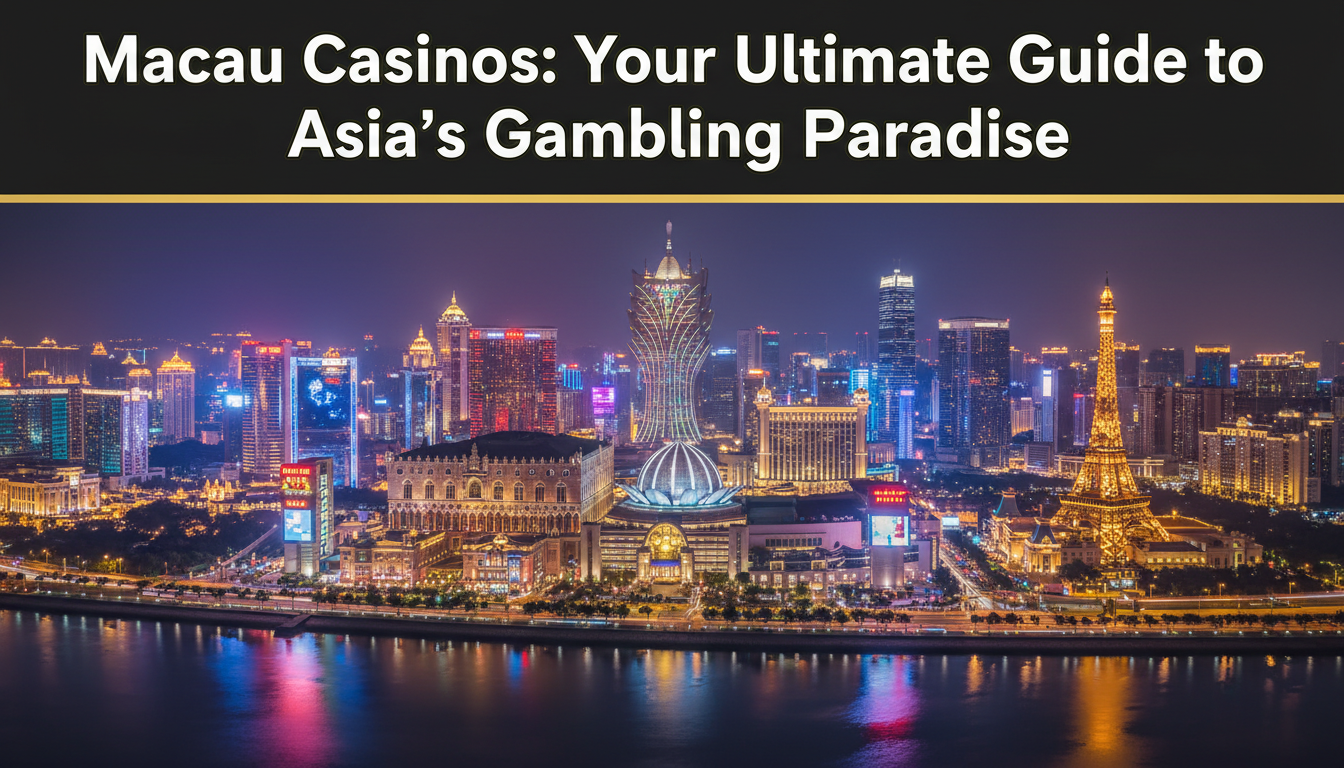
Macau casinos have reigned as the undisputed champions of global gambling since surpassing Las Vegas in gaming revenue back in 2006. Known as the “Monte Carlo of the East” and more recently as the “Las Vegas of Asia,” this compact Chinese territory packs an extraordinary punch with its glittering casino resorts that dominate the Cotai Strip and Macau Peninsula. Unlike anywhere else in China where gambling is strictly prohibited, Macau operates under its own special administrative status that preserves its centuries-old gaming tradition while blending Portuguese colonial heritage with cutting-edge entertainment complexes. Today, Macau casino resorts generate more than six times Las Vegas Strip’s gaming revenue despite having fewer properties, thanks to their deep connection with Chinese high rollers and growing middle-class gamblers. This former Portuguese colony transformed into the world’s gambling capital through strategic licensing, foreign investment, and its unique position serving mainland Chinese tourists who cross the border seeking legal gaming thrills unavailable at home.
Key Takeaways
- Macau generates more gaming revenue than all US casinos combined despite having fewer properties
- Cotai Strip is the modern casino hub while Macau Peninsula features historic sites alongside gaming
- Table games dominate over slots in Macau’s gambling culture
- New government mandates require casino operators to invest 90% of $15 billion in non-gaming attractions
- Chinese tourists account for over 90% of Macau casino visitors
- Macau offers more than gambling with UNESCO heritage sites and diverse cuisine
- Minimum gambling age is 21 with strict ID verification required
- Offshore online casinos operate legally for Macau residents despite local restrictions
Table of Contents
- Historical Background of Macau Gambling
- Major Casino Resorts in Macau
- Macau Gaming Culture and Rules
- Non-Gaming Entertainment and Attractions
- Macau Travel Guide for Casino Visitors
- Safety and Responsible Gambling
- Macau Gambling Regulations and Taxation
- Online Gambling in Macau
- Macau Casino Investment Landscape
- What Experts Say About Macau Casinos
- Frequently Asked Questions About Macau Casinos
Historical Background of Macau Gambling
Macau’s gambling history reaches back centuries, establishing itself as Asia’s premier gaming destination long before modern casino resorts appeared. Originally a Portuguese colony until 1999, Macau operated under different gambling rules than mainland China where all forms of gambling have been prohibited since the Communist revolution. As early as the late 19th century, Macau introduced a formal licensing system for gambling houses. The Portuguese administration recognized gaming’s economic potential early, legalizing various forms of gambling including lotteries, horse racing, and traditional Chinese games.
The real transformation began in the 1960s when Stanley Ho established the Sociedade de Turismo e Diversões de Macau (STDM), which held the exclusive gaming monopoly for 40 years. Ho modernized Macau’s gambling infrastructure while developing roads, hotels, and other amenities that transformed the territory. When Macau returned to Chinese sovereignty in 1999, the “one country, two systems” arrangement preserved its unique gambling culture with a crucial promise – the Portuguese government agreed with Chinese authorities that no legislative changes would affect gambling for at least 50 years (until 2049).
This commitment proved critical when Macau’s government ended the 40-year STDM monopoly in 2002. Foreign operators entered the market through three (later six) casino licenses, triggering Macau’s explosive growth into today’s gaming powerhouse. American companies like Las Vegas Sands, Wynn Resorts, and MGM Grand brought Las Vegas-style integrated resorts featuring hotels, shopping, dining, and entertainment alongside traditional gaming floors.
Macau isn’t just casinos – it’s a cultural phenomenon where Chinese gambling traditions meet Western hospitality. Study the ‘fan tan’ table game history before visiting to understand why table games dominate over slots here. Most visitors don’t realize Macau’s gaming culture evolved from traditional Chinese gambling houses dating back to Ming Dynasty practices.”
— Dan Mezzalingua, Executive Director of Global Gaming Expo Asia
Major Casino Resorts in Macau
Macau’s casino landscape concentrates primarily in two areas: the Macau Peninsula for historic gaming properties and the modern Cotai Strip for integrated resorts. Here’s a detailed comparison of Macau’s flagship casino destinations:
| Casino Resort | Location | Gaming Space | Room Count | Signature Attractions | Unique Features |
|---|---|---|---|---|---|
| Casino Grand Lisboa | Macau Peninsula | 18,000 m² | 430 | Robuchon au Dôme, The Eight | Lotus-shaped tower, golden dragon statue |
| Sands Cotai Central | Cotai Strip | 15,600 m² | 6,000+ | Venetian Macao, Parisian Macao | World’s largest hotel, indoor canals, Eiffel Tower replica |
| City of Dreams | Cotai Strip | 16,000 m² | 1,500 | Nobre Gallery, House of Dancing Water | Melco Select Lounge, celebrity chef restaurants |
| Wynn Palace | Cotai Strip | 15,000 m² | 1,700 | Performance Lake, SkyCab gondolas | Flower wall, daily floral displays |
| Cotai Arena Resorts | Cotai Strip | 12,500 m² | 1,000 | Macau Tower | 360° rotating buffet, bungee jump |
Macau Peninsula Gaming District
The older Macau Peninsula remains home to legendary gambling halls where high-stakes baccarat rules supreme. The Macau Peninsula offers the classic gambling experience with centuries-old establishments alongside newer luxury properties. Visitors can find:
- Casino Lisboa – The original Stanley Ho casino that launched modern Macau gambling
- New Lisboa – Home to the famous Golden Dragon show with hourly performances
- Wynn Macau – First integrated resort on the peninsula featuring luxury shopping and fine dining
- Grand Emperor Hotel – Near Ruins of St. Paul’s with classic Macau charm
- Crown Macau – Winner of “Best Casino Interior Design Award” in 2008
The peninsula blends gambling with sightseeing, allowing visitors to experience both Macau’s gaming culture and its UNESCO World Heritage sites within walking distance. Many peninsula casinos feature plush lounges accessible through programs like Melco Select Lounge and Superstar Lounge that provide gaming credits and dining privileges.
Cotai Strip Developments
The man-made Cotai Strip represents Macau’s modern face with massive integrated resorts designed to attract global tourists. This reclaimed land connects Taipa and Coloane islands, housing over 30 hotel properties and 8 major casinos. The Cotai Strip features:
- Venetian Macau – 800 gaming tables and over 3,000 slot machines filling the world’s largest casino floor
- Take indoor gondola rides while being serenaded under painted blue skies at Venetian Macau
- Parisian Macao – Features half-scale Eiffel Tower with observation deck
- City of Dreams – Known for its Michelin-starred restaurants and luxury shopping
- Sands Cotai Central – Contains multiple hotel brands including Conrad and Sheraton
These Cotai resorts go far beyond gambling with massive convention centers, high-end retail malls, and entertainment venues. The Venetian Macau alone features the Cotai Arena (Asia’s largest indoor arena), multiple theater productions, and enough hotel rooms to accommodate 10,000 guests.
Macau Gaming Culture and Rules
Understanding Macau’s unique gaming culture proves essential for visitors, as it differs significantly from Western casino experiences. The most striking difference? Table games dominate over slot machines. Baccarat – particularly VIP baccarat – reigns supreme in Macau casinos, accounting for over 80% of table game revenue. This Chinese preference drives the casino design philosophy throughout Macau.
Gambling age restrictions in Macau strictly prohibit anyone under 21 from entering gaming areas. Security checks at every casino entrance require presentation of valid government-issued ID verifying age compliance. Unlike some Western jurisdictions, Macau casinos do not serve alcoholic beverages on the gaming floor due to cultural preferences and regulatory requirements.
Macau Betting Limits and Table Game Structure
Macau’s gaming tables follow a distinctive layout designed specifically for Asian high rollers:
| Feature | Standard Western Casino | Macau Casino |
|---|---|---|
| Minimum Bets | $25-$100 | $500-$1,000+ (main floor) |
| VIP Minimums | $5,000+ | $100,000+ with lines of credit |
| Dealing Technique | Dealer handles all cards | Players rotate dealing the “shoe” |
| Ceremonial Elements | Standard procedures | Fortune chants, golden dragon presentations |
| Commission Structure | 5% on banker wins | Variable commissions based on volume |
The high-minimum betting structure reflects Macau’s customer demographic—primarily affluent Chinese gamblers. While main gaming floors have minimum bets substantially higher than Western casinos, many resorts offer more accessible gaming options through their casual gaming areas and slot machines.
“Never try to negotiate betting minimums on Macau gaming floors—this violates cultural norms. Instead, approach the cashier with your desired minimum and they’ll route you to the appropriate section. Most visitors don’t realize Macau’s ‘complimentary’ room stays actually require substantial minimum gambling turnover.”
— Alidad Tash, Founder of Gaming Consultancy 2nt8
Non-Gaming Entertainment and Attractions
Macau wisely recognizes that exclusive reliance on gaming proves unsustainable. New government mandates require casino operators to diversify their offerings significantly. Since 2022, casino licensees must demonstrate specific investments in non-gaming attractions reaching 30% of total revenue within the decade (up from just 5% pre-pandemic). This strategic push has transformed Macau into more than just a gambling destination:
- Performance Venues – City of Dreams features the House of Dancing Water, the world’s most expensive resident show costing $250 million to produce
- Family Entertainment – Wynn Palace offers the SkyCab gondola ride with stunning island views
- Cultural Attractions – Several resorts integrate Macau’s history with Portuguese tilework and Chinese architectural elements
- Gastronomic Experiences – Multiple Michelin-starred restaurants including Robuchon au DĂ´me and The Eight within Grand Lisboa
- Shopping Complexes – Galaxy Macau features the largest shopping mall in Macau with luxury brands
Macau’s Cultural Heritage Sites
Macau’s 20-plus UNESCO World Heritage sites blend seamlessly with casino developments, creating a culturally rich experience:
- Ruins of St. Paul’s – Iconic Portuguese church facade on Macau Peninsula offering panoramic city views
- Guia Fortress – Highest point on peninsula housing Chapel of Our Lady of Guia (1622)
- Senado Square – Cobblestone plaza surrounded by pastel-colored colonial buildings
- A-Ma Temple – Ancient Taoist temple complex honoring the goddess who gave Macau its name
- Macau Tower – Observation platform with casino, restaurants, and bungee jumping
Visitors can easily combine cultural exploration with gaming by exploring the historic center after their casino visit. The Portuguese influence remains palpable through architecture, cuisine, and place names throughout the peninsula.
Macau Travel Guide for Casino Visitors
Planning a trip to Macau requires understanding practical considerations for optimal casino access and enjoyment. The territory’s small size (32.9 km²) makes navigation straightforward but requires strategic planning during peak tourist seasons.
When to Visit Macau Casinos
Macau enjoys a subtropical climate with significant seasonal variations impacting casino visits:
| Season | Weather Conditions | Casino Crowd Levels | Best For |
|---|---|---|---|
| December-February | Mild (10-15°C), low humidity | Very crowded (Lunar New Year) | Cultural festivals, comfortable sightseeing |
| March-May | Warm (18-25°C), occasional rain | Moderate | Optimal casino conditions, fewer crowds |
| June-August | Hot (28-33°C), typhoon season | Domestic tourists | Special promotions, non-peak hours |
| September-November | Warm (25-28°C), decreasing humidity | Moderate-High | Best overall conditions for gaming |
The most strategic time to visit Macau casinos falls between September and November when typhoon risks decrease and major Chinese holiday crowds have passed. Avoid the Lunar New Year period (late January-February) when casino floors become overwhelmingly crowded by local visitors celebrating the holidays.
Getting Around Macau
Navigating Macau proves straightforward with multiple transportation options connecting casino areas:
- Casino Shuttles – Free shuttle buses from Macau Ferry Terminal, Hong Kong, and major hotels
- Taxis – Widely available with flat-rate fares: MOP$25.50 (Peninsula), MOP$33.50 (Taipa), MOP$40.00 (Coloane)
- Buses – Three companies serve the territory; many routes connect directly to casino resorts
- Walking – Feasible between peninsula properties but less practical for Cotai destinations
Visitors receive special treatment from casino operators who provide complimentary transportation to maximize gaming time. All major airports and ferry terminals feature dedicated shuttle counters for each casino resort.
“Always request your hotel reservation in Cantonese characters when taking taxis—they’ll get you there faster. Most visitors don’t realize Macau’s casino shuttles operate on two loops: main road routes stop at all properties while direct shuttles run only to the operator’s resort.”
— James Hunt, Publisher of MacauShopper.com
Safety and Responsible Gambling
Macau maintains an exceptionally safe environment with crime rates significantly lower than most international gaming destinations. The territory’s strict regulatory framework and cultural attitudes toward gambling contribute to its security profile.
Visitors should take standard precautions common to any major tourist destination:
- Carry identification at all times including passport copies
- Use hotel safes for valuable documents and excess cash
- Avoid displaying large amounts of cash outside casino environments
- Stay aware of surroundings when withdrawing large sums from ATMs
- Keep personal belongings secured in gaming areas and crowded spaces
Responsible Gambling Resources in Macau
Macau’s government and casino operators prioritize responsible gambling through multiple initiatives:
- Mandatory Self-Exclusion Programs – Macau Gambling Addiction Prevention Association offers registration
- Age Verification Systems – Strict enforcement of 21+ minimum with electronic monitoring
- Problem Gambling Hotlines – 24/7 support available in multiple languages
- Cash Limit Assistance – Casinos provide tools to set deposit and loss limits
- Staff Training – All gaming employees trained to identify and assist at-risk patrons
Macau’s cultural approach to gambling differs from Western markets, with casinos actively promoting moderation among their clientele. Many properties offer complimentary gambling counseling services to frequent visitors showing signs of problematic behavior.
Macau Gambling Regulations and Taxation
Macau operates under one of the world’s most sophisticated gambling regulatory frameworks, administered by the Gaming Inspection and Coordination Bureau (DICJ). This dedicated authority ensures strict compliance with Macau’s comprehensive gaming laws while maintaining the territory’s competitive position.
Macau Gambling Tax Structure
The taxation model supporting Macau’s gaming industry functions on multiple layers:
| Tax Type | Rate | Payment Frequency | Recipients |
|---|---|---|---|
| Casino Tax | 35% of Gross Gaming Revenue | Monthly | Macau SAR Government |
| Special License Fee | 3% of Gross Gaming Revenue | Monthly | Macau SAR Government |
| Salary Tax | Progressive 7%-12% | Annually | Macau SAR Government |
| Community Contributions | Variable (approx. 2%) | Quarterly | Local Social Programs |
Unlike some gaming jurisdictions, Macau casino operators cannot deduct operating expenses before paying taxes. This “gross” taxation model generates substantial revenue for the territory while maintaining operator profitability through high-volume operations. The government’s recent licensing renewal required casinos to commit $15 billion toward non-gaming infrastructure over the next decade, with 90% specifically allocated to entertainment, tourism, and cultural projects.
Online Gambling in Macau
Online gambling presents a unique situation in Macau due to the territory’s special status within China. While mainland China strictly prohibits all forms of online gambling, Macau operates under different rules:
- No specific local laws prohibit Macau residents from accessing offshore online casinos
- Macau regulatory body does not issue licenses to local online casino operators
- Resident access to international online casinos remains unrestricted
- Macau’s physical casinos offer regulated mobile betting applications for table games
Macau’s position creates a distinctive online gambling environment where residents legally access international platforms without interference. This situation stems from the “one country, two systems” arrangement that preserves Macau’s autonomy over gambling regulation until at least 2049.
Macau Casino Investment Landscape
Macau’s casino industry represents one of the world’s most volatile yet lucrative investment opportunities. Major international operators maintain significant stakes in the territory through concession agreements with Macau’s government:
| Operator | Macau Assets | Concession Period | Non-Gaming Focus | Recent Performance |
|---|---|---|---|---|
| Sands China | Venetian, Parisian, Cotai Expo | 2022-2032 | Convention center expansion | Recovered 2023 revenues |
| Wynn Macau | Wynn Palace, Wynn Macau | 2022-2032 | Performance lake shows | Steady growth post-pandemic |
| Melco Resorts | City of Dreams, Studio City | 2022-2032 | Premium entertainment focus | Strong recover |
| Galaxy Entertainment | Galaxy Macau, StarWorld | 2022-2032 | Retail and family entertainment | Leading revenue recovery |
Recent concession renewals reflect Macau’s strategic pivot toward economic diversification. All six operators committed to substantial non-gaming investments with requirements including:
- 90% of $15 billion investment must fund non-gaming attractions
- Increased focus on attracting international tourists (beyond mainland China)
- Enhanced community contributions for social programs
- Stricter corporate governance requirements
These changes aim to transform Macau from a gambling-focused destination into a comprehensive tourism and entertainment hub that can sustain growth regardless of fluctuations in gambling revenue.
What Experts Say About Macau Casinos
Industry thought leaders provide valuable perspectives on Macau’s evolution as the world’s premier gambling destination:
“Macau’s gaming sector has demonstrated remarkable resilience through multiple crises—SARS, global financial crisis, anti-corruption campaigns, and most recently the pandemic. The key is understanding that Macau serves a unique market: Chinese high rollers who value privacy, service, and credit arrangements unavailable elsewhere. The new concession terms requiring massive non-gaming investments may finally transform Macau into a true destination rather than just a gambling stopover.
— Ben Lee, Founder of Macau Gaming Consultancy IGamiX
“Macau’s future success depends on attracting more foreign tourists beyond the Chinese market. Current data shows over 90% of Macau visitors come from greater China, creating vulnerability to policy changes. By developing world-class non-gaming attractions comparable to Singapore’s Marina Bay Sands, Macau can build sustainable tourism independent of gaming revenue fluctuations.”
— David Green, Head of Macau Gaming Consultancy Newpage
“Macau’s regulatory framework sets the global standard for gambling oversight. The Gaming Inspection and Coordination Bureau maintains strict control over all operations while allowing sufficient commercial freedom. Recent enhancements to anti-money laundering procedures demonstrate Macau’s commitment to operating within international best practices despite occasional criticisms about money laundering connections.”
— Professor Sarah Ann Cousins, University of Macau Business School
Frequently Asked Questions About Macau Casinos
What is the legal gambling age in Macau?
The minimum gambling age in Macau is 21 years. All visitors must present valid government-issued identification at casino entrances for age verification. This applies to all gaming areas including slot machines, table games, and poker rooms.
Can US citizens safely travel to Macau for gambling?
Yes, Macau remains exceptionally safe for US citizens and international travelers. Macau maintains one of the lowest crime rates among international destinations. The territory’s special administrative status within China provides additional stability and security for foreign visitors. Standard travel precautions apply as in any major tourist destination.
How many days should I spend in Macau to experience casinos properly?
Most visitors allocate 2-3 days in Macau for a comprehensive casino experience. This allows time to explore multiple properties on both Cotai Strip and Macau Peninsula while experiencing cultural attractions. If focusing primarily on gaming with business meetings, a minimum of 1.5 days proves sufficient. Visitors combining Macau with Hong Kong often spend 1 day in Macau after arriving by ferry from Hong Kong.
Is Macau walkable for casino hopping?
Macau Peninsula offers reasonable walkability between historic sites and some casinos, but Cotai requires transportation. The Cotai Strip spans approximately 2.5 miles where casinos sit relatively close but lack comfortable pedestrian pathways between properties. Shuttles and taxis provide the most practical transportation for moving between Cotai casinos. The free casino shuttle buses create efficient routes connecting major properties without cost to visitors.
What dining options exist near Macau casinos?
Macau casinos feature extraordinary dining options spanning multiple price points:
- Luxury – Robuchon au DĂ´me (Grand Lisboa), The Eight (Cotai)
- Buffets – Praha Restaurant (Harbourview Hotel), Rotating 360° CafĂ© Buffet (Macau Tower)
- Casual Dining – Ciao CafĂ© Buffet (Metropark Hotel), Lan Thai Restaurant
- Specialty – Must-Try Cantonese Dim Sum (Metropole Hotel), Seafood Hot Pot (Altira)
Most resorts offer afternoon tea services and breakfast buffets popular with both guests and visitors without room bookings.
How does Macau taxation affect casino operations?
Casino operators pay 35% of their gross gaming revenue as tax regardless of profitability. Additionally, they pay a special license fee of 3% of gross gaming revenue and contribute to social programs. Unlike many jurisdictions, Macau does not tax players on winnings, and offshore online gambling remains outside local taxation requirements for Macau residents.
What payment methods work best in Macau casinos?
Macau casinos accept multiple payment methods:
- Cash in Macau Pataca (MOP) or Chinese Yuan (CNY)
- Credit cards for gaming chips (primarily for high rollers)
- Digital payments through hotel apps
- Prepaid gaming cards available at cashier booths
Most players convert currency at airport, ferry terminal, or casino exchange booths before gaming. Major casinos accept US dollars but provide better exchange rates for CNY or MOP transactions.
Are Macau casinos still recovering from the pandemic?
Yes, Macau’s casino industry has shown strong recovery since reopening borders in late 2022. February 2023 marked Macau’s gambling revenue rising for seven consecutive months to a two-year high of US$2.9 billion. While VIP gaming revenues haven’t fully rebounded to pre-pandemic levels, mass-market gaming has exceeded previous highs. Operators emerged from the pandemic with stronger balance sheets and higher profit margins due to cost-cutting measures implemented during closures.
Can I gamble online legally while in Macau?
Macau residents legally access offshore online casinos without restrictions. The regulatory environment specifically prohibits local licensing of online operators within Macau but does not restrict resident access to international platforms. Macau’s physical casinos also offer regulated mobile betting applications for their patrons. This unique situation stems from Macau’s special status under the “one country, two systems” arrangement.
What non-gaming attractions will Macau casinos develop next?
Macau’s new casino concessions require massive non-gaming investment including:
- Indoor waterparks at multiple resorts
- Health and wellness centers with medical tourism options
- Art exhibitions and cultural programming
- Large garden attractions similar to Singapore’s Gardens by the Bay
- Expanded convention facilities for business tourism
Casinos aim to transform Macau into a year-round destination rather than just a gambling stopover by developing these diversified offerings that appeal to international travelers beyond Chinese visitors.
