
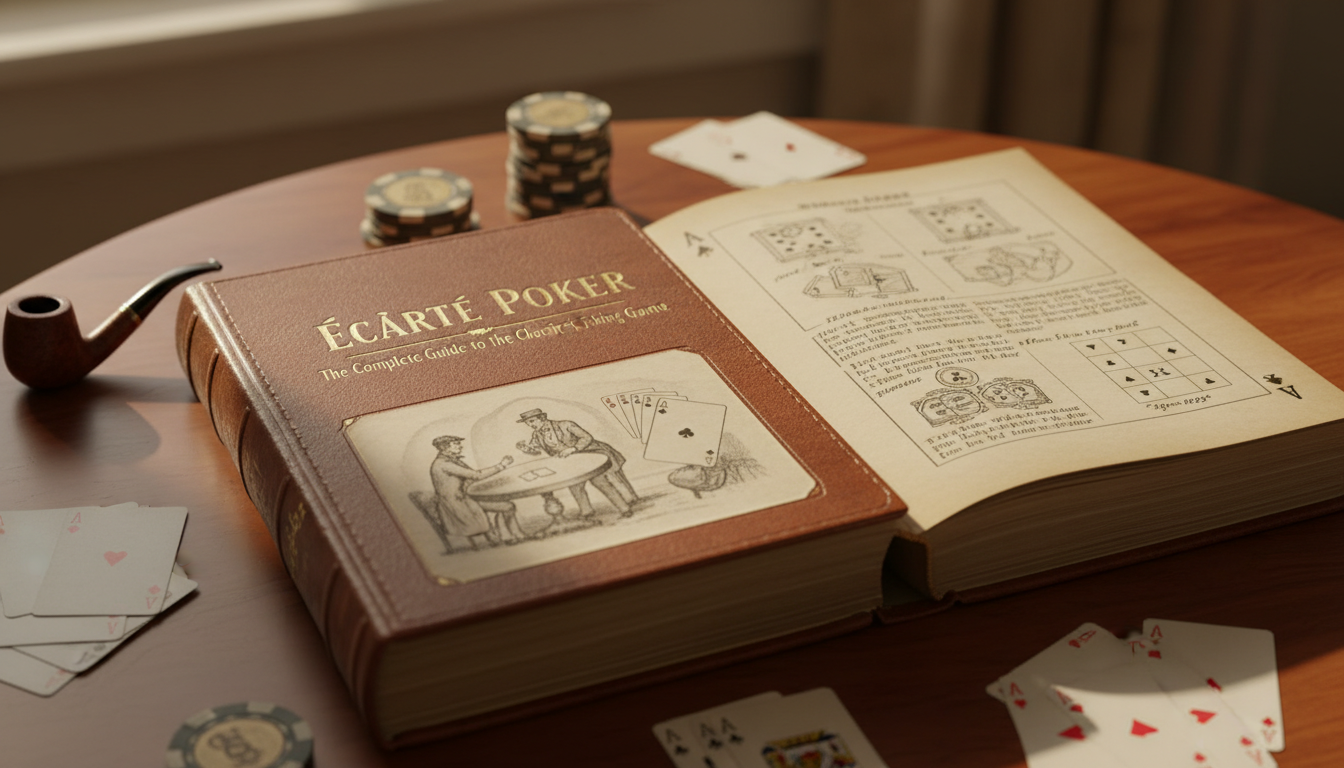
Écarté Poker is a fascinating two-player trick-taking card game that dates back to 19th-century France. As a fast-paced casino game, it blends the core mechanics of classic discard protocols with intense betting rounds. The name itself translates to “discarded,” highlighting the game’s central mechanic of exchanging cards to build a stronger hand. For those who enjoy strategic duels, mastering the trump suit and learning when to swap cards are the keys to victory. This guide walks you through the essentials, helping beginners and seasoned gamblers alike secure more consistent wins.
Understanding the Basics of the Game
The rules are simple but require deep strategic thinking. You play entirely against a single opponent. This format makes it an excellent choice for intense, heads-up casino action.
The 32-Card Deck
You do not use a standard deck. The game requires a stripped deck of 32 cards. You achieve this by removing all cards numbered from two to six.
Card Rankings
The card hierarchy differs slightly from traditional games. Understanding this ranking is crucial for securing tricks.
| Rank | Card Name | Power Level |
|---|---|---|
| 1 | King | Highest |
| 2 | Queen | Very High |
| 3 | Jack | High |
| 4 | Ace | Medium High |
| 5 | Ten | Medium |
| 6 | Nine | Low |
| 7 | Eight | Very Low |
| 8 | Seven | Lowest |
How to Play Like a Pro
Structured gameplay ensures fair competition. Both players have equal opportunities to shape their hands. The setup occurs in specific phases.
The Initial Deal
The dealer deals five cards to each player. Cards are dealt in batches of two and three. The dealer places the remaining stock in the center.
Revealing the Trump
The dealer turns over the top card of the stock. This revealed card determines the trump suit for the round. The trump suit naturally beats any other suit played.
The Exchange Phase
If a player dislikes their hand, they can propose a swap. This phase defines the entire game.
- The non-dealer decides first if they want to exchange cards.
- If accepted, the player discards unwanted cards face down.
- The dealer then deals replacement cards from the stock.
- This process repeats until a player is satisfied or the stock runs out.
Winning Tricks and Scoring Points
Winning requires taking more tricks than your opponent. There are five tricks available per round.
Trick-Taking Rules
The non-dealer leads the first trick. You must follow suit if possible. If you cannot follow suit, you must play a trump card. The highest card of the led suit wins, unless a trump card is played.
Scoring System
Points are awarded based on trick tallies.
- Winning three or four tricks earns one point.
- Winning all five tricks is called a “vole” and earns two points.
- Holding the King of Trumps awards an automatic point if declared early.
Core Casino Strategies
Having played this game extensively, I can confirm that strategy matters more than luck. You must play the math and observe your opponent.
When to Propose a Swap
Never swap if you hold three strong trumps. Keep high cards of the non-trump suits. Only trade when you hold low cards across multiple weak suits.
Refusing the Exchange
The dealer has the right to refuse a swap proposal. Refuse if you already hold a dominant hand. Forcing the opponent to play with their initial bad hand is a strong tactic.
Bankroll and Betting Tactics
Managing your money is essential. Establish clear limits before you sit at the table. Heads-up formats can drain your bankroll quickly if you chase losses.
Unit Betting
Always use a unit betting system. Bet a consistent percentage of your total bankroll. Increase your wagers only when you secure the dealer advantage.
What Experts Say About Écarté Poker
Professional card game analysts respect the deep mechanics of this two-player format. The balance of luck and skill attracts highly strategic minds.
Expert Opinion: The Value of Discarding
“The true skill lies not in the cards you hold, but in the cards you choose to discard,” explains veteran casino consultant Robert Harris. “Knowing exactly when to drain the stockpile gives a mathematical edge over aggressive players.”
Expert Opinion: Hand Evaluation
Renowned gambling historian Sarah Jenkins states, “Unlike Texas Hold’em, this format demands immediate hand evaluation. You have seconds to calculate trick probabilities before confirming a swap. That speed creates a massive skill gap in modern casinos.”
Alternative Variations to Explore
Casinos often adapt rules to speed up gameplay. Always check the house rules before placing your bets.
Jeux de Règle
This is a strict mathematical approach to the game. It outlines the precise hands that dictate when you should stand pat or exchange. Learning this system elevates your play drastically.
Extensive FAQ
Find quick answers to the most common questions from beginners and curious players.
What does the term “Écarté” actually mean?
The word translates to “discarded” or “thrown away” in French. It perfectly describes the fundamental mechanic of swapping out unwanted cards.
Can more than two people play at once?
No, the traditional format is exclusively designed for two players. However, some casual groups play in teams, but official casino rules enforce heads-up play.
Why is the Ace ranked lower than the Jack?
This stems from old European card game traditions. Many French and German games historically placed the Ace between the face cards and the numerical cards.
Is it possible to count cards in this game?
Yes, card counting is highly effective. Since the deck only holds 32 cards, tracking trumps and high face cards provides a distinct mathematical advantage.
What happens if the stockpile runs out?
If the stock depletes during the exchange phase, players must immediately play the hands they currently hold. No further cards are dealt.
How many points are needed to win a full match?
A standard match is typically played to five points. In grand casino tournaments, rounds may be extended to eleven points to test endurance and strategy.